
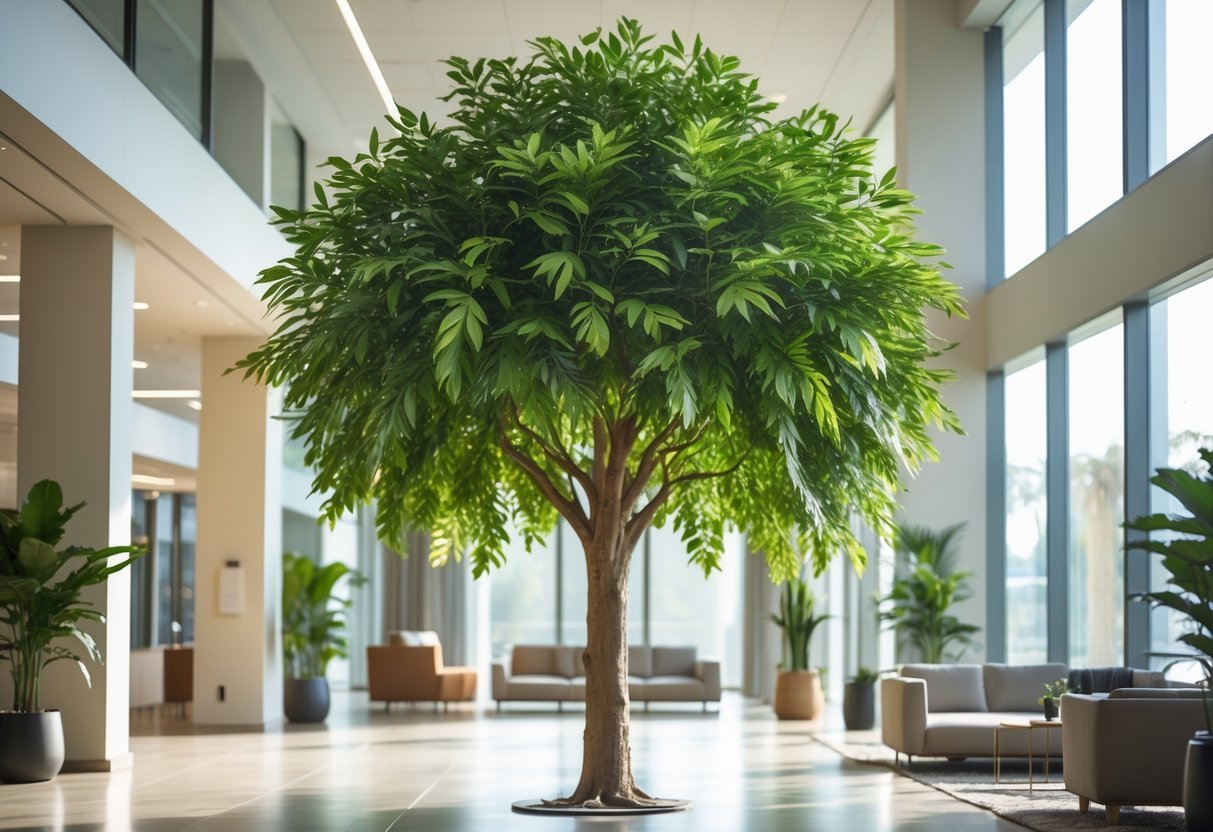
You want greenery that makes an impact, but you don’t want the watering, pruning, or mess. A large artificial tree gives you height, texture, and structure without the ongoing upkeep that comes with a living plant. A large artificial tree is a tall, lifelike decorative tree designed to create visual impact in a space without requiring maintenance.
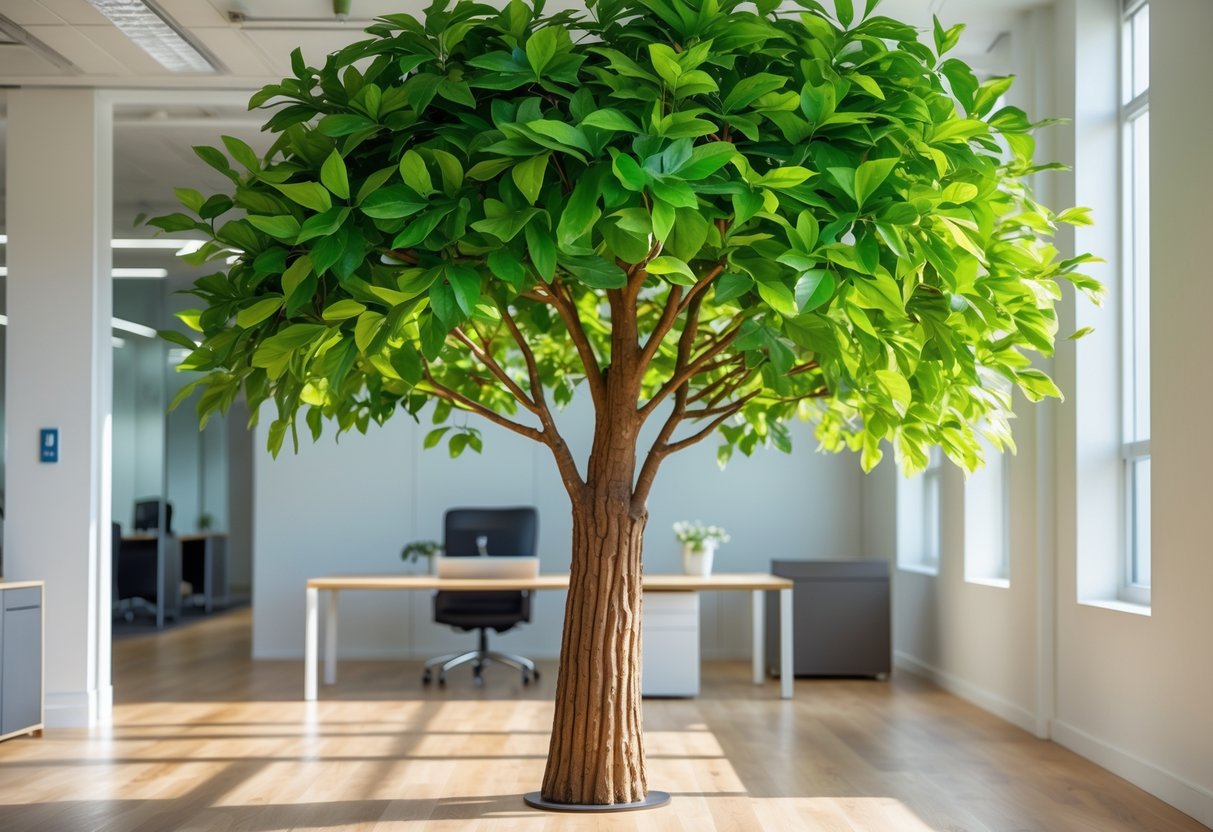
I use large artificial trees to anchor open-plan living areas, fill empty corners, and soften commercial spaces like foyers and offices. With options ranging from palms to ficus and olive trees, you can match the look to your style while keeping maintenance simple.
When you choose the right size and shape, you transform a plain room into a balanced, inviting space. Keep going and you’ll see how to choose the right type, where to place it, and how to make it look natural in your home or business.
Key Takeaways
- Large artificial trees add height and visual structure without ongoing care.
- You can choose from many realistic styles to suit homes or commercial spaces.
- Smart placement and styling help create a natural, balanced look.
What Are Large Artificial Trees?
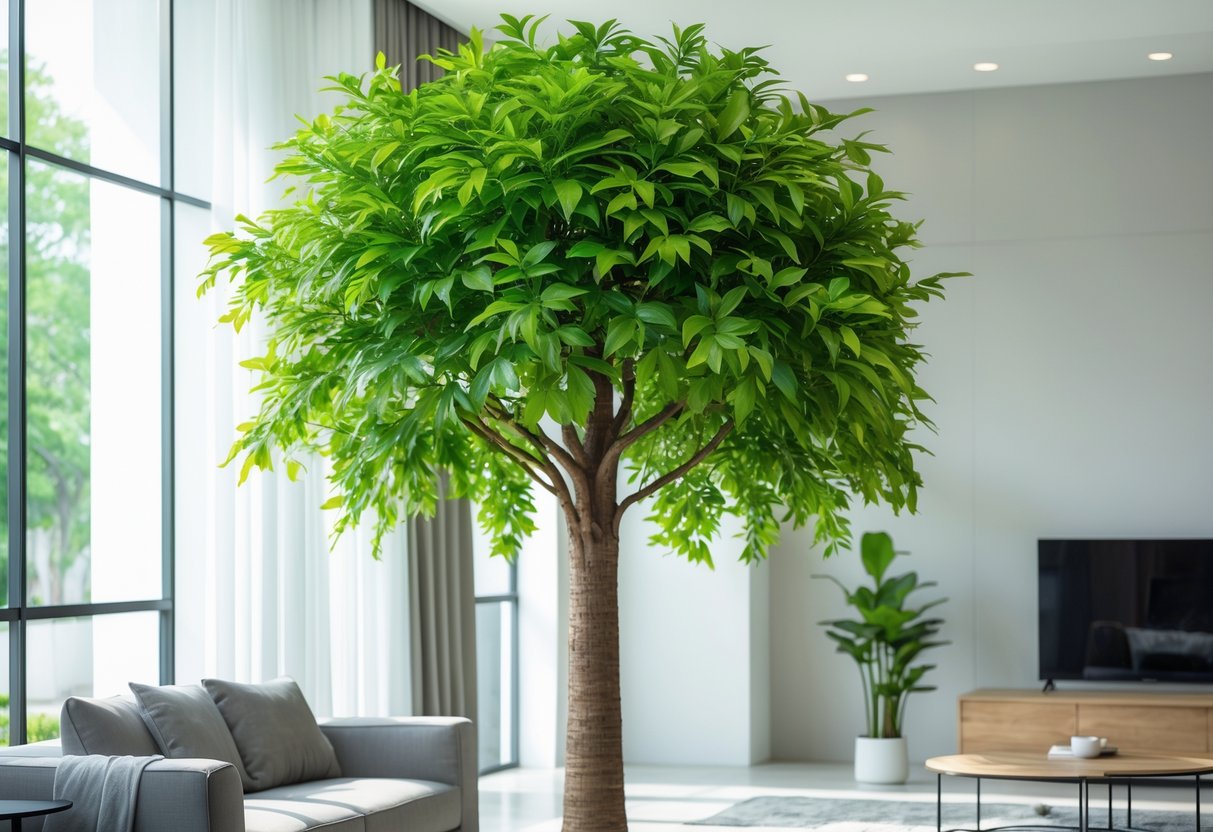
Large artificial trees are life‑sized decorative trees designed to replicate the structure, scale, and foliage of real trees without the need for soil, watering, or pruning. I see them used in homes, offices, shopping centres, and outdoor venues where real trees would be impractical or high maintenance.
They range from indoor statement pieces to towering commercial installations that stand several metres tall.
Defining Large Artificial Trees
When I refer to large artificial trees, I usually mean trees over 150 cm tall, with many models reaching 2–7 metres depending on the setting. Some commercial installations span up to seven metres, as seen in examples of giant artificial trees.
These trees feature realistic trunks, layered branches, and dense foliage designed to mimic mature species. Unlike small décor plants, a large artificial tree fills vertical space and acts as a focal point.
I often see them installed in:
- Hotel lobbies
- Shopping centres and food courts
- Open‑plan offices
- Large living rooms with high ceilings
Some large-scale models ship fully assembled, while bigger canopy designs may require partial disassembly for transport and reassembly on site, which is common with designer lifelike greenery for any space.
Common Materials and Construction
The realism of artificial trees depends heavily on materials and build quality. I always look for high‑grade polyester or polyethylene leaves because they resist fading and tearing.
Durability matters even more outdoors. Many manufacturers highlight the importance of weather‑resistant plastics and fabrics, especially when choosing the best large artificial outdoor trees.
Key construction features often include:
- Metal or steel internal frames for structural strength
- Moulded trunks with textured bark finishes
- UV‑protected foliage to reduce sun damage
- Weighted pots or steel base plates for stability
Some suppliers also offer UV protection and flame‑retardant options, particularly for commercial spaces, as noted in customisable large artificial tree options for indoor and outdoor decoration.
Popular Varieties and Styles
I notice that certain faux trees consistently stand out in both residential and commercial spaces. Olive trees, palms, ficus, maple, and bonsai designs remain popular because they suit modern Australian interiors.
Retailers specialising in large artificial trees and plants for bold spaces often showcase models that soften empty corners or frame furniture without overwhelming a room.
Common styles include:
| Style | Best For |
|---|---|
| Olive trees | Coastal and Mediterranean interiors |
| Palm trees | Tropical or resort-style spaces |
| Bonsai trees | Minimalist or contemporary settings |
| Broadleaf trees | Offices and commercial foyers |
For dramatic interiors, some homeowners choose oversized statement pieces from collections like giant artificial trees, which prioritise height and canopy spread.
I choose varieties based on ceiling height, available floor space, and how much visual impact I want the artificial tree to create.
Benefits of Choosing Large Artificial Trees
I choose large artificial trees because they give me structure, greenery, and visual impact without the workload that comes with living plants. They stay consistent, suit many environments, and solve practical issues like allergies, upkeep, and seasonal changes.
Low Maintenance and Durability
I don’t want to water, prune, fertilise, or manage pests, especially with oversized plants. Large artificial trees are effectively maintenance-free, which means I avoid ongoing care costs and daily attention.
Many models use sturdy internal frames and stable pots designed for high-traffic areas. When I look at options like large artificial trees for bold spaces, I see products built to stand over 150cm tall and hold their shape in living rooms, offices, and hospitality settings.
I also pay attention to construction details:
- Reinforced branches
- Fade-resistant foliage
- Weighted bases for stability
High-quality artificial trees keep their structure over time. I don’t deal with leaf drop, soil spills, or root damage, which makes them practical for commercial spaces and busy homes.
Allergy-Free and Safe
If I or someone in my space struggles with pollen allergies, artificial greenery makes sense. Large artificial trees are allergy-free, so they don’t release pollen or trigger common plant-related sensitivities.
I also avoid mould growth in soil and the insects that sometimes come with live plants. That matters in offices, retail stores, and healthcare settings where air quality and cleanliness are priorities.
Because these trees don’t require water, I reduce the risk of spills on flooring. In homes with children or pets, I don’t need to worry about fertilisers, sharp thorns, or toxic leaves.
This makes artificial trees a straightforward option when I want greenery without health concerns or added risk.
Versatile Placement Options
I can place a large artificial tree almost anywhere because I don’t need sunlight, irrigation, or drainage. That flexibility helps me fill awkward corners, frame entryways, or soften large open-plan rooms.
A large artificial tree for your space typically ranges from around 1.8 metres to over 3.7 metres tall. That scale allows me to create a strong focal point in lobbies, living rooms, patios, or event venues.
I use them to:
- Anchor a seating area
- Break up expansive walls
- Add height variation to flat interiors
When I browse artificial trees for sale, I look for styles that match my layout—olive trees for a Mediterranean feel, palms for a coastal look, or ficus varieties for a classic interior finish.
Year-Round Aesthetic Appeal
I like that artificial trees maintain the same appearance every day of the year. Leaves don’t yellow, branches don’t thin out, and the overall shape stays consistent.
With high customisability in large artificial trees, I can choose specific shapes, trunk styles, and foliage density to suit a residential or commercial design brief. That control helps me align greenery with branding, colour palettes, or architectural lines.
Artificial trees also deliver immediate impact. I don’t wait years for growth or deal with seasonal dormancy.
When I invest in high-quality artificial trees, I get stable colour, defined structure, and predictable visual results in every season.
Types and Popular Species of Large Artificial Trees
When I choose a large artificial tree, I focus on shape, leaf structure, and how closely it reflects a real species. Olive, palm and ficus designs dominate commercial and residential spaces because they deliver recognisable form, practical height, and year-round evergreen impact.
Artificial Olive Tree
I often recommend an artificial olive tree when a client wants a refined, Mediterranean look without ongoing care. Its slim trunk and narrow, dusty-green leaves create a light canopy that suits dining areas, entryways, and retail settings.
Most artificial olive trees feature detailed branching and small, dark olives for realism. Heights typically range from 1.8 to over 3 metres, which makes them suitable for homes with standard ceilings as well as hospitality venues.
I look for UV-stable foliage if the tree will sit near windows or outdoors under cover. Many buyers compare styles and structure before purchase, and guides such as this overview of how to choose the right artificial tree by project and species help clarify differences in trunk materials and leaf density.
Large Artificial Palm Trees
A large artificial palm tree makes a stronger visual statement than most other species. I use artificial palm trees in open-plan spaces, poolside settings, and shopping centres where ceiling height allows wide fronds to spread naturally.
Common varieties include date palms and kentia-style artificial palm designs. These trees often exceed 2.5 metres and may feature textured trunks built from moulded or wrapped materials to resemble real bark.
Installers frequently place oversized palms in commercial projects, including food courts and atriums. Suppliers that specialise in artificial giant trees for large venues highlight on-site installation options for high-traffic environments.
When I select an artificial palm, I check frond attachment points and colour variation. Subtle shading along the leaf ribs improves realism and prevents a flat, plastic appearance.
Artificial Ficus Tree
The artificial ficus tree remains one of the most versatile options available. I see artificial ficus trees used in offices, lobbies, and homes because they provide a full canopy without excessive width.
A giant artificial ficus can reach 3 to 4 metres, with layered branching that creates depth. Some models replicate the classic weeping ficus, while others mimic the popular fiddle leaf fig with large, glossy leaves.
Design references such as this breakdown of types of large artificial trees used in interior design explain how canopy trees like faux ficus work well in hospitality and retail layouts.
I pay close attention to leaf attachment and trunk tapering. A gradual trunk thickening toward the base gives the artificial ficus a more convincing silhouette.
Other Popular Species
Beyond olive, palm and ficus, I regularly specify other evergreen styles. Cherry blossom replicas suit event spaces, while maple and flowering varieties introduce seasonal colour without maintenance.
Large artificial trees commonly range from 6 to over 12 feet in height, which suits homes, offices, and retail fit-outs. Buying guides such as this overview of how to choose the best large artificial trees for your space outline typical size ranges and placement considerations.
I also consider foliage density and pot style. A clean planter and stable internal frame ensure the tree holds its form over time, especially in busy commercial environments.
Where to Use Large Artificial Trees
I use large artificial trees to solve specific design problems in homes, workplaces, and high-traffic public areas. They add height, structure, and greenery without the maintenance demands of living plants.
Homes and Residential Interiors
In homes, I place large artificial trees where natural light is limited or maintenance would be difficult. Entryways, stair voids, and living room corners work well because tall foliage draws the eye upward and softens empty vertical space.
Corners are especially practical. As explained in this guide on large artificial trees for living room corners, they fill low‑traffic zones without interrupting movement through the room.
For indoor use, I look for stable bases and realistic trunks. Some modern options even include integrated lighting, similar to the features described in these large artificial trees with built‑in LED options, which help in rooms without ceiling fixtures.
I also use them as designer plants in open‑plan layouts. A tall olive or palm can visually separate a dining space from a lounge without building a wall.
Offices and Commercial Spaces
In offices, I focus on scale and placement. Large artificial trees define reception areas, anchor waiting rooms, and break up long corridors.
They also align with biophilic design principles. This overview of large artificial trees in interior design explains how trees guide movement and frame views inside commercial spaces.
For shared workplaces, I choose durable materials and secure planters. Maintenance teams do not need to water or prune them, which keeps operating costs predictable.
I often recommend artificial giant trees for high ceilings in foyers or coworking hubs. They fill vertical space that would otherwise feel empty while staying practical for year‑round indoor use.
Shopping Centres and Public Areas
In shopping centres and large public venues, I prioritise impact and durability. Giant artificial trees create clear meeting points and help customers orient themselves in wide, open layouts.
Many suppliers design them specifically for these environments. For example, these artificial giant trees for shopping centres and food courts suit large homes and commercial spaces where scale matters.
For outdoor or semi‑outdoor zones, I check for UV protection and flame‑retardant materials. Products such as these customisable large artificial trees for indoor and outdoor decoration allow adjustments to height, canopy spread, and finish.
I use them to frame escalators, highlight food courts, or soften hard architectural lines. In busy public areas, they add greenery without ongoing maintenance or safety risks from falling leaves or soil.
Tips for Styling and Maintaining Large Artificial Trees
I focus on two things when I style large artificial trees: making them look convincingly real and keeping them clean. Small adjustments and regular upkeep make the biggest difference.
Making Faux Trees Look Realistic
I always start by shaping the branches. I bend and separate each stem so the tree does not look flat or compressed from the box. This simple step adds depth and shadow, which helps faux trees look more natural.
I position the tree where a real plant could logically grow. I avoid dark corners unless the species suits low light, and I place it near windows for a believable setting. For help choosing the right size for tight spaces, I like the guidance in this article on large artificial trees for living room corners.
The pot matters just as much as the leaves. I swap basic plastic pots for ceramic or woven planters and top the base with real soil, bark, or pebbles.
If the tree looks sparse, I use simple techniques from this guide on how to make an artificial tree look fuller such as fluffing branches and adjusting leaf angles. Small tweaks create a more realistic shape.
Cleaning and Upkeep Advice
Artificial plants do not need watering, but they still collect dust. I dust leaves every few weeks with a microfibre cloth or a soft duster.
For a deeper clean, I wipe each leaf with a damp cloth and mild soapy water. I dry the foliage straight away to prevent streaks, especially on glossy leaves.
In high-traffic areas, I check for loose branches or leaning trunks. Commercial spaces often need sturdier builds that handle movement and foot traffic, which I first noticed when reading about customising a high-quality large fake tree.
I also rotate the tree slightly every few months. This keeps one side from fading if it sits near strong sunlight and helps the shape stay balanced.
Custom and Speciality Large Artificial Trees
When I need a statement piece, I look beyond standard catalogue options. Custom sizing, integrated lighting, and sculpted forms like topiary or oversized feature trees give me far more control over how a space feels and functions.
Custom Orders and Sizing
I often choose custom builds when ceiling height, floor load limits, or branding requirements rule out off‑the‑shelf options. Many suppliers offer tailored solutions, including custom tall artificial trees designed to meet specific height and canopy spread requirements.
When I order a custom piece, I focus on:
- Overall height and canopy diameter
- Trunk style (natural timber, sculpted fibreglass, or real wood trunks)
- Leaf density and species selection
- Access requirements for installation
For large commercial spaces, I consider installers experienced with artificial giant trees, especially for shopping centres or hospitality venues. These projects often involve on‑site assembly, reinforced bases, and compliance with fire regulations.
Custom sizing also matters outdoors. Some manufacturers offer UV protection and flame‑retardant options for large fabricated trees, similar to those found in large outdoor artificial plants. I always confirm material specifications before committing.
LED Light Trees
LED light trees combine greenery with functional illumination. I use them in entryways, event spaces, and hospitality settings where ambient lighting improves visibility and atmosphere at the same time.
Most LED light trees feature:
- Warm white or cool white integrated LEDs
- Concealed wiring within branches or trunks
- Low‑voltage transformers for safer operation
- Replaceable light strings in higher‑end models
When I select one, I check IP ratings for outdoor use and confirm energy consumption. LED systems typically draw less power than traditional bulbs and produce less heat, which helps protect synthetic foliage.
Some suppliers include illuminated options within their broader giant artificial trees ranges, allowing me to match tree scale with lighting needs. I make sure access panels or connection points remain reachable for maintenance.
Artificial Topiary and Unique Designs
Artificial topiary gives me structure and symmetry that natural plants cannot always maintain. I use shaped forms such as spheres, cones, spirals, and multi‑tier designs in entrances, courtyards, and retail displays.
Key features I look for include:
- Dense, tightly clipped foliage finish
- UV‑treated materials for outdoor placement
- Stable internal frames to hold sculpted shapes
- Weighted or concealed planters
For large installations, I sometimes explore speciality providers of custom large specimen artificial trees when I need oversized topiary or themed designs. These options suit hotels, event venues, and commercial foyers where scale matters.
Artificial topiary and other speciality forms let me create consistent shapes year‑round without pruning, watering, or seasonal dieback.
Frequently Asked Questions
I look at ceiling height, materials, outdoor suitability, cleaning methods, and secure installation before I buy a large artificial tree. These details affect how realistic the tree looks, how long it lasts, and how safely it fits into my space.
How do I choose the best size artificial tree for my space?
I measure my ceiling height first, then subtract at least 30–60 cm to avoid crowding the room. This gap keeps the canopy from pressing against the ceiling and allows space for a decorative pot or planter.
I also check the tree’s width. A tall tree with a wide canopy can overwhelm a narrow room or walkway.
If I place it near furniture, I follow placement ideas like positioning a tall tree beside a sofa to frame the living area, as suggested in this guide to artificial trees for living spaces.
What’s the most lifelike material for an artificial tree?
I look for trees made from high‑quality synthetic materials such as polyester, PVC, rubber, or nylon. Many modern artificial trees use these materials rather than silk, which improves durability and realism, as explained in this overview of what artificial trees are made of.
I check the leaves for colour variation and natural vein patterns. A realistic trunk with textured bark also makes a noticeable difference.
Can large artificial trees be used outdoors without fading?
I only use trees outdoors if the product description clearly states they are suitable for exterior use. Not all artificial trees handle direct sun, rain, or strong wind well.
Some FAQs cover durability, fire retardancy, and outdoor placement, which I review before buying, such as this page on frequently asked questions about artificial trees.
For harsh Australian sun, I prefer UV‑stabilised materials and place the tree in a sheltered area when possible.
What’s the easiest way to clean and maintain an artificial tree?
I dust the leaves regularly with a microfibre cloth or a soft duster. For heavier build‑up, I wipe leaves gently with a damp cloth and let them air dry.
Maintenance guides often explain simple cleaning steps and care tips, like those in these fake tree FAQs.
I avoid harsh chemicals because they can dull the finish or damage synthetic foliage.
Are there eco-friendly options for artificial trees?
I look for manufacturers that mention recyclable materials or long product lifespans. A durable tree that lasts many years reduces replacement waste.
Some suppliers discuss materials and durability in their FAQs, such as this page from Artificial Tree USA FAQs, which helps me understand how the tree is made and how long it may last.
I also reuse existing pots and décor to minimise additional purchases.
How do I safely install a large artificial tree in my home?
I check that the base is heavy and stable before setting the tree upright. If the tree is very tall, I secure it inside a weighted planter or add extra ballast such as sandbags inside the pot.
For oversized or custom pieces that may need ordering or special handling, I review retailer guidance like the notes on products available on backorder to understand delivery and setup expectations.
If I place the tree in a high‑traffic area, I position it away from doorways and secure it so it cannot tip if bumped.