
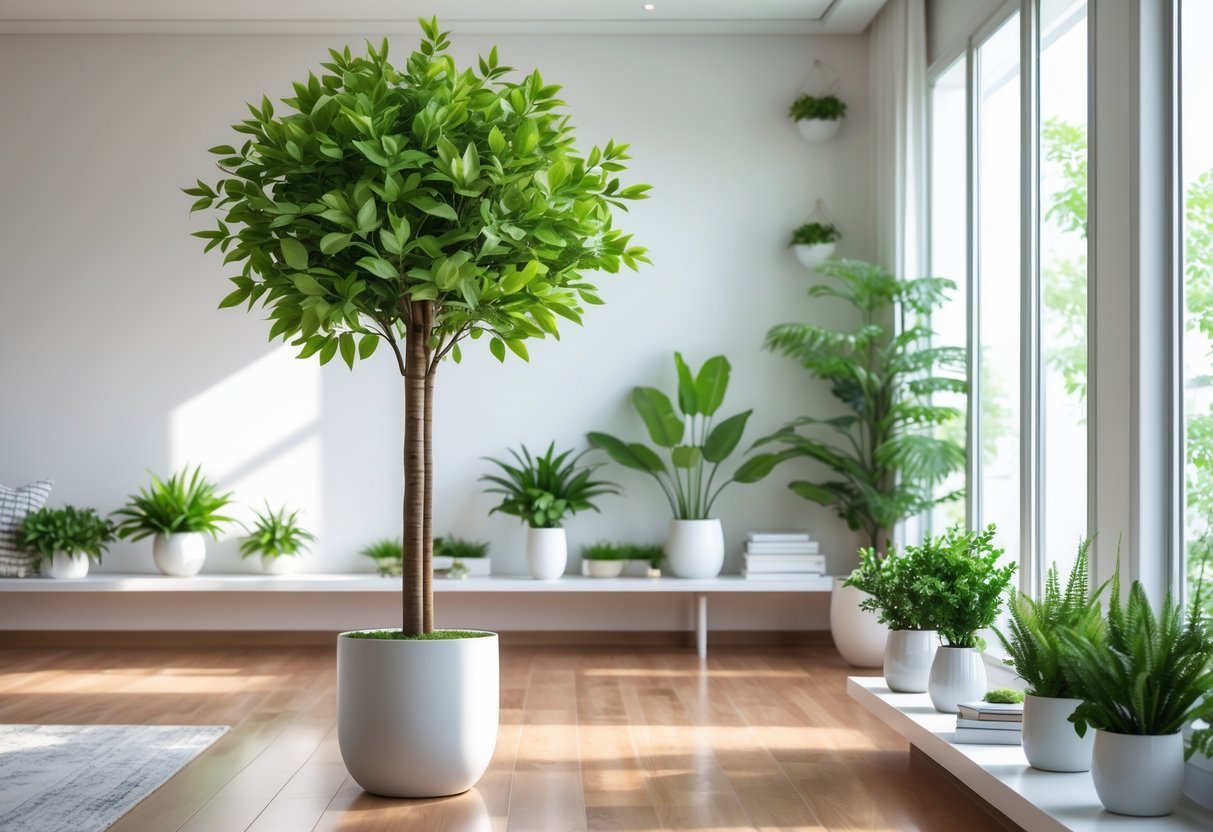
You can add lush, maintenance-free greenery to any room and get the look of a living tree without the upkeep. I’ll show you which indoor artificial trees look most realistic, how to place them for maximum impact, and what to check so you buy a durable, low-fuss piece that suits your space.
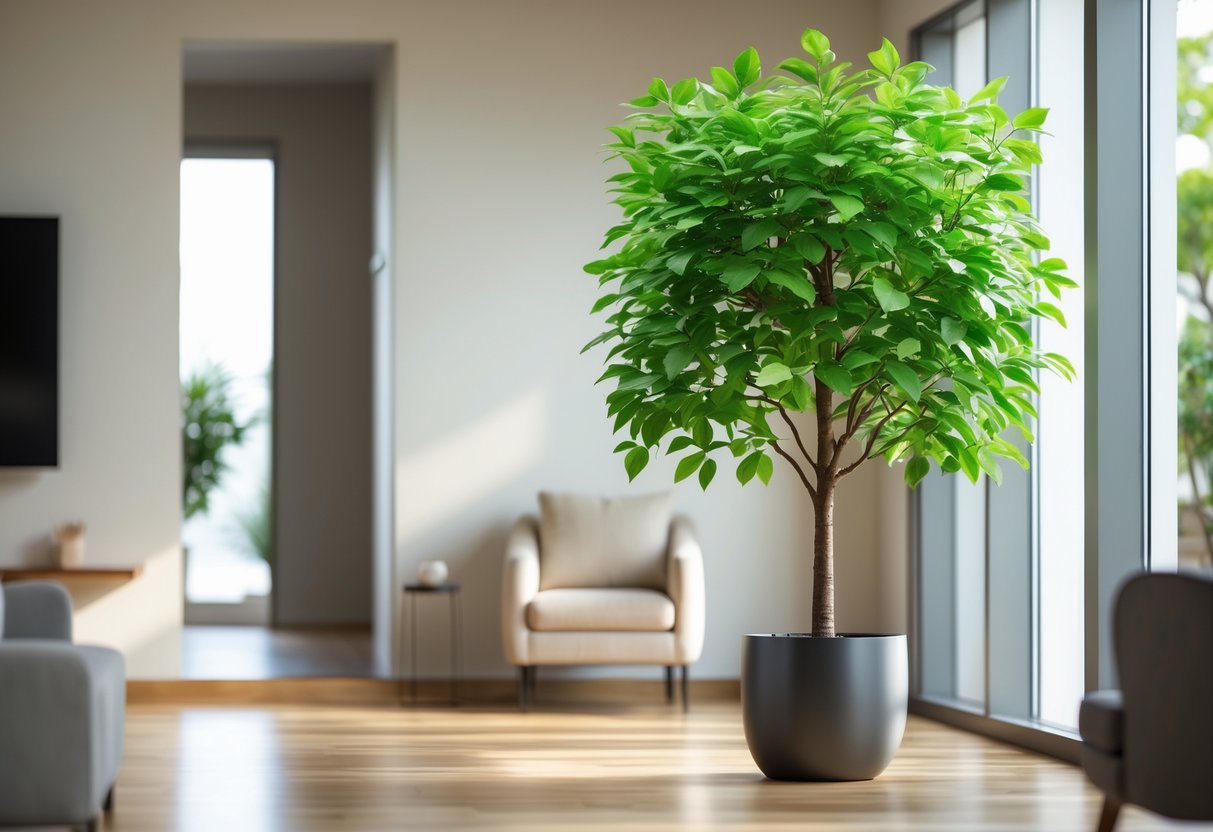
Choose a faux tree that matches your light, scale and style and you’ll transform a corner into a design feature instantly. I’ll walk through realistic types, styling tips and practical buying checkpoints so you can pick with confidence and avoid costly returns.
Key Takeaways
- Understand common faux tree styles and which fit different rooms.
- Learn simple placement and styling moves that make artificial trees look natural.
- Check materials, UV rating and pot stability to ensure long-lasting value.
Types of Indoor Artificial Trees
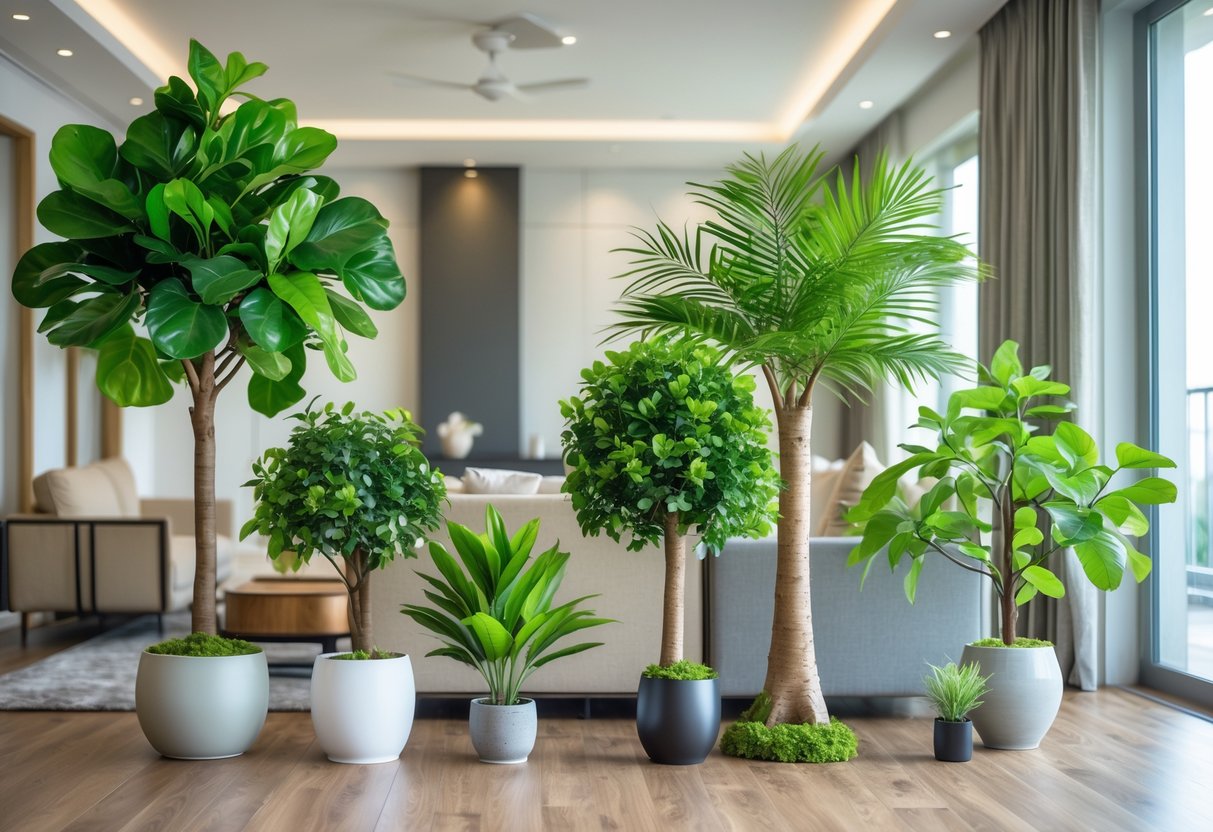
I look for realism, scale and maintenance needs when choosing an indoor artificial tree. The right pick depends on how much floor space I have, the light in the room, and whether I want a sculptural focal point or subtle greenery.
Lifelike Artificial Trees
Lifelike artificial trees use mixed materials and detailed construction to mimic real growth patterns. I prefer models with individually wired branches, multi-tone leaves and textured trunks because they hold shape and don’t look flat from different angles. High-end versions use silk or high-grade PE leaves that resist fading and feel more natural to the touch.
Placement matters for realism. I position taller faux trees in corners or beside sofas to balance room scale, and smaller potted trees on consoles or in bathrooms to add height without crowding. Look for trees with removable leaves or modular trunks so I can adjust density and repair any damage.
Popular Species: Fiddle Leaf Fig, Olive, Rubber Tree
The fiddle leaf fig (Ficus lyrata) works as a statement piece with large, broad leaves and a single or multi-stem trunk. I choose fiddle-likes to anchor living rooms or create a faux focal wall because their oversize leaves read well on camera and in person.
Artificial olive trees bring a Mediterranean look with narrow grey-green leaves and small fruit clusters. I use olive trees in sunrooms and entryways; their slender profile fits narrow spaces and pairs well with rattan or timber décor.
Rubber tree (Ficus elastica) replicas have glossy, deep-green leaves and a dense canopy. I place faux rubber trees where I want a compact, lush appearance—near bookshelves or behind armchairs. For all three species, check base stability and realistic leaf veining when buying.
Faux Trees vs. Real Trees
I weigh maintenance and longevity first. Faux trees never need watering, pruning or specific light levels, so they work in low-light rooms or holiday rentals where I can’t care for live plants. They also won’t drop leaves or attract pests.
Real trees offer air-quality benefits and seasonal growth changes that faux versions cannot replicate. If I want living benefits, I choose a real fiddle leaf fig or rubber tree and accept watering and humidity requirements. If I prioritise consistent aesthetics and minimal upkeep, a high-quality artificial tree gives predictable shape and colour year-round.
Artificial Plants and Greenery Options
I focus on practical choices that deliver realistic texture, long-term value and low maintenance. Expect options that suit corners, high shelves and hanging displays, plus fruiting or flowering styles for colour.
Artificial Plants for Indoors
I look for scale and leaf detail first. Choose a tree or large plant with a sturdy trunk, weighted pot and UV-stable foliage so it won’t fade in sunlit rooms. Popular indoor styles include fiddle-leaf figs, rubber trees and kentia palms; each offers different heights and leaf widths to match living rooms, hallways or office reception areas.
Placement matters: position taller artificial trees near furniture with a 30–50 cm clearance so leaves don’t brush seating. I recommend using a pebble or moss top layer in the pot to hide fixings and add realism. For easy cleaning, pick wipeable leaves and avoid fragile wire stems if the tree will be moved often.
Artificial Hanging Plants
I prefer hanging plants to add vertical interest without taking floor space. Look for robust hanging baskets, secure hooks and chains rated to the pot weight. Trailing pothos and string-of-pearls styles work well on shelves, in bathrooms or above kitchen islands.
Match the drop length to the space—shorter 30–50 cm trails suit shelves, while 60–90 cm drops create drama in double-height rooms. Choose UV-resistant materials for outdoor-exposed eaves or sunrooms. For realistic movement, select stems with varied lengths and a mix of matte and slightly glossy leaves so light plays naturally across the foliage.
Fruit and Flowering Varieties
I use fruiting and flowering artificial plants to add colour without seasonal upkeep. Faux citrus trees, olive trees with small fruit, or magnolia branches provide focal points in dining areas and entrances. Flowering varieties like peonies, hydrangeas or native Australian blossoms can be arranged singly or in mixed bunches.
Inspect the flower heads for layered petals and natural-looking centres; this detail separates convincing pieces from toy-like versions. If you want scent, use a gentle diffuser nearby instead of perfumed fabrics on the fake flowers. For commercial settings, choose hardwearing stems and secure pot fixings to withstand frequent handling.
Benefits of Indoor Artificial Trees
I value indoor pieces that add visual warmth without extra work. These artificial trees deliver reliable greenery, flexible placement, and predictable upkeep so I can focus on design and comfort.
Low Maintenance and Durability
I don’t water, prune, or fertilise artificial trees, which saves time and removes the risk of overwatering or root rot that comes with real plants. High-quality lifelike artificial trees use UV-stable plastics and metal or resin trunks that resist fading and structural wear, so a well-made piece stays presentable for years.
Cleaning is simple: a quarterly dusting or a wipe with a damp cloth keeps leaves looking fresh. If a branch bends out of shape, I can usually reshape it or replace a single branch rather than the whole tree. For commercial or high-traffic spaces, that durability translates into lower long-term replacement and labour costs.
Allergy-Free and Child-Friendly
Artificial plants remove pollen and mould concerns associated with live plants, which matters if anyone in my household has hay fever or mould sensitivities. I can place artificial trees in bedrooms, play areas, or near HVAC vents without spreading allergens.
They also work well around children. There’s no need to worry about toxic soil, pesticides or spilled water creating slip hazards. I still secure taller artificial trees to a weighted base or a wall anchor to prevent tipping, and I choose sturdy leaves and branches to withstand rough play.
Year-Round Greenery
I get a consistent aesthetic every season: the same full canopy and colour no matter the light levels or humidity. This reliability helps when I design interiors with a fixed palette or when a client needs a permanent green feature in low-light corridors.
Artificial trees come in many species and sizes, from ficus-style trees to oversized indoor palms, allowing me to match scale and style precisely. If I want a focal point, I select a large lifelike artificial tree; for subtle texture, I use a smaller artificial plant. I can reposition them instantly to refresh a room or respond to changing layouts.
Styling and Placement Ideas
I focus on where an artificial tree will have the most impact and how to style it so it looks intentional and natural in the room.
Living Room and Entryway Inspiration
I place a large fake tree, like a fiddle tree, in an empty corner to anchor seating and add height without crowding the floor. Match the pot size to the tree’s height — a 6–8 ft tree usually needs a wide, heavy base to stop it toppling.
I use layered lighting: a floor lamp behind the leaves or string lights woven through branches gives depth at night. Keep nearby furniture low so the tree reads as a vertical feature rather than competing with sofas or console tables.
For entryways, I position an artificial tree next to a coatstand or bench to create a welcoming vignette. Add a tray for keys or a small mirror above the bench to balance the composition. Choose leaf colour and scale to complement your palette — deep green for contrast, pale olive for a softer Mediterranean look.
I avoid placing faux trees where direct heat from heaters or drafts will flare their glue or fabric finishes.
Home Office and Workspace Styling
I size the tree to fit behind or beside my desk so it provides visual relief without blocking light or shelves. A slim artificial tree works best behind a chair; a fuller fake tree suits a side corner where it won’t interfere with movement.
I keep the pot neutral and add a simple rug underneath to define the workspace. A fiddle tree with glossy leaves brings a calming, organic feel while staying low-maintenance.
I use the tree to frame a camera shot for video calls, positioning it slightly off-centre for a professional backdrop. If storage is tight, I choose a lightweight, easy-to-move option so I can relocate it for meetings or rearrangement. I also add minimal accessories — one framed print or a desk lamp — to avoid visual clutter.
Small Spaces and Tabletop Trees
I pick tabletop artificial trees for apartments and small nooks: bonsai-style, miniature ficus, or a compact artificial olive tree all work well. Place them on consoles, narrow shelves, or kitchen islands where they add texture without using floor space.
I match pot scale to the surface; a heavy ceramic pot prevents tipping on narrow furniture. For very small areas, I use a slim base and trim the lower branches so the tree doesn’t block pathways or cabinets.
I swap seasonal decorations — a few baubles or a mini string of LED lights — to refresh the look without changing the tree. When buying, I check branch attachment and leaf density to ensure the fake tree appears realistic at eye level and holds decorations without drooping.
How to Choose the Right Artificial Tree
I focus on practical decisions you can make quickly: pick the right height and spread for the room, choose a style that complements existing furniture, and check materials for durability and realism.
Selecting the Correct Size and Style
I measure ceiling height and available floor space before I look at trees. For ceilings under 2.4 m I choose trees 1.8–2.1 m tall to keep proportions balanced; for open-plan living with 2.7 m ceilings I consider 2.4–3.0 m specimens. I always allow 30–50 cm clearance for branches and light fixtures so the tree does not look cramped.
I match pot diameter to the tree’s canopy — a wide base stabilises taller faux trees and prevents tipping. If the tree sits in a corridor I prefer narrower trunks and slimmer canopies. For statement corners I pick fuller palms or ficus; for subtle greenery I use slender olive or bamboo styles.
Matching Décor and Aesthetic Preferences
I think about colour temperature and scale to ensure the tree feels intentional. Cool-toned, grey-green foliage suits minimalist, Scandi or coastal palettes; warmer, olive greens work well with timber furniture and Mediterranean styling. Match leaf size to room scale: large fronds read well in high-ceiling rooms, while small-leaf species suit compact or detailed interiors.
I coordinate the pot or planter finish with existing metals and woods. Matte ceramic or rattan pots soften a room, while sleek black or brass planters lend a contemporary edge. If I want seasonal flexibility, I choose a neutral trunk and change decorative pots or wraps.
Understanding Materials and Quality
I inspect foliage for stitching, wire visibility and colour variation to judge realism. High-quality faux trees use UV-stable polyethylene (PE) leaves with printed or moulded veins; these resist fading and look lifelike. Cheaper PVC foliage often appears shiny and repeats identical leaf patterns.
I check the trunk and stem construction for stability. Fibre-reinforced trunks or braided stems give a natural texture and last longer than thin, painted plastic. For outdoor-exposed interiors or sunlit rooms I choose trees explicitly rated for UV resistance. When possible I look for removable leaves and refillable bases so I can reposition branches and add ballast or potting material.
For provenance and options on species and finishes I often consult buying guides such as this artificial tree overview from Oakco (how to choose the right artificial tree).
Frequently Asked Questions
I cover specific care routines, recommended tree types, placement in low light, safe cleaning methods, eco-friendly choices, and realism tips so you can keep a faux indoor tree looking its best. Expect clear steps for dusting, material choices, and styling tricks.
How do I care for my indoor faux plants to keep them looking fresh?
I dust leaves weekly with a soft brush or microfibre cloth to prevent dulling and buildup.
Every few months I give larger trees a gentle vacuum using a brush attachment to remove trapped dust.
I avoid direct heat sources like radiators to prevent warping of plastic or silk parts.
I rotate the tree occasionally so all sides get even light and less uneven fading.
What are the best types of artificial trees for indoor decoration?
I favour Ficus, rubber plant (Ficus elastica), and ficus lyrata styles for living-room scale and natural leaf shapes.
For tall corners, artificial fiddle-leaf fig and kentia palm look proportional and provide height without needing soil.
If I need a low-maintenance office option, I choose compact boxwood or olive trees in realistic pots.
Look for trees with wired branches and weighted bases so they hold shape and stand securely.
Can artificial indoor trees be used in areas with low light?
Yes — artificial trees do not need sunlight, so they suit windowless corridors and dim living spaces.
I still place them away from extreme humidity to protect glued joints and any fabric leaves.
For low-light areas where realism matters, I select species that naturally grow in understory conditions, such as palms or ferns, so proportions and leaf textures match the setting.
Consider a small LED grow-style lamp only if you want to subtly mimic natural light without risking heat damage.
What are the safest ways to clean and maintain artificial indoor trees?
I start by checking the manufacturer’s care tag for material-specific instructions.
For plastic or silk leaves I use a microfibre cloth or a soft brush; for heavily soiled parts I mix mild dish soap with water and wipe gently.
I avoid harsh chemicals, bleach or abrasive pads that can strip colour or fray fabric leaves.
For metal or resin trunks I use a damp cloth and dry immediately to prevent corrosion or staining.
Are there eco-friendly options for artificial trees meant for indoors?
I look for manufacturers using recycled plastics, recyclable packaging, or plant-based fibres to reduce environmental impact.
Some brands offer replaceable foliage kits so I can refresh the tree without discarding the whole product.
Buying higher-quality, longer-lasting trees reduces waste compared with cheap, single-season items.
If disposal is needed, I separate recyclable metal bases and non-recyclable parts where local facilities allow.
How can I make my artificial indoor tree look more realistic?
I position the tree with asymmetry in branches and slightly bend wired stems to mimic natural growth.
I add a top layer of real or realistic faux mulch and use a decorative, weighted pot to hide the base and stabilise the trunk.
I combine in-scale companion plants and varied pot heights to create depth and reduce the “single-object” look.
Finally, I gently mist leaves with a dust-repellent spray designed for faux foliage to bring back a soft, natural sheen.