
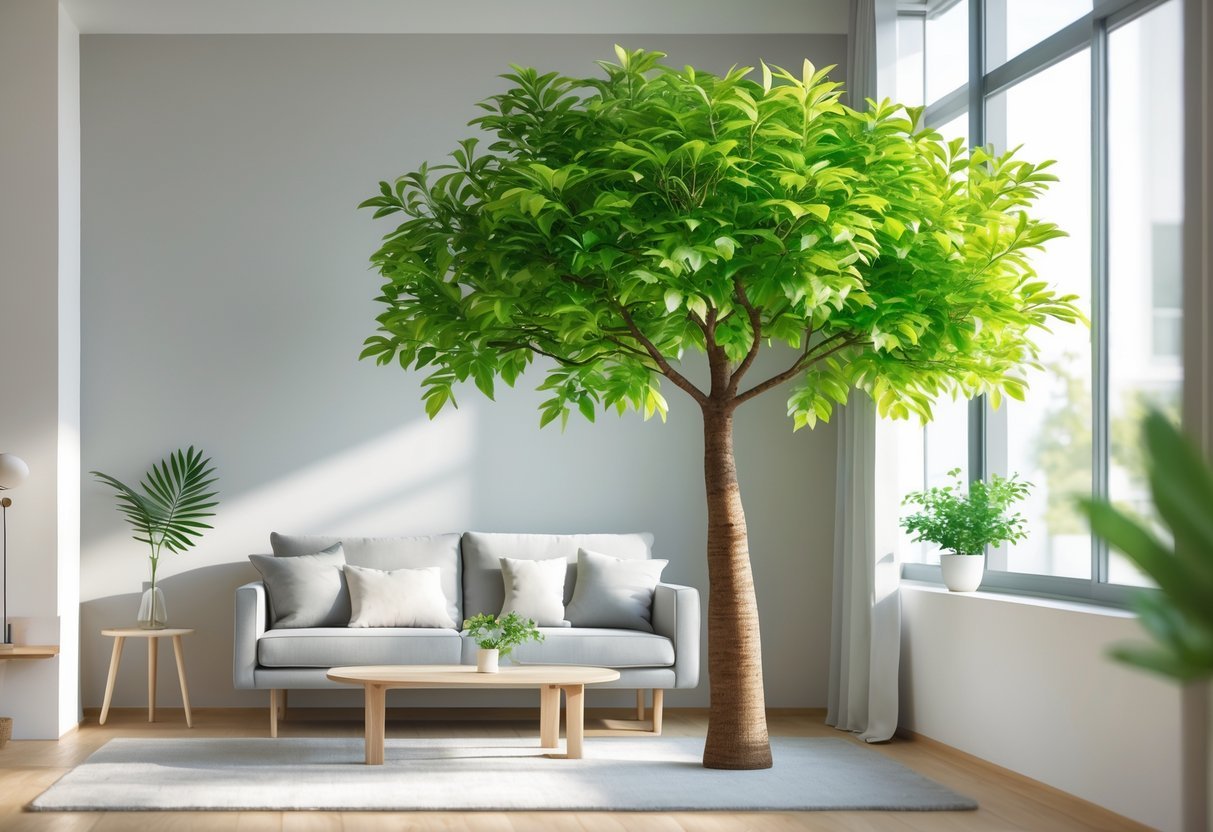
Creating a green, inviting home doesn’t have to involve daily watering schedules or worrying about plant care. I’ve discovered that artificial trees offer low-maintenance greenery that brings natural beauty indoors without the hassle of traditional houseplants.
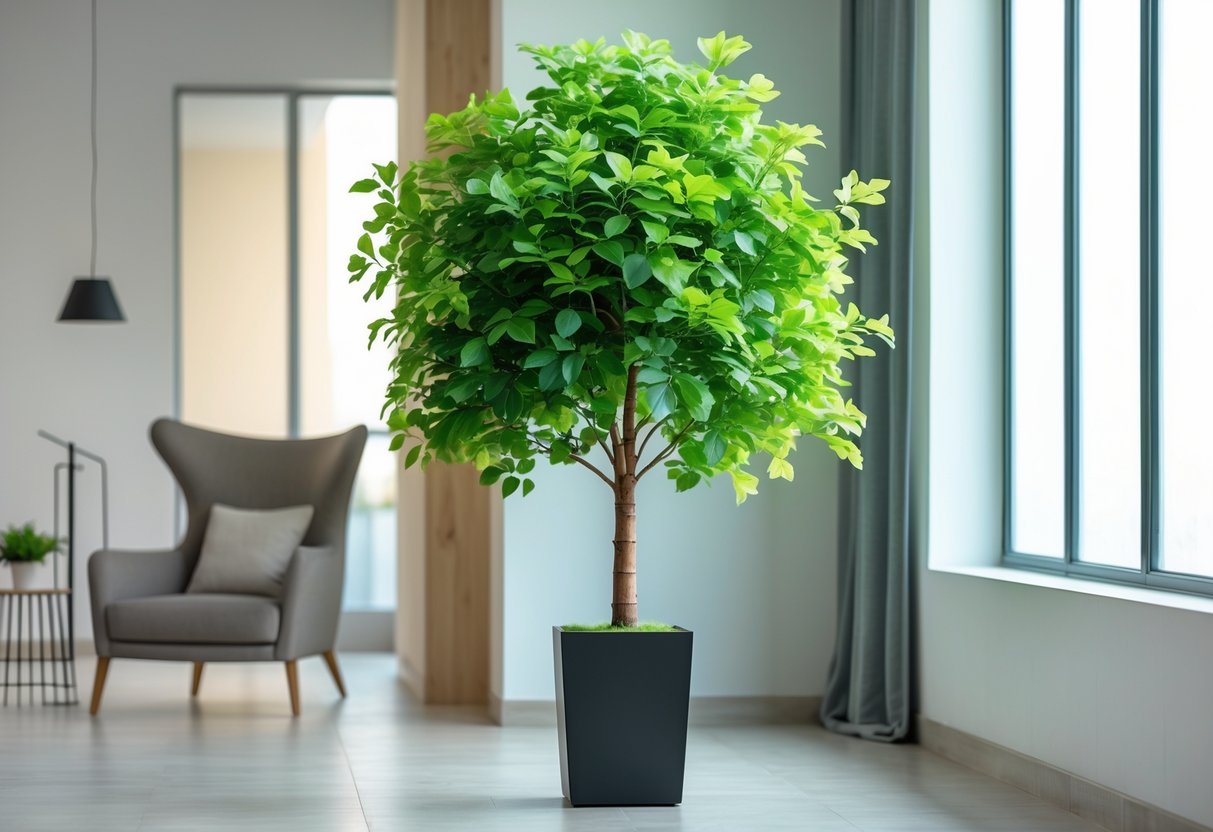
Indoor artificial trees provide year-round beauty with zero maintenance whilst offering the same visual appeal as living plants. Whether you’re dealing with low light conditions, frequent travel, or simply want to avoid the responsibility of plant care, artificial trees solve these common decorating challenges.
I find that today’s artificial trees look remarkably realistic, with many varieties featuring natural wood trunks and lifelike foliage that can fool even the closest inspection. From artificial fiddle leaf trees to bamboo and palm varieties, there’s an option to suit every decorating style and space requirement.
Key Takeaways
- Artificial indoor trees require no watering, pruning, or special lighting conditions
- High-quality faux trees provide realistic appearance with natural textures and colours
- Various styles including fiddle leaf, olive, and palm trees suit different decorating preferences
Overview of Artificial Trees for Indoors
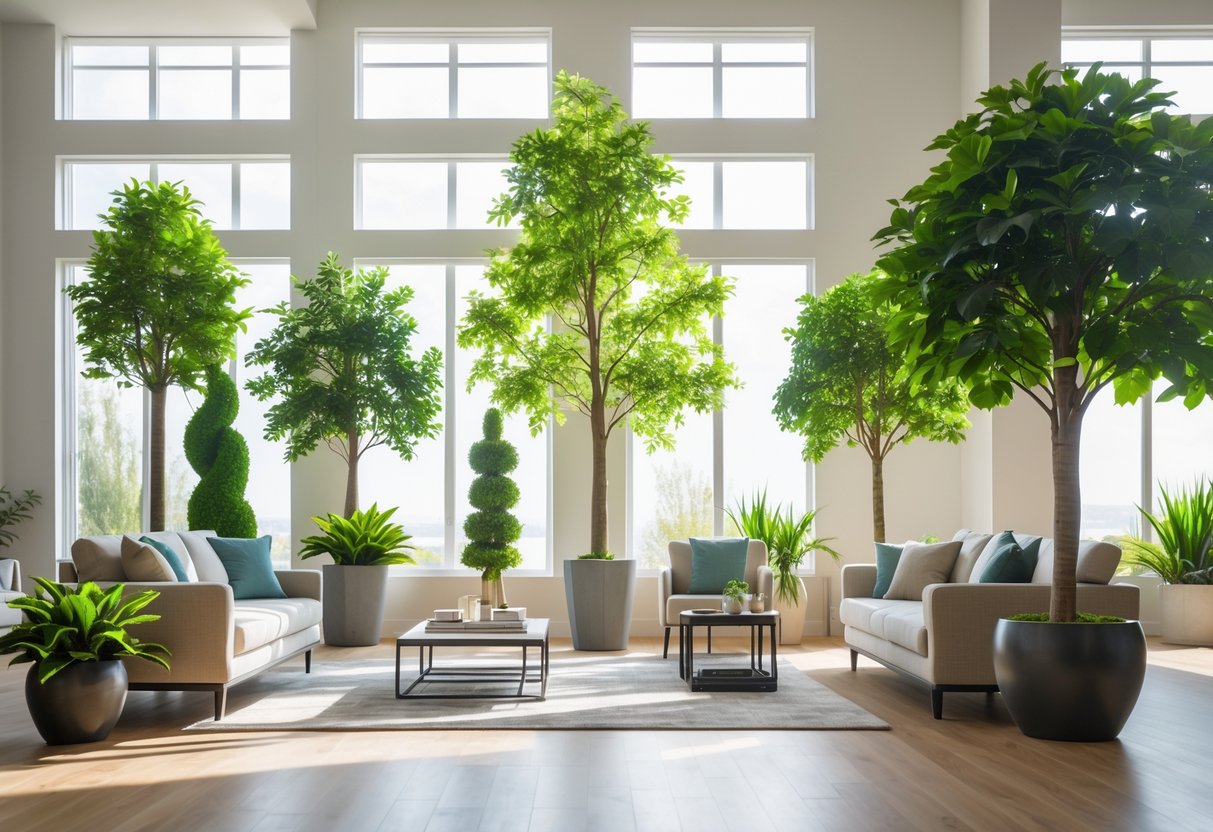
Indoor artificial trees have transformed from obviously fake decorations into surprisingly realistic alternatives that bring nature’s beauty into homes without maintenance requirements. These low-maintenance greenery solutions offer year-round appeal through diverse styles, sizes, and materials designed specifically for interior spaces.
What Makes Artificial Trees Suitable for Indoor Spaces
I find that artificial trees excel indoors because they eliminate the common challenges of live plants. They require no watering, pruning, or specific lighting conditions, making them perfect for dark corners or rooms with limited natural light.
Durability stands out as a key advantage. Quality artificial trees maintain their appearance for years without seasonal changes or leaf drop that can create mess indoors. They’re also safe for homes with pets or small children, as there’s no soil, fertilisers, or potentially toxic plant materials involved.
The stability factor is crucial for indoor placement. Modern artificial trees feature cement-filled pots that provide secure anchoring, preventing tipping in high-traffic areas. This makes them suitable for offices, waiting rooms, and homes where safety is paramount.
Space flexibility allows me to place these trees anywhere without considering sunlight, humidity, or temperature requirements. They work equally well in bathrooms, basements, or air-conditioned offices where live plants might struggle.
Types and Categories of Indoor Artificial Trees
I’ve discovered that indoor artificial trees fall into several distinct categories based on their design and intended use. Tropical varieties include palm trees, banana plants, and bird of paradise, which create exotic atmospheres in modern homes.
Traditional options encompass olive trees, eucalyptus, and ficus varieties that suit classic interior designs. The 6ft artificial olive tree with its 1,296 silk fabric leaves represents the high-quality end of this category.
Size categories range significantly:
- Small trees (2-4 feet): Perfect for tabletops and shelves
- Medium trees (4-6 feet): Ideal for corner placement
- Large artificial trees (6+ feet): Create dramatic focal points
Material classifications include silk fabric leaves for premium appearance, plastic options for durability, and mixed materials that balance cost with realism. High-quality materials like silk and plastic ensure longevity and realistic appearance.
Popular Styles and Trends in Indoor Faux Trees
Current trends favour hyperrealistic designs that closely mimic natural growth patterns. I notice that manufacturers now include imperfections like slightly yellowed leaves or natural-looking bark textures that enhance authenticity.
Potted presentations have evolved beyond basic containers. Contemporary artificial trees come in cement pots, decorative ceramic planters, or woven baskets that complement interior design schemes. The pot choice significantly impacts the overall aesthetic.
Multi-trunk designs are gaining popularity as they create more natural, organic appearances compared to single-stem varieties. These designs work particularly well for larger indoor spaces requiring substantial visual impact.
Seasonal adaptability represents an emerging trend where artificial trees can be dressed with lights, ornaments, or seasonal decorations. This flexibility makes them year-round investments rather than static decorative elements.
The growing market for artificial plants reflects increasing demand for low-maintenance solutions that don’t compromise on visual appeal, driving innovation in materials and design techniques.
Benefits of Indoor Artificial Trees
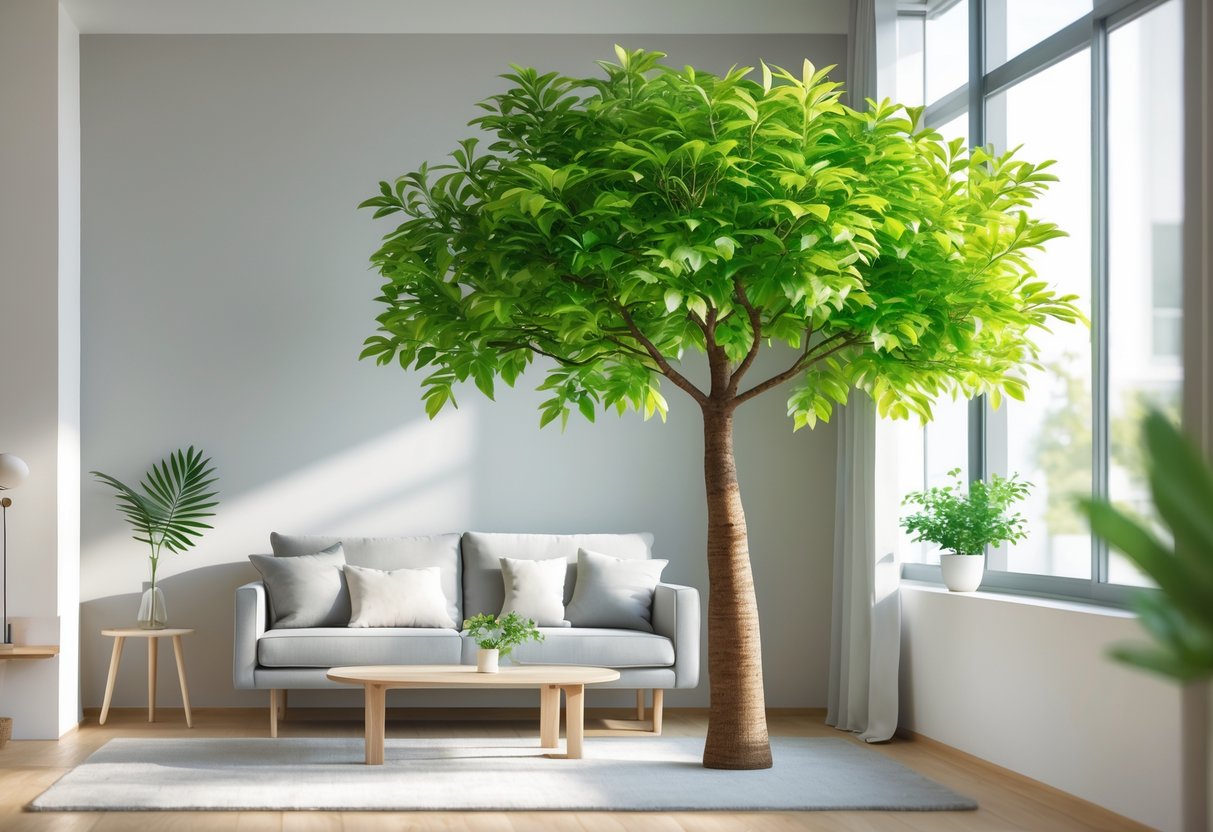
Artificial trees offer practical advantages that make them increasingly popular for indoor spaces. They require minimal upkeep, eliminate allergen concerns, and provide lasting value through their durable construction.
Low Maintenance and Convenience
I find that artificial trees require no watering, pruning, or specialised care, making them perfect for busy lifestyles. Unlike living plants, fake trees never need fertiliser, soil changes, or pest control treatments.
You won’t need to worry about leaf drop or seasonal changes with faux trees. They maintain their appearance year-round without any intervention from me.
Key maintenance benefits include:
- No watering schedules to remember
- Zero pruning or trimming required
- No soil mess or pot drainage issues
- Freedom to travel without plant care concerns
This convenience makes artificial indoor trees ideal for offices and commercial spaces where consistent maintenance might be challenging.
Allergy-Free Indoor Greening
Artificial trees provide the visual benefits of greenery without triggering allergic reactions. I appreciate that they don’t produce pollen, mould, or other allergens that living plants can harbour.
Fake plants are allergy-friendly alternatives that allow everyone to enjoy natural-looking décor. They’re particularly valuable in healthcare settings, schools, and homes with sensitive family members.
The absence of soil eliminates concerns about dust mites or fungal spores. This makes lifelike artificial trees suitable for people with respiratory conditions or plant allergies who still want to incorporate greenery into their spaces.
Long-Lasting Value and Durability
Quality artificial trees represent a one-time investment that pays dividends over years of use. I’ve found that high-quality artificial trees are made with non-toxic materials and can be reused, making them cost-effective long-term.
Modern faux trees resist fading and maintain their realistic appearance for years. They won’t die from neglect, overwatering, or environmental changes.
Durability advantages:
- UV-resistant materials prevent colour fading
- Sturdy construction withstands repositioning
- No replacement costs from plant death
- Minimal cleaning requirements maintain appearance
The initial cost often proves less expensive than repeatedly purchasing and replacing living plants over time.
Choosing the Right Indoor Artificial Tree
Finding the perfect artificial tree involves balancing your space requirements with quality materials and realistic appearance. Consider your room’s dimensions, lighting conditions, and existing décor whilst evaluating construction quality and visual authenticity.
Selecting the Best Tree for Your Space
I recommend matching your tree choice to your specific room and lifestyle needs. Artificial olive trees work brilliantly in Mediterranean-inspired spaces with their silvery foliage and elegant structure. For modern homes, I find artificial fiddle leaf figs create stunning focal points with their broad, glossy leaves.
Artificial palm trees suit tropical themes and add height to corners without overwhelming smaller rooms. Meanwhile, artificial ficus varieties offer versatility with their dense, green foliage that complements both traditional and contemporary settings.
Consider your lighting conditions carefully. Rooms with limited natural light benefit from trees with darker foliage that won’t appear washed out. Brighter spaces can handle lighter-coloured leaves without looking artificial.
Size, Proportion, and Placement Considerations
Large artificial trees require proper scaling to avoid overwhelming your space. I measure my ceiling height first, leaving at least 30cm clearance above the tree to maintain visual balance.
For placement, I consider these key factors:
- Corner positioning maximises floor space
- Natural light sources enhance realistic appearance
- Traffic flow around doorways and walkways
- Furniture proportions relative to tree height
Rooms under 3 metres suit trees between 1.2-1.8 metres tall. Higher ceilings accommodate trees up to 2.4 metres without appearing cramped.
I avoid placing large artificial trees indoor directly against walls, as this creates an unnatural appearance. Instead, I position them slightly forward to allow shadow play and dimensional depth.
Understanding Material Quality and Realism
Quality artificial trees feature UV-resistant materials that won’t fade over time. I look for silk or high-grade polyester leaves with natural colour variations rather than uniform green tones.
Premium trees include these realistic details:
- Natural bark texture on trunks and branches
- Varied leaf sizes and subtle colour differences
- Flexible stems that allow repositioning
- Weighted bases for stability
I examine leaf attachment points closely – quality artificial trees use secure connections that won’t loosen with handling. Wire-reinforced branches maintain their shape whilst allowing realistic positioning.
The most convincing artificial trees combine multiple materials – fabric leaves, realistic bark wrapping, and natural-looking soil or moss at the base. I avoid trees with obviously plastic components or overly shiny finishes that scream “artificial” from across the room.
Popular Indoor Artificial Tree Varieties
Modern artificial trees indoor come in numerous realistic varieties that perfectly mimic their living counterparts. From Mediterranean-inspired olive trees to tropical palms, these faux options deliver stunning visual appeal without the maintenance requirements.
The Appeal of Artificial Olive Trees
I find artificial olive trees amongst the most sophisticated choices for indoor spaces. Their silvery-green foliage and gnarled branches create an instant Mediterranean atmosphere that works beautifully in contemporary homes.
Key features of quality fake olive trees:
- Realistic bark texturing with natural imperfections
- Multi-toned leaves in varying shades of green and silver
- Sturdy weighted bases for stability
- UV-resistant materials for long-lasting colour
Artificial olive trees typically range from 1.2 to 2.1 metres in height. I recommend placing them near windows or in corners where their elegant silhouette can be appreciated. The muted colour palette complements neutral décor schemes whilst adding organic texture to minimalist interiors.
These trees require minimal upkeep beyond occasional dusting. Their drought-tolerant appearance makes them particularly convincing since real olive trees naturally have that slightly weathered look.
Fiddle Leaf Fig and Faux Fiddle Leaf Fig Choices
The fiddle leaf fig remains one of my favourite statement pieces for modern interiors. Artificial fiddle leaf fig varieties have improved dramatically, offering the iconic broad leaves without the notorious difficulty of caring for the real plant.
What to look for in faux fiddle leaf figs:
- Large, violin-shaped leaves with realistic veining
- Natural colour variations including subtle brown spots
- Thick, sturdy trunks with authentic bark patterns
- Adjustable branches for custom shaping
I particularly appreciate how artificial versions eliminate the common issues with live fiddle leaf figs. No more dropped leaves from stress or brown edges from improper watering. The best artificial trees in this category feature hand-painted details that capture the plant’s natural beauty.
These trees work exceptionally well in living rooms and bedrooms where their dramatic foliage creates instant visual impact.
Tropical Looks: Indoor Artificial Palm Trees
Artificial palm trees bring instant holiday vibes to any interior space. I’ve noticed these popular artificial trees for indoors have become increasingly realistic with better frond materials and natural-looking trunk details.
Popular palm varieties include:
- Kentia palms – elegant arching fronds
- Areca palms – full, bushy appearance
- Parlour palms – compact size for smaller spaces
- Phoenix palms – dramatic, architectural shape
The key advantage of artificial palm trees is their ability to thrive in low-light areas where real palms would struggle. I find them particularly effective in bathrooms, bedrooms, or interior corners lacking natural light.
Quality artificial palms feature flexible fronds that can be adjusted and individual leaves that move naturally. The trunks should have realistic texture and colouring that matches the specific palm variety.
Other Stylish Indoor Faux Tree Options
Beyond these popular choices, I’ve discovered several other indoor fake trees that create stunning focal points. Artificial ficus trees offer lush green canopies perfect for filling empty corners.
Additional varieties worth considering:
- Rubber trees – glossy, broad leaves with burgundy undersides
- Money trees – braided trunks with distinctive five-leaflet arrangement
- Eucalyptus trees – aromatic-looking silvery foliage
- Birch trees – striking white bark for contemporary spaces
These alternatives provide flexibility for different décor styles and room sizes. I particularly recommend artificial ficus trees for their full, dense appearance that creates privacy screens or room dividers.
The beauty of modern artificial trees lies in their incredible realism and variety, allowing you to achieve any aesthetic vision without ongoing plant care concerns.
Styling and Displaying Artificial Trees Indoors
The key to successful artificial tree styling lies in choosing the right planter, strategic placement that mimics natural growing conditions, and thoughtfully combining faux elements with live plants to create authentic-looking indoor gardens.
Pairing with Decorative Planters
I’ve found that selecting the right decorative planter makes an enormous difference in how realistic my artificial trees for home appear. The planter should complement both the tree’s size and your room’s aesthetic.
Size Guidelines:
- Small trees (1-1.2m): 30-40cm diameter planters
- Medium trees (1.5-1.8m): 45-55cm diameter planters
- Large trees (2m+): 60cm+ diameter planters
Natural materials like rattan, ceramic, or timber work brilliantly with most artificial trees. I prefer planters that are slightly wider than they are tall, as this creates better visual balance.
Adding decorative elements around the base enhances realism significantly. I use river stones, bark mulch, or preserved moss to cover any visible artificial roots or stems. These materials also add texture and make the display feel more authentic.
Enhancing Realism Through Placement
Strategic placement transforms how convincing your artificial ficus or other faux trees appear in your space. I’ve learnt that tall artificial trees work best in corners where they can provide structure without overwhelming the room.
Natural lighting plays a crucial role in realism. I position my trees near windows where they’d naturally thrive, but avoid direct harsh sunlight that might fade the foliage over time.
Ideal Placement Spots:
- Living room corners – adds height and fills empty spaces
- Behind furniture – creates layered depth
- Entryway areas – provides welcoming greenery
- Next to staircases – utilises vertical space effectively
I also consider the tree’s natural growth pattern when placing it. Artificial ficus trees, for example, should have space around their canopy to showcase their distinctive branching structure.
Blending Faux and Real Plants in Interiors
Mixing artificial trees with live plants creates the most convincing indoor garden displays. I start with large artificial trees as anchor pieces and surround them with smaller real plants that are easy to maintain.
This approach gives me the dramatic impact of big trees without the challenge of keeping large specimens healthy indoors. I choose live plants with similar leaf textures or colours to create cohesion.
Effective Combinations:
- Artificial olive tree + real succulents
- Faux fiddle leaf fig + live pothos
- Artificial palm + real snake plants
The key is varying heights and textures whilst maintaining a consistent colour palette. I group plants in odd numbers and ensure each has adequate space to be appreciated individually.
Real plants also help mask any artificial elements that might look less convincing up close, creating a seamless transition between faux and live greenery throughout my home.
Care and Maintenance Tips for Indoor Artificial Trees
I’ll walk you through the essential steps to keep your artificial trees looking fresh and vibrant year-round. Regular dusting, proper shaping techniques, and strategic placement tricks will help maintain that premium appearance you invested in.
Routine Cleaning for Lasting Beauty
I recommend dusting your artificial tree every two weeks using a soft microfibre cloth or feather duster. For deeper cleaning, I use a spray bottle filled with water and a few drops of mild dish soap to gently mist the foliage.
Weekly maintenance tasks:
- Light dusting with a soft brush
- Checking for loose branches or decorations
- Rotating the tree to prevent uneven fading
For stubborn dust buildup, I take my tree outdoors and use a gentle garden hose setting to rinse the leaves. Allow the tree to dry completely before bringing it back inside to prevent mould growth.
Different materials require specific approaches. Silk or fabric leaves need gentle handling, whilst plastic varieties can withstand more vigorous cleaning. I always test cleaning methods on a hidden branch first.
Fluffing and Shaping Your Tree
I spend time reshaping my artificial trees every few months to maintain their natural appearance. Start from the bottom branches and work your way up, gently bending each branch outward and slightly downward to mimic natural growth patterns.
Essential shaping techniques:
- Separate clustered branches for fuller coverage
- Vary branch angles to avoid uniform patterns
- Pull inner branches forward to create depth
- Bend smaller twigs in different directions
Quality artificial trees respond well to regular fluffing because their wire armatures hold new positions effectively. I focus on creating an asymmetrical silhouette that mirrors how real trees grow naturally.
The key is patience – I never rush this process. Taking 15-20 minutes every few months ensures my tree maintains its lifelike appearance and doesn’t develop that flat, artificial look.
Making Artificial Trees Look More Realistic
I enhance realism by varying the positioning of my artificial trees throughout the year. Rotating them monthly prevents prolonged sun exposure from windows whilst creating the illusion of natural growth changes.
Adding complementary elements transforms the entire display. I place decorative pots with realistic soil or moss around the base, and sometimes incorporate a few real plants nearby to blur the boundaries.
Realistic enhancement tips:
- Use weighted bases that mimic real root systems
- Add subtle imperfections like slightly bent branches
- Incorporate natural materials like bark or stones
- Adjust lighting to eliminate harsh shadows
Lifelike artificial trees benefit from strategic placement away from direct sunlight, which can cause fading and make synthetic materials more obvious. I position mine in corners or areas with soft, indirect lighting that creates natural-looking shadows and depth.
Frequently Asked Questions
I’ve compiled the most common questions about indoor artificial trees to help you make informed decisions about purchasing, maintaining, and positioning these decorative elements. These answers address practical concerns ranging from selection criteria to safety considerations.
How do I choose the best artificial tree for my indoor space?
I recommend measuring your ceiling height first, then selecting a tree that leaves at least 30 centimetres of clearance above. Consider your room’s colour scheme and existing furniture when choosing between species like fiddle leaf figs for modern spaces or olive trees for Mediterranean styles.
The size of your space determines the appropriate tree scale. I suggest choosing trees between 1.2 to 1.8 metres for standard residential rooms, whilst larger commercial spaces can accommodate trees up to 2.4 metres tall.
Look for trees with realistic bark texture and varied leaf colours rather than uniform green shades. Quality artificial trees feature realistic materials that closely mimic natural foliage patterns.
What’s the most effective way to clean and maintain my faux indoor tree?
I clean my artificial trees monthly using a soft brush attachment on a vacuum cleaner set to low suction. This removes dust from leaves without damaging delicate branches or causing leaf detachment.
For deeper cleaning, I use a damp microfibre cloth with mild soap solution on individual leaves. Regular cleaning and maintenance keeps artificial trees looking fresh and prevents dust buildup that makes them appear obviously fake.
I avoid using harsh chemicals or placing trees near heating vents, which can cause fading and material degradation over time.
Can artificial indoor trees be used in areas without natural sunlight?
I place artificial trees in windowless rooms, basements, and interior hallways without any concerns about light requirements. Unlike living plants, synthetic trees don’t need photosynthesis to maintain their appearance.
However, I position them thoughtfully to avoid completely dark corners where they might look unnatural. Adding nearby table lamps or overhead lighting helps create the illusion that they’re thriving in their environment.
I’ve successfully used artificial trees in bathrooms, walk-in wardrobes, and home offices where real plants wouldn’t survive.
What safety considerations should I keep in mind when displaying a fake tree indoors?
I always check that artificial trees carry fire-resistant certification before purchasing, especially if I’m placing them near fireplaces or heating appliances. Many quality manufacturers treat their products with flame-retardant materials for safety.
I secure tall trees with weighted bases or wall anchors to prevent tipping, particularly in homes with children or pets. Tree stability becomes crucial in high-traffic areas where people might accidentally bump into branches.
I inspect trees regularly for loose parts or sharp wire ends that could pose injury risks. Quality control varies between manufacturers, so I address potential hazards immediately.
How do I ensure my synthetic indoor tree looks realistic?
I choose trees with multiple trunk variations and asymmetrical branching patterns rather than perfectly symmetrical shapes. Realistic artificial plants feature natural imperfections that mirror how real trees grow.
I add decorative elements like real river stones in the pot base or wrap fairy lights around branches to enhance authenticity. Mixing different leaf sizes and incorporating subtle brown or yellow leaves creates natural variation.
Positioning matters significantly for realism. I place trees where real plants would naturally thrive, avoiding obviously artificial placements like directly beside radiators.
Are there environmentally friendly options for indoor artificial trees?
I look for trees made from recycled plastics or sustainable materials when environmental impact concerns me. Some manufacturers now produce artificial trees using post-consumer recycled content and eco-friendly manufacturing processes.
Consider the longevity factor when evaluating environmental impact. I view high-quality artificial trees as environmentally responsible when they replace multiple real plants over many years, eliminating water consumption and transport emissions.
I donate or sell artificial trees when redecorating rather than discarding them. Their durability means they can serve multiple households throughout their lifespan, reducing overall environmental footprint.