
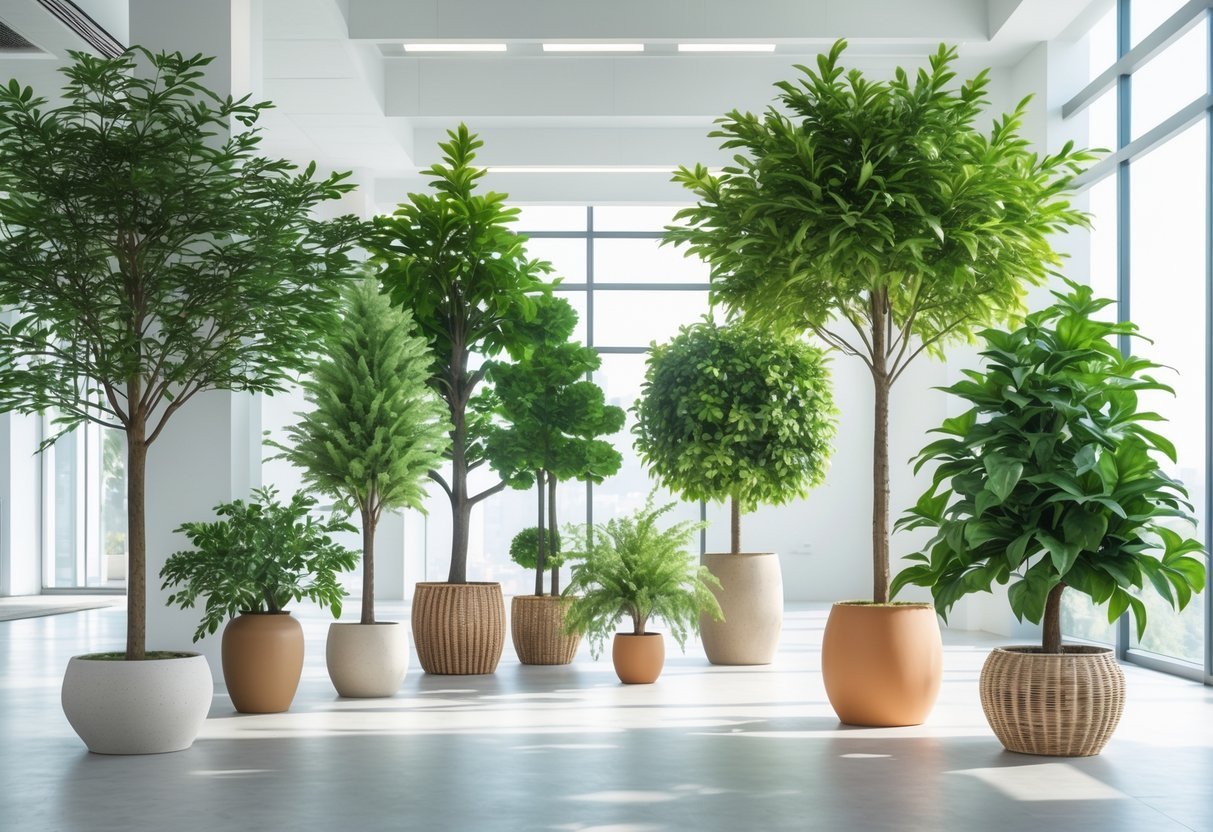
You want greenery that looks great without the fuss, and artificial potted trees give you that instant impact. I’ll show how a well-chosen faux tree lifts a corner, masks an awkward space, or creates a focal point — all with no watering, pruning or seasonal loss of leaves. You can get realistic scale and texture, durable materials for indoor use, and a low‑maintenance statement piece that stays consistent year-round.
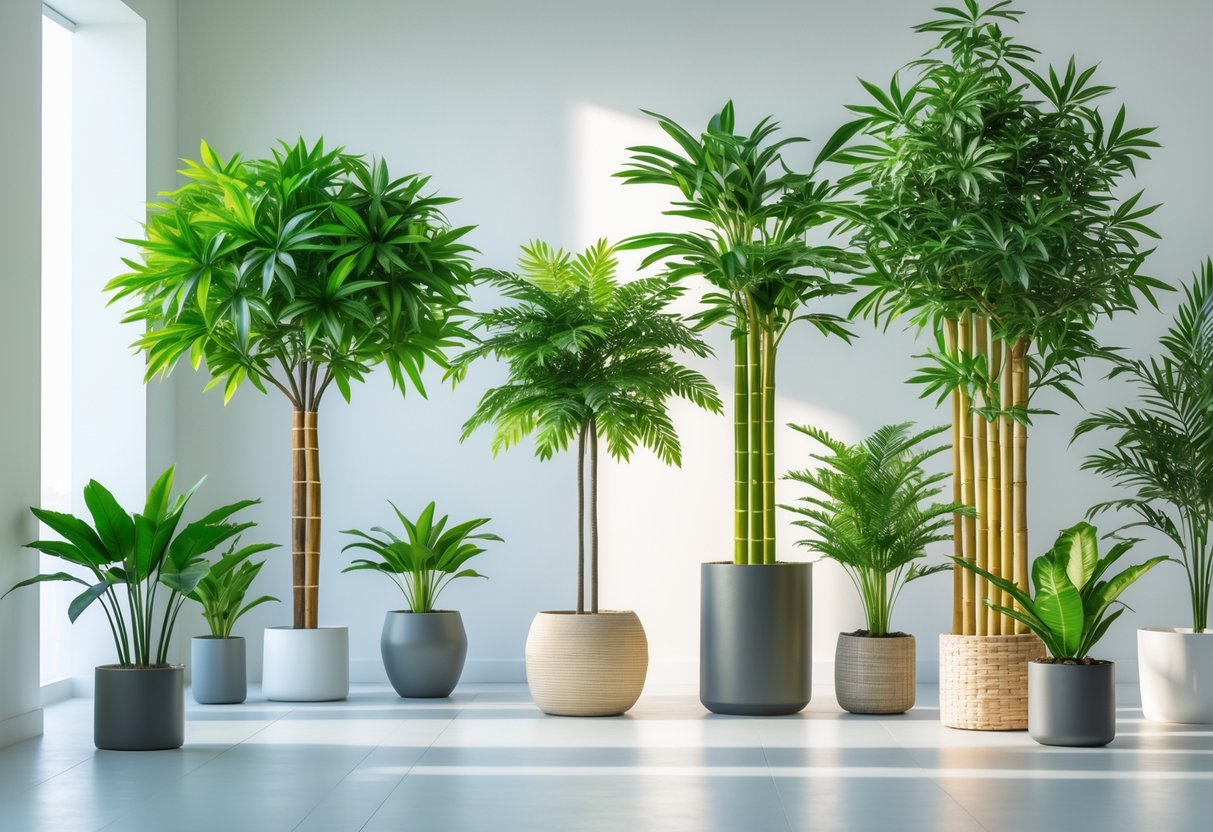
I’ll walk you through which species and sizes suit your space, how to match pots and placement, and simple upkeep tips that keep a lifelike look for years. Expect practical buying cues, styling ideas and care shortcuts so you spend less time worrying about plants and more time enjoying the result.
Key Takeaways
- Artificial potted trees deliver instant, low‑maintenance greenery for any space.
- Choose size, scale and finish to match your room and decor style.
- Simple cleaning and correct placement keep faux trees looking natural.
What Are Artificial Potted Trees?
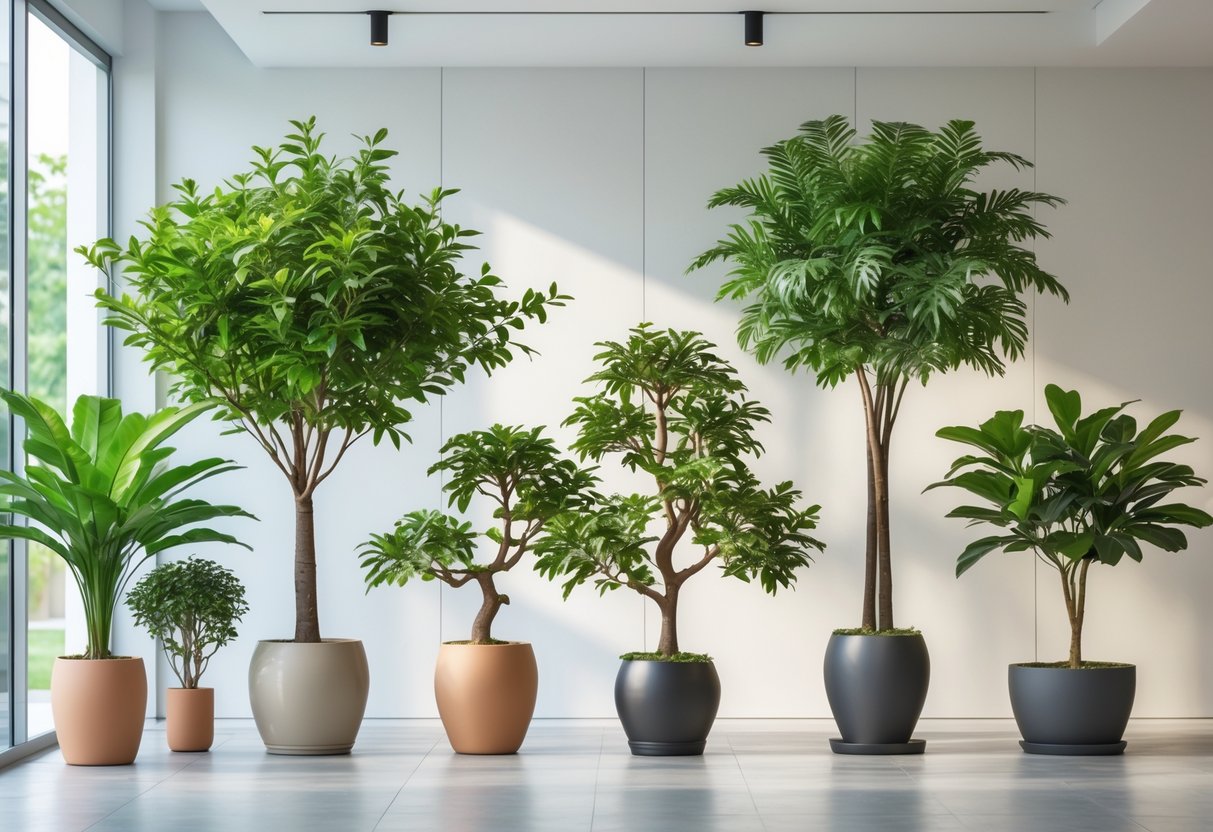
I use artificial potted trees to add greenery where real plants won’t thrive or where I want zero maintenance. They mimic the shape, texture and scale of living trees while staying stable in pots for indoor or sheltered outdoor display.
Materials and Construction
Most artificial potted trees combine a molded trunk, a root-filled pot base and synthetic foliage. Trunks are commonly made from PVC, polyurethane or treated natural wood; PVC offers flexibility, polyurethane provides realistic bark texture, and real wood lends authenticity. Foliage uses UV-stable polyethylene or silk blends for colour retention and realistic leaf veining.
Bases usually contain a weighted core—cement, sand or resin—to keep the tree upright. Some manufacturers secure branches with metal armatures so I can reposition fronds without damage. High-end pieces often include hand-painted leaves and layered branch construction to avoid the “flat” look.
Cleaning and minor repairs are straightforward: a soft brush or compressed air removes dust, and replacement branches or touch-up paint restore scuffed trunks. Choosing UV-treated materials matters for sun-exposed locations to prevent fading.
Types of Artificial Trees
I look for species and scale to suit the room. Common types include faux fiddle‑leaf figs, olive trees, palms, boxwoods and decorative ficuses. Sizes range from 60 cm desktop stems to large 3–4 m statement trees for foyers or retail displays.
Styling varies between single-trunk specimens, multi-stem clusters and topiary forms. Single-trunk fiddle‑leaf trees deliver a sculptural look; clustered palms create tropical groupings; boxwood spheres suit formal courtyards. Manufacturers sometimes offer modular trees with interchangeable branches so I can adjust fullness.
Potted finishes differ too: terracotta, ceramic, concrete and woven baskets change the aesthetic. I match pot style to interior design and consider weight for stability and transport.
How They Differ From Live Trees
Artificial potted trees require no watering, pruning or soil management, eliminating the risk of overwatering or pest infestations. They don’t grow, so I won’t need larger pots or repotting; their size stays constant unless I change branches.
They also lack ecological functions: no air filtration, humidity control or habitat for insects. However, they offer consistency—colour, leaf shape and posture remain the same year-round, and they tolerate low light and indoor heating without stress.
Maintenance is mostly cosmetic—dusting and occasional UV protection—rather than horticultural care. That predictability makes them practical for busy homes, commercial spaces and locations where live plants struggle.
Benefits of Artificial Potted Trees
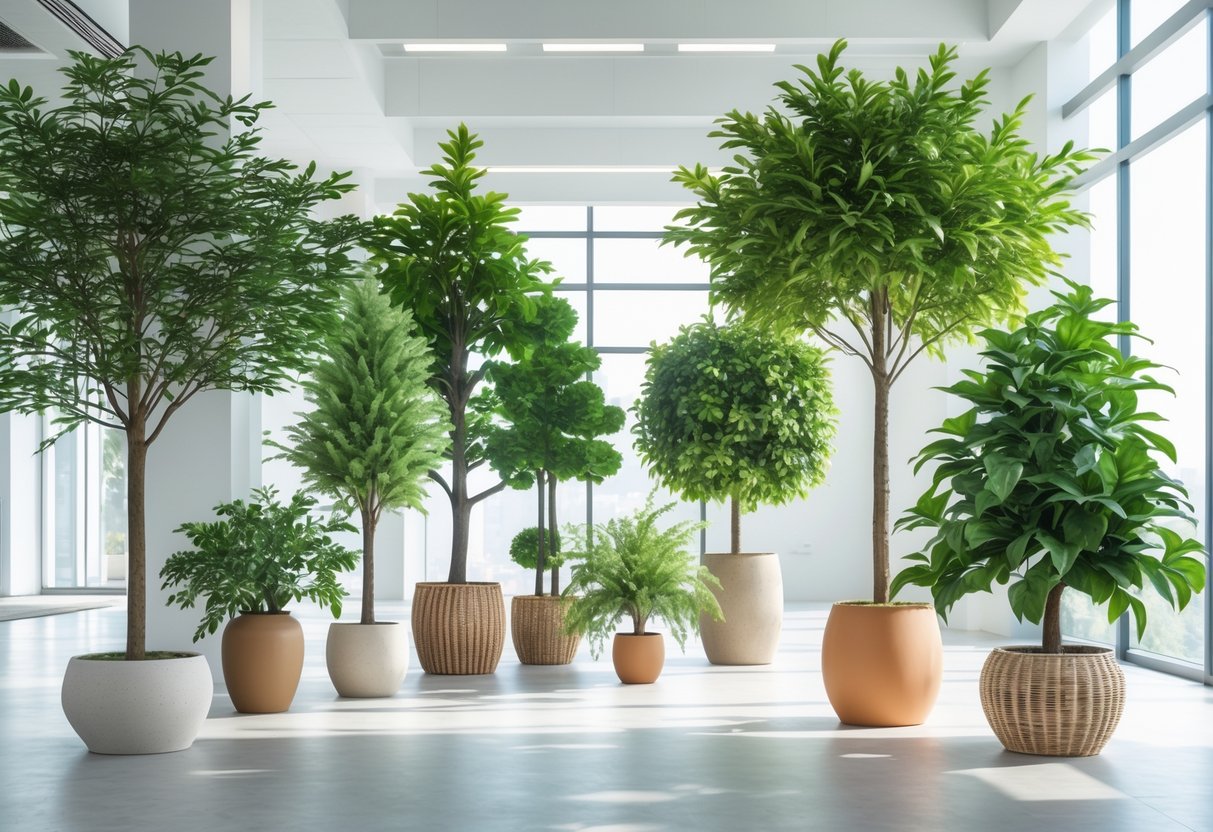
I value practical choices that save time, reduce upkeep and still look great. Artificial potted trees deliver predictable appearance, low ongoing cost and fewer complications than many live alternatives.
Low Maintenance Appeal
I don’t water, prune or fertilise these trees. That removes the weekly chore and the risk of over- or under-watering that kills real plants. For busy households or offices, this means consistent greenery with no specialist care.
Cleaning is occasional and simple — a quick dust or a wipe with a damp cloth every few months keeps foliage looking fresh. There’s no need for potting mix, pest treatments, or regular repotting, which saves both money and storage space for gardening tools.
If you place trees in hard-to-reach spots or windowless rooms, artificial options maintain shape and colour where real plants struggle. I can move them easily between rooms or store them seasonally without plant stress.
Long-Lasting Beauty
I get years of consistent appearance from one purchase. Quality artificial potted trees use UV-resistant plastics and sturdy trunks that resist fading and loss of leaves, so they stay presentable in sunlight-exposed areas.
Initial cost can be higher than a single live plant, but the lifetime cost often becomes lower because I avoid recurring replacement and maintenance expenses. Many guides suggest long-term reuse as the break-even factor for environmental and cost considerations.
Design variety also matters. I can choose from realistic ficus, olive, or yucca replicas to match interior style exactly. If a branch bends or a leaf detaches, replacement parts or simple repairs keep the tree usable rather than replacing it entirely.
Allergy-Friendly Choice
I find artificial potted trees helpful when managing indoor allergies. They don’t produce pollen, so they cut a common indoor trigger for hay fever and respiratory irritation.
They also avoid mould risks from damp soil. For people sensitive to dust-mite habitats or fungal spores, swapping a potted live plant for an artificial alternative reduces those indoor allergen reservoirs.
Regular surface cleaning prevents dust build-up, and using an allergen-proof base (like sealed pots or inert filler) further lowers risk. That makes artificial trees a practical option for bedrooms, clinical spaces or workplaces where air quality matters.
Choosing the Right Artificial Potted Tree
I focus on practical details: how big the tree should be, which styles fit a room, and which species work best indoors. I prioritise durability, scale, and how the tree will be used in the space.
Size and Placement Considerations
Measure ceiling height and clearances first. I leave at least 15–30 cm between the top of the fake tree and the ceiling to avoid a cramped look and to allow for light fixtures or vents.
Consider sight lines from seating and entry points. A 1.8–2.1 m tree suits living rooms with 2.4–2.7 m ceilings; a 1.2–1.5 m tree works for hallways or bedrooms. I check doorways and lift access before buying if the pot and tree come assembled.
Weight and pot footprint matter for floors and balconies. I weigh the base or ask the retailer for specifications if the pot will sit on timber flooring or a small balcony. For outdoor-covered areas, I choose UV-rated materials and a drainage-capable pot.
Matching Décor Styles
Match leaf shape and colour to the room’s palette. I pick darker glossy leaves for modern interiors and softer matte or variegated foliage for Scandinavian or boho schemes.
Scale the pot to the tree and furniture. I choose low, wide pots for chunky sofas and tall slim pots for narrow console areas. Matching pot textures — terracotta for rustic, concrete for industrial, glazed ceramic for contemporary — helps the tree blend with existing finishes.
Think about maintenance cues. I use simple designs and neutral pots in high-traffic areas so the tree looks intentional, not decorative clutter. For hospitality or retail settings, I opt for easy-to-clean foliage and removable foliage panels.
Popular Varieties for Homes
Fiddle Leaf Fig: I recommend this for statement corners. Its large, sculptural leaves create a strong focal point and work well at 1.8–2.4 m in open-plan living areas.
Olive and Lemon Trees: I choose these for kitchens and sunrooms. Their narrow trunks and airy foliage suit Mediterranean or farmhouse themes and fit in pots 30–45 cm wide.
Rubber Tree and Monstera: I use these in shaded rooms. The rubber tree’s glossy deep-green leaves and the Monstera’s split foliage give tropical texture without needing sunlight.
When selecting species, I check branch density and leaf attachment to ensure realism. I prefer models with layered branches and matte finishes to reduce visible shine under indoor lighting.
Styling and Decorating with Artificial Potted Trees
I focus on practical choices that make artificial potted trees look intentional and lived-in. I emphasise pot selection, combining faux with real plants, and simple seasonal touches that change the mood without extra work.
Creative Pot Selection
Choosing the right pot transforms a lifelike tree into a design statement. I match pot scale to tree height: low, wide pots suit short, bushy trees while tall, narrow planters complement slim-trunked palms and fiddle-leafs. Weight and stability matter—use ceramic, concrete or weighted fibrestone for taller trees to prevent tipping.
I consider texture and finish to fit the room. Matte terracotta or raw concrete reads earthy and modern, glazed ceramics add colour, and rattan or woven baskets soften hard edges. Use a saucer or decorative filler—river pebbles, moss or bark—to conceal the base and add realism.
I sometimes use a double-pot method: place the nursery pot inside a decorative cachepot for easy swapping and cleaning. That also lets me lift the tree for vacuuming or to change the cover quickly.
Blending With Real Plants
I position faux trees as anchors and surround them with small, living plants to sell the narrative of real greenery. I place a real trailing pothos or peperomia on a nearby shelf to introduce variation in leaf texture and subtle growth that artificial plants can’t mimic.
I match lighting needs visually rather than botanically; keep faux trees in spots that would suit real trees of similar leaf tone so they don’t look out of place. Grouping works best: odd-numbered clusters (three or five items) look natural. Vary pot materials—pair a faux fiddle-leaf in a glazed pot with a live fern in a woven basket to balance shine and softness.
I routinely check for dust on faux foliage; a quick wipe keeps them harmonious with the living plants. When arranging, leave breathing space so each plant’s silhouette reads clearly.
Seasonal Decorating Ideas
I change small accents around the pot to reflect seasons without altering the tree. For summer, I add a linen ribbon or a few faux citrus sprigs tucked into the soil surface for a fresh look. I keep decorations minimal so the tree still reads as plant, not prop.
For winter, I swap in warm-toned mulches, a ring of faux eucalyptus sprigs, or a subtle string of battery LED lights hidden behind branches. I avoid heavy ornaments that compress branches or create unnatural silhouettes.
I store seasonal props in labelled boxes so swaps take minutes. Small changes—textured moss, a plaid plant collar, or a few ceramic decorative stones—deliver clear seasonal cues without compromising the tree’s lifelike appearance.
Care and Maintenance Tips
I focus on keeping artificial potted trees dust‑free, structurally sound, and colourfast so they look natural for years. Practical routines and the right products prevent buildup, pests, and fabric or plastic degradation.
Cleaning Methods
I dust my tree weekly using a soft microfiber cloth or a feather duster to remove loose particles before they settle. For heavier dust, I work from top to base and wipe individual leaves and stems; for silk foliage I use gentle strokes to avoid crushing fibres.
When the tree needs deeper cleaning I mix a mild dish soap with lukewarm water (about one teaspoon per litre). I test an inconspicuous leaf first, then wipe with a damp cloth and immediately blot with a dry microfiber cloth to prevent water spots. For plastic leaves or UV‑stabilised materials I can rinse under a gentle stream of water outdoors and let the tree air dry completely before returning it inside.
Use a soft paintbrush or compressed air for tight spots and the pot area. If dust has built up inside branches, I remove detachable branches and soak them briefly, then dry thoroughly. Avoid harsh chemicals, bleach, or abrasive pads that can strip colour or damage finishes.
Preventing Fading and Damage
I place my artificial tree away from direct midday sun and east‑ or west‑facing windows to minimise UV fading. If natural light is unavoidable, I rotate the tree every few months and use sheer curtains or UV‑blocking film to cut sun exposure.
For outdoor or high‑light indoor displays I choose UV‑rated products and treat faded edges with manufacturer‑recommended repair kits rather than DIY paints. Keep humidity stable: avoid steam from bathrooms or kitchens and store the tree in a cool, dry place during off‑season. I secure loose branches with green floral tape or zip ties and tighten pot fittings to prevent wobble. Finally, I clean and dry the base before storage in a breathable container; storing a dirty tree can attract pests and accelerate degradation, so I always clean first.
Keep a small kit handy: microfiber cloth, mild soap, soft brush, floral tape and a spare drying towel. This saves time and extends the life of the tree.
Helpful external guide on cleaning artificial plants: How To Care for Artificial Plants (Balsam Hill) (https://www.balsamhill.com.au/inspiration/artificial-plants-clean-care).
Frequently Asked Questions
I cover cleaning, realism, placement, outdoor use, quality indicators and sizing so you can choose and care for a faux potted tree with confidence. Expect specific tips on materials, UV resistance, realistic features, and measuring for your room.
How do you clean and maintain artificial potted trees?
I dust leaves weekly with a soft-bristle paint brush or microfibre cloth to prevent buildup. For a deeper clean, I wipe foliage with a damp cloth and mild soapy water, rinsing and air-drying away from direct sun.
I clean topiaries and delicate branches outdoors where possible to avoid spreading dust inside. For trunks and heavier foliage, I vacuum on a low setting using a brush attachment for quick upkeep.
Are there specific types of artificial potted trees that are more realistic?
I look for trees with textured trunks, layered foliage, and varied leaf sizes and colours to mimic natural growth. High-grade materials like polyethylene (for leaves) and rubber or coated wire (for stems) usually produce more natural drape and movement.
I also check for silicone or soft-touch leaves and hand-finished details; these often read more realistic than flat printed leaves. If you want guidance about materials and realism, see details on materials and finishes at this artificial trees FAQ page (https://www.we-heart.com/2022/01/09/artificial-trees-faqs-all-you-need-to-know/).
What are the best places in the home to display faux potted trees?
I place tall trees near corners, behind sofas, or beside media units to add height without obstructing sightlines. Medium trees work well beside entryways or in open dining areas to anchor a space.
I use small trees on console tables, shelves or bathrooms with good ventilation to add greenery without overwhelming the room. Keep walkways clear by choosing a pot diameter that allows safe circulation.
Can artificial potted trees be used outdoors, and how do they handle the elements?
I use UV-treated and weatherproof artificial trees for balconies, patios or covered outdoor spaces to minimise fading and brittleness. For exposed areas I recommend products specifically treated for outdoor use and to apply a UV-protection spray periodically for extra longevity.
I avoid placing untreated indoor-only trees outdoors because rain, wind and sun will degrade fibres and colours quickly. For more on outdoor suitability and UV treatment, consult an FAQ about outdoor use and UV resistance (https://tizenplant.com/imitation-potted-plants/).
What should I look for to ensure I’m buying a high-quality artificial potted tree?
I inspect leaf attachment points, trunk construction and pot weight; glued or flimsy joints and lightweight pots often indicate lower quality. I prefer trees with wired branches for easy shaping and heavy, stable pots or weighted bases to prevent tipping.
I check for fire-retardant labelling if the tree will be in a commercial or high-traffic setting. Also look for UV-stabilised materials and hand-finished details that indicate better craftsmanship.
How do I choose the right size artificial potted tree for my space?
I measure ceiling height and allow at least 20–30 cm of clearance between the top of the tree and the ceiling for breathing room. For scale, I compare the tree height to furniture: a tree should be taller than a sideboard but not so tall it overwhelms a sofa back.
I also measure floor space and pot footprint to ensure the tree won’t block walkways or door swing. When in doubt, I place tape on the floor to visualise the pot size and use a broom or stick to estimate final height.