
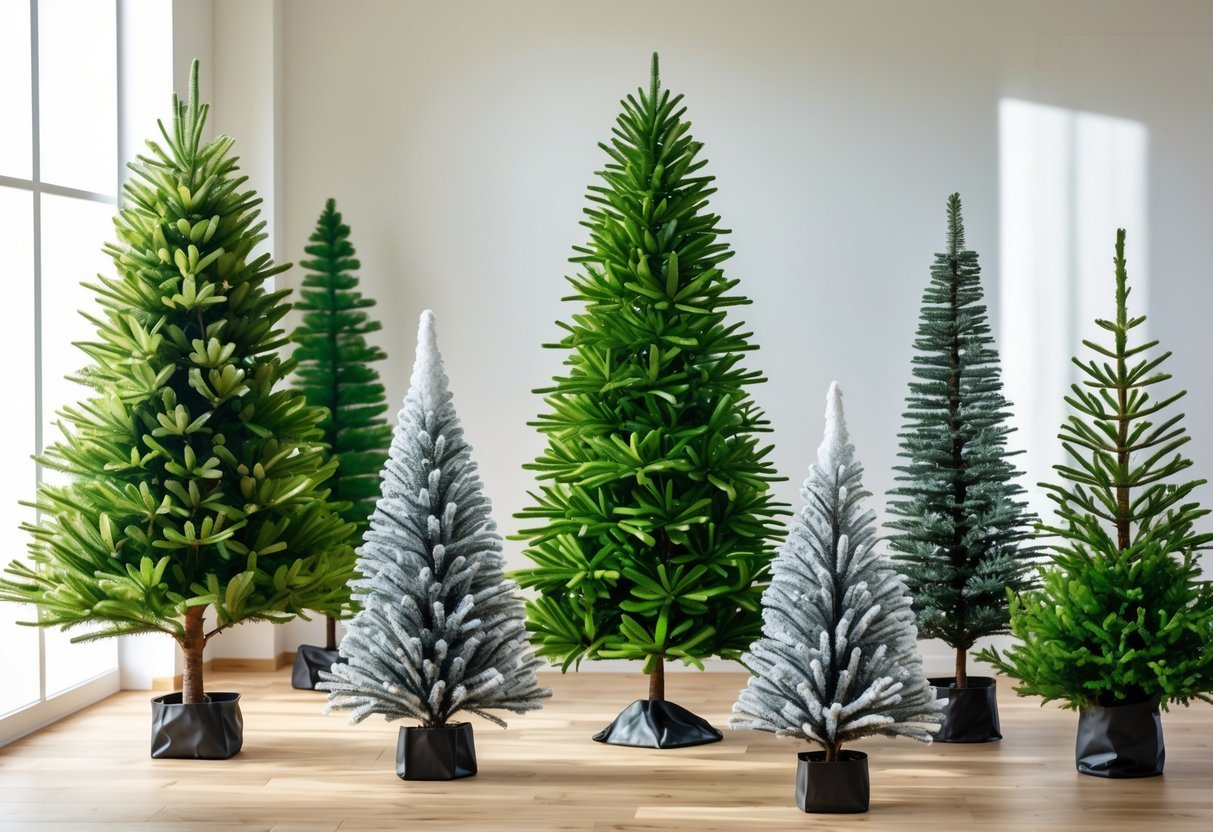
You want an evergreen look without the upkeep of real pines, and an artificial pine tree delivers that instantly. I’ll show you realistic options, explain materials and sizes, and help you pick one that fits your space and lifestyle. An artificial pine tree gives you consistent, low‑maintenance greenery that suits indoor and outdoor settings while avoiding needle mess and frequent watering.
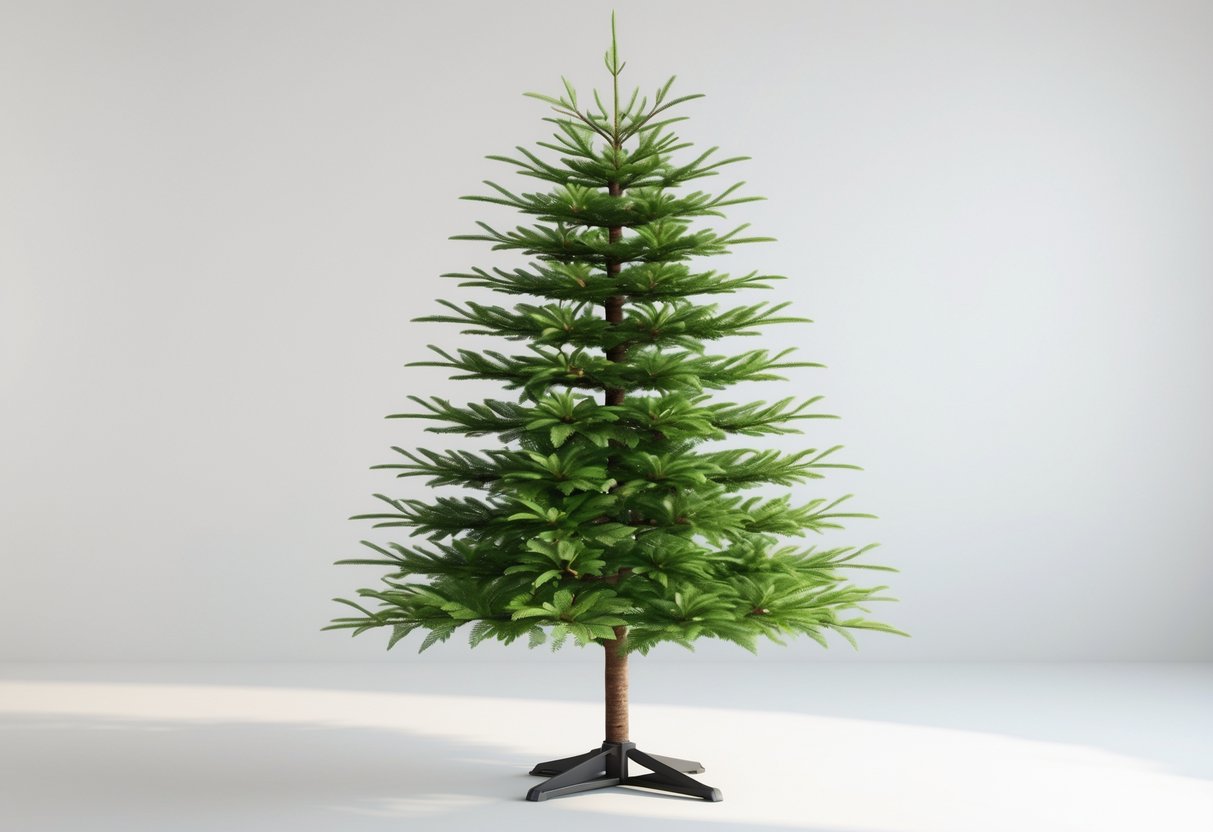
I’ve gathered practical tips on spotting quality, choosing UV‑resistant models for outdoors, and matching styles from compact tabletop pines to full‑height statement trees. Expect straightforward advice so you can buy with confidence and enjoy the look you want without the usual plant chores.
Key Takeaways
- Artificial pines offer long‑lasting greenery with minimal upkeep.
- Choose materials and UV protection based on indoor or outdoor use.
- Match size and style to your space for the best visual impact.
What Is an Artificial Pine Tree?
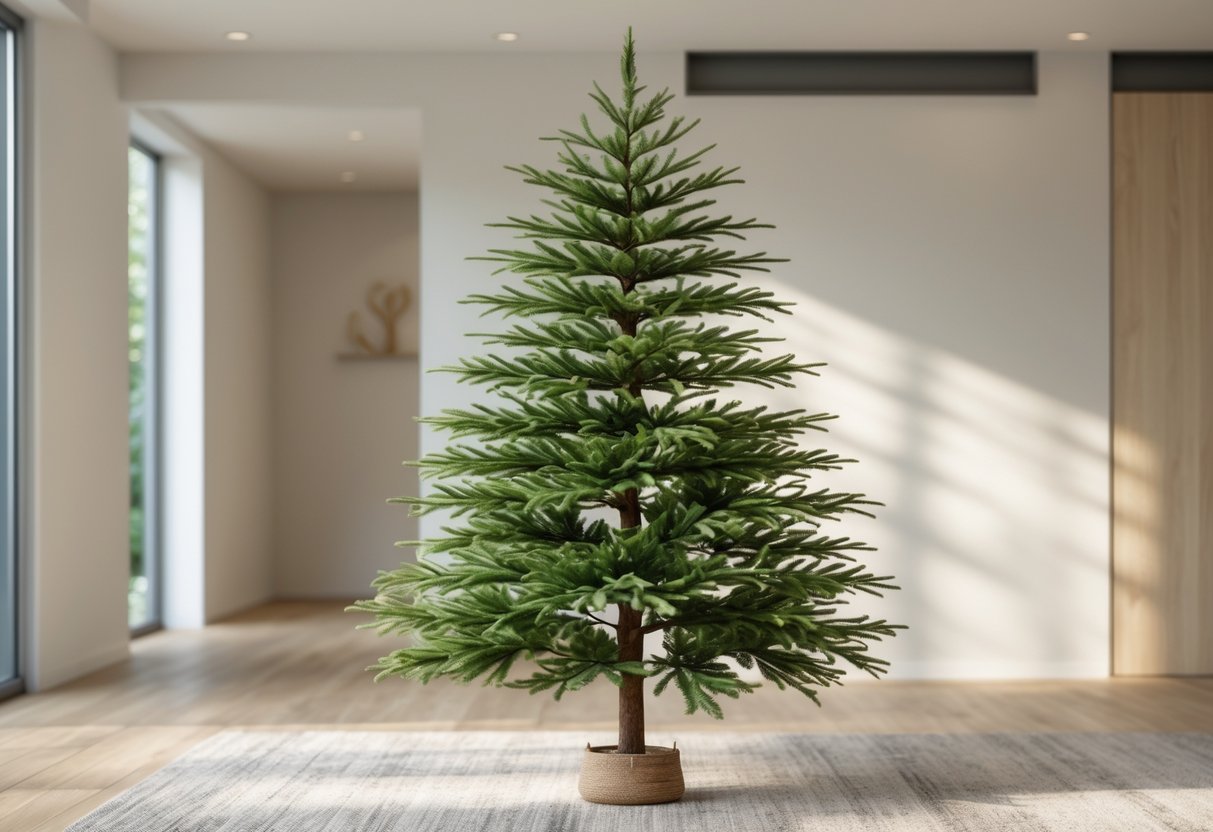
I describe what an artificial pine tree is, how manufacturers build realism into fake trees, and the practical differences you’ll notice compared with a real pine.
Defining Artificial Pine Trees
An artificial pine tree is a manufactured replica of pine species, built primarily for decoration and year‑round greenery. I often see them made from PVC or PE needles attached to metal or fibre trunks, with branch tips designed to mimic the shape and density of real pine foliage. Sizes range from tabletop sprigs to multi‑metre floor trees used in commercial displays.
Manufacturers market artificial trees both as seasonal Christmas trees and as permanent interior plants. I look for construction notes such as welded branch cores, layered branch assemblies, and UV‑resistant materials when assessing durability and outdoor suitability. Some premium options use textured trunks and mixed‑material needles for closer realism.
Key Features and Realism
Realism depends on needle material, branch density, and assembly technique. I find PE needles tend to look more natural because they’re moulded with vein and needle textures, while PVC needles are shinier and cheaper. Branch tips come either hooked on metal arms or flared from moulded tips; the former gives adjustable silhouette, the latter gives uniform shape.
Other important features include a realistic trunk (fibreglass or timber imitation), hinged branches for easy setup, and flame‑retardant or UV‑stable finishes for safety and outdoor use. Many artificial pine trees include wired branch tips so I can shape limbs, hide stems, and create a layered canopy. If I want near‑authentic appearance, I choose models advertised as “PE blend” or “mixed‑material” and check close‑up photos for visible seams.
Differences Between Artificial and Real Pine Trees
Maintenance is the clearest difference: artificial trees require no watering, needle cleanup, or pest control. I’ll vacuum or dust them occasionally and store them in a labelled box or cover to protect the foliage. Real pines shed needles, need water and light, and can introduce allergens or sap into the home.
Longevity and cost profile diverge too. A quality artificial pine tree can last many years with minimal upkeep and lower seasonal cost over time, though the upfront price may be higher. Real pines offer natural scent and seasonal authenticity that fake trees can’t fully replicate. I weigh factors like indoor air quality, setup frequency, storage space and how important a natural scent or living plant is before choosing between artificial trees and a live pine.
Popular Varieties and Styles
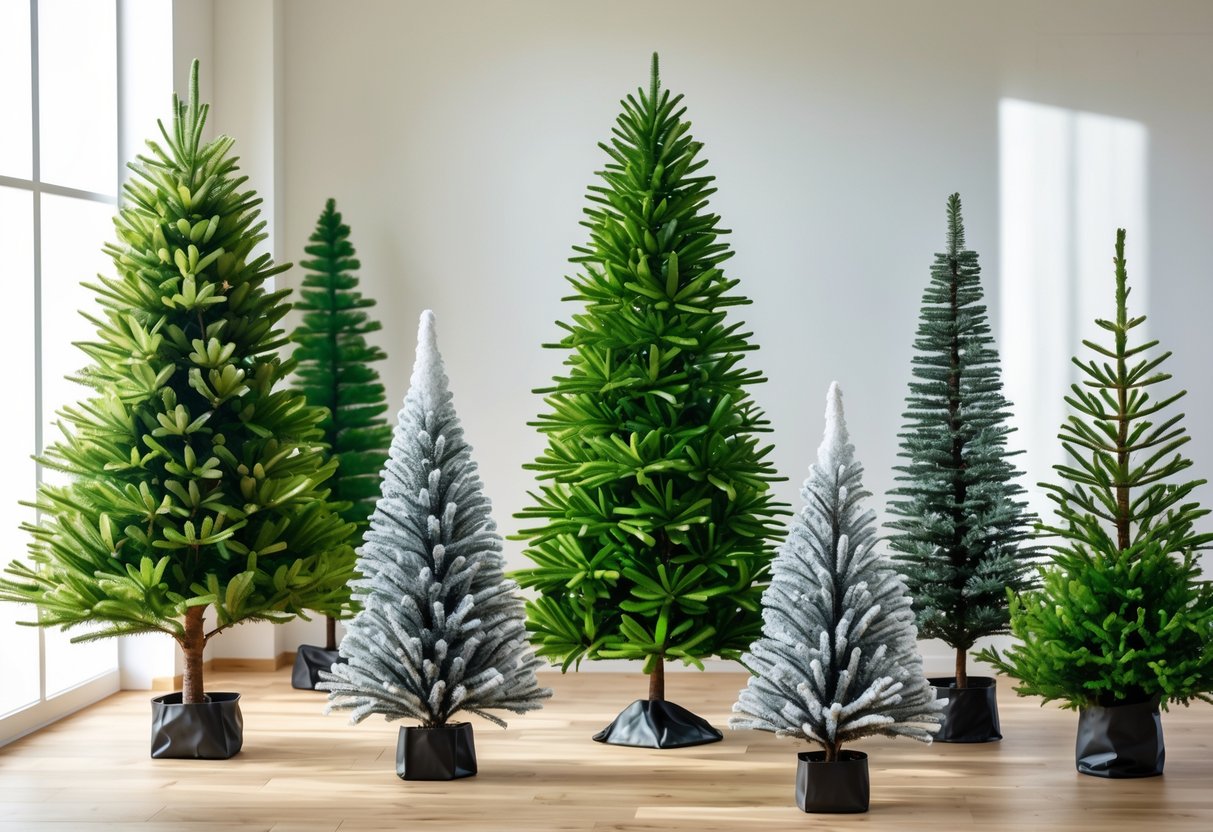
I’ll highlight the specific forms, finishes and sizes that matter most when choosing an artificial pine tree, so you can match shape, realism and practicality to your space.
Cypress Pine and Pencil Pine
I like cypress pine for its dense, slightly irregular foliage that mimics a live garden look without needle drop. Artificial cypress pine trees usually feature layered branch tips and a mix of darker inner needles with lighter tips to give depth. This makes them good for living areas and commercial displays where realism matters.
Pencil pine (also called Italian or columnar pine) appeals when vertical shape is the priority. Artificial pencil pines have tight, upward-pointing branches and a slim trunk that suits narrow hallways or balcony corners. I check branch density and tip length—shorter tips keep the column profile neat while longer tips soften the silhouette.
Both types often come in PVC or PE tips; PE gives a more realistic textured look, while PVC is cheaper and still durable. I recommend inspecting the branch join method and inner wiring for easier shaping and longer life.
Pre-Lit and Decorated Options
I often advise choosing pre-lit models when convenience matters. Pre-lit artificial pine trees arrive with LEDs either woven through tips or attached to inner branches. LED bulbs use less power and run cooler, reducing fire risk compared with older incandescent sets.
Decorated options save set-up time. Manufacturers add garlands, cones or baubles permanently or semi-permanently; permanent décor looks neat but limits your styling, while detachable decorations let you personalise annually. I look for models with replaceable light strings and accessible plug points so repairs are simple.
When comparing pre-lit trees, check whether lights are replaceable and whether the tree offers a spare bulb access point. Also confirm if the lights are single-colour, multi-function or smart-compatible to match your home’s lighting setup.
Tree Heights and Profiles
I pick tree height to fit room proportion: measure ceiling height then allow 20–30cm clearance for a topper and tree stand. Artificial pine trees commonly range from 90cm tabletop sizes to 3m commercial models; choose based on floor area and sightlines.
Profiles vary from full and bushy to slim and sparse. A full profile suits wide living rooms and families who hang many ornaments. Slim or pencil profiles fit narrow spaces and modern interiors. I scrutinise branch spacing: denser branch placement hides the centre pole better and supports heavier ornaments.
Many retailers list packed and assembled dimensions; I always compare both. Also check whether the tree has hinged branches for quick assembly or detachable sections that store flatter for off-season storage.
Materials and Construction
I focus on the exact materials and how components are assembled so you can choose an artificial pine tree that fits your space and maintenance preferences. I prioritise material type, branch construction, trunk options and how those aspects affect realism, longevity and upkeep.
Common Materials Used
I look for trees made from PVC, PE (polyethylene) and PET, because each affects appearance and feel. PVC tips are cheaper and softer, often used on budget artificial trees; they give a fuller but less realistic sheen. PE moulded needles reproduce the thin, layered look of real pine and are common on higher‑end artificial pine trees for a natural silhouette.
Metal or wire armatures form the branches; thicker gauge metal adds stability while thinner wire lets branches be shaped more precisely. Trunks may be metal, plastic or simulated timber; real timber-look trunks increase realism but raise weight and cost. Bases vary from foldable metal stands to wooden or weighted bases for freestanding fake trees.
Indoor and Outdoor Durability
I check label ratings and construction when deciding if a fake tree is fit outdoors. Indoor‑only artificial trees commonly use non‑sealed electrical components and glues that degrade when exposed to moisture or temperature swings. Outdoor‑rated trees feature sealed connections, corrosion‑resistant metal and sturdier adhesives to resist rain, wind and fluctuating temperatures.
Look for drainage features in the base and rust‑proof fittings when placing any artificial pine tree outside. For indoor use, I prioritise lighter frames and detachable branches for easy storage. For verandahs or semi‑outdoor displays, consider trees advertised as suitable for covered outdoor use and confirm the manufacturer’s guidance.
UV-Resistant Features
I prioritise UV protection if the tree will get any direct sunlight or bright filtered light. UV‑stabilised PE and PVC compounds include additives that slow fading and embrittlement; manufacturers usually list “UV‑resistant” or “UV‑stabilised” on product pages. Without those additives, needles can yellow and become brittle within a season in strong sun.
Check for UV ratings or warranties; some sellers specify a UV warranty or show accelerated‑weathering test claims. I also inspect dye consistency and edge finishing—well‑finished tips and multi‑shade colouring retain a more natural look after UV exposure. For long outdoor exposure, choose a tree with explicit UV treatment rather than relying on general weatherproof claims (example product details here: Artificial pine buying guide).
Benefits and Uses of Artificial Pine Trees
I find artificial pine trees useful because they combine visual realism with practical benefits. They suit multiple rooms, events and low‑care spaces while avoiding needle drop and watering.
Home and Office Decoration
I place artificial pine trees in living rooms, entryways and reception areas to add year‑round greenery without seasonal stress. They fit tight spaces when I choose slim or pencil-profile models and bring scale when I pick fuller styles for lounges or hotel lobbies.
I match tree height and branch density to the ceiling height and furniture layout to avoid crowding. For a polished look, I select trees with realistic PE or mixed‑material tips and check that the trunk and stand are sturdy enough for ornaments or signage.
When I shop at an artificial plant shop, I prioritise UV‑resistant finishes for sunlit offices and fire‑retardant coatings for commercial settings. I also use potted faux trees to mask unsightly corners or to frame desks and reception counters.
Holiday and Event Styling
I use artificial pine trees as reliable centrepieces for seasonal displays and themed events because they stay consistent across multiple years. I pick pre‑lit models to save on installation time and wired trees to maintain symmetrical branch spacing that holds decorations evenly.
For weddings and pop‑up markets, I choose modular trees or detachable branches that allow transport and quick setup. I also use a mix of artificial trees and branches to create layered backdrops where real trees would be impractical.
When decorating, I balance ornament weight and branch strength; I prefer trees with metal frames and dense PE tips so baubles and garlands hang straight without sagging.
Low Maintenance Advantages
I appreciate that artificial pine trees require no watering, pruning or pest control, which cuts ongoing maintenance time and cost. They don’t shed needles, so I avoid daily sweeping and reduced wear on vacuum filters.
Storage and seasonal care are simple: I compress branches into labelled boxes, dust lightly before redeploying, and replace string lights only when needed. This convenience makes artificial trees ideal for rental properties, offices, and retail where staff time is limited.
From an operational perspective, using fake trees reduces allergy triggers indoors and eliminates disposal logistics linked to live trees, which suits landlords and business owners managing multiple sites.
Artificial pine trees, artificial plants and fake trees offer predictable appearance and flexible styling while keeping upkeep low. For shopping options, consider specialised retailers that provide realistic material choices and commercial‑grade finishes, such as an artificial plant shop’s pine range.
Environmental Impact and Care
I focus on the real trade-offs between materials, carbon cost and practical care for artificial pine tree use so you can make a measured choice that fits your home and values.
Sustainability Factors
I look at the materials first. Most artificial trees use PVC or PE foliage and metal frames; PVC is durable but derived from fossil fuels and hard to recycle, while newer PE models offer more realistic needles but still rely on plastics. Manufacturing in overseas factories adds transport emissions, so the tree’s carbon payback depends on how many years I reuse it.
I consider end-of-life options. Artificial pine trees rarely biodegrade; shredding for landfill is common unless local recycling accepts mixed plastics and metal. Donating or reselling extends useful life, lowering per-year environmental impact. For additional reading on lifecycle and reuse thresholds, refer to the lifecycle comparison of artificial and real trees (https://iere.org/are-artificial-trees-better-for-the-environment/).
Key choices I recommend:
- Buy higher-quality PE models to reduce replacement frequency.
- Prioritise locally stocked items to cut transport emissions.
- Plan to reuse the tree at least 7–10 years to approach parity with yearly real-tree purchases.
Care and Longevity Tips
I maintain artificial trees to extend lifespan and reduce waste. Store the tree in a dry, cool place inside a sealed bag or box to prevent dust, UV damage and pest ingress. Disassemble carefully, wrap branches in acid-free paper or cloth, and keep the metal stand protected against rust.
Cleaning is simple but important. I dust with a soft brush or use a low-suction vacuum weekly while decorating. For deeper cleaning, wipe foliage with a damp cloth and a mild detergent solution, then air-dry completely before storage to avoid mould.
Repairs and small upgrades save replacement costs. I replace broken branch clips, tighten the frame bolts and touch up faded tips with matching coloured paint or replacement sprigs when available. When I can’t repair, I donate or sell the tree to lengthen its useful life and reduce overall environmental burden.
Frequently Asked Questions
I cover practical care steps, safe outdoor use, compact storage tips, greener material choices, realism tricks, and how to judge quality differences. Each answer gives clear actions and specific things to check.
How do I properly care for an artificial pine tree?
I dust the branches weekly using a soft brush or a microfiber cloth to keep the needles looking fresh. For deeper cleaning, I vacuum with a brush attachment on low suction or wipe foliage with a damp cloth and mild soapy water; rinse and air dry before reassembling.
I check the stand and wiring before I set up the tree each season. Tighten screws, replace any frayed cords, and test lights on a short run to avoid electrical faults.
Can an artificial pine tree be used outdoors safely?
Most artificial pine trees are designed for indoor use only; check the manufacturer’s label for weather resistance and UV protection. If a tree is rated for outdoor use, I place it on a covered patio or protected spot to reduce wind and sun exposure.
I secure outdoor trees with a heavy base or anchor points to prevent tipping in gusts. For long-term outdoor display, I remove any electrical components at the first sign of moisture ingress.
What’s the best way to store an artificial pine tree when it’s not in use?
I disassemble the tree into sections and label each part to speed up next-season setup. Store branches in their original box or a breathable storage bag and keep the trunk sections upright to avoid bending or warping.
I store lights separately on a spool or in a labelled container to prevent tangles. Keep the boxes in a cool, dry place away from direct sunlight and damp to preserve colour and materials.
Are there any eco-friendly options for artificial pine trees?
I look for trees made with recyclable materials or brands that offer take-back and recycling programmes. Trees with higher-quality PE needles usually last longer, which reduces the need to replace them frequently.
I prefer suppliers that disclose material composition and manufacturing practices. Buying a well-made tree and using it for many years will lower the product’s lifetime environmental impact.
How can I make my artificial pine tree look more realistic?
I bend and separate branch tips by hand to create varied spacing and a natural silhouette. Mixing a few different branch types or adding fuller PE tips gives better depth and texture.
I use warm white LED lights, vary bulb spacing, and tuck some lights deeper into the tree for a natural glow. Adding real elements—like a few pinecones or a light spray of scent—can boost realism without harming the tree.
What are the differences in quality among various artificial pine trees?
I compare needle material first: PE (polyethylene) moulded needles look more realistic than standard PVC blades. Check branch construction; hinged branches open easily and hold shape better than wired stems.
I inspect internal frames and stand strength; thicker metal and solid bases increase stability. Finally, I review warranty length and user reviews — longer warranties and consistent positive feedback usually indicate better-built trees.