
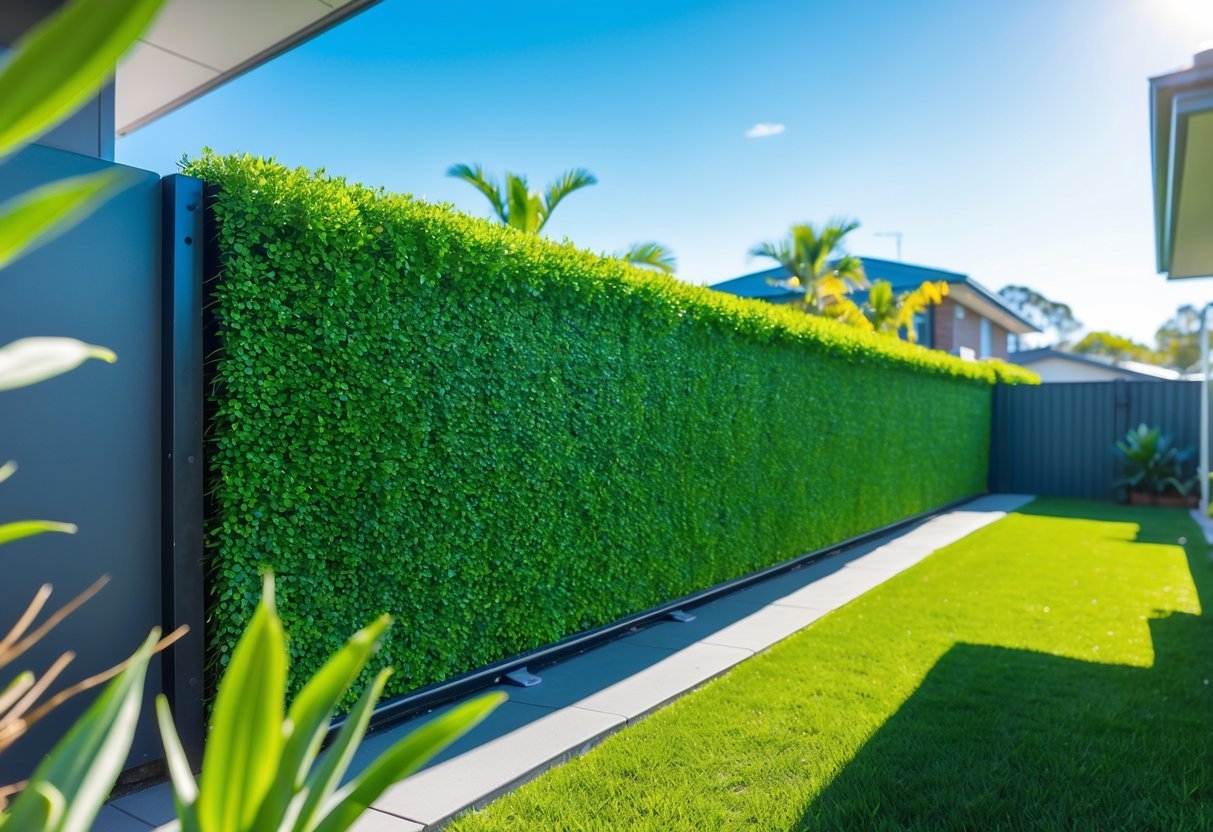
If you want instant privacy without the upkeep of real plants, you can install an artificial hedge roll and transform your space in a single afternoon. I’ve seen how quickly it changes a plain fence or balcony into a clean, green backdrop that looks tidy all year.
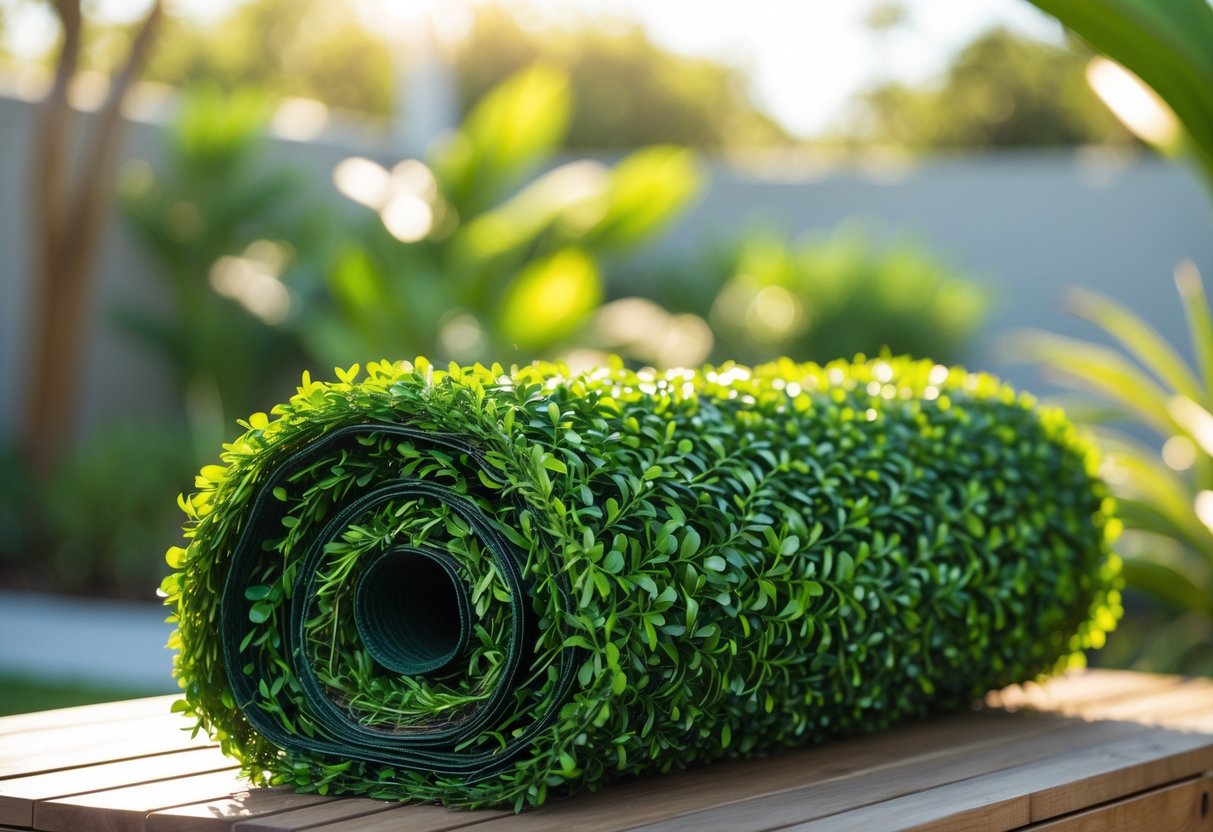
An artificial hedge roll in Australia gives you a low‑maintenance privacy screen that handles sun exposure, skips watering, and stays consistent in colour across the seasons. You simply secure it to an existing fence, frame, or wall and enjoy coverage without trimming, fertilising, or dealing with patchy growth.
I’ll walk you through how it works, what to look for before you buy, and how to choose a style that suits your home, rental, café, or strata property.
Key Takeaways
- You can create instant privacy and greenery with minimal maintenance.
- You should choose UV‑resistant materials suited to Australian conditions.
- You can install most hedge rolls easily on fences, walls, or frames.
What Is an Artificial Hedge Roll?
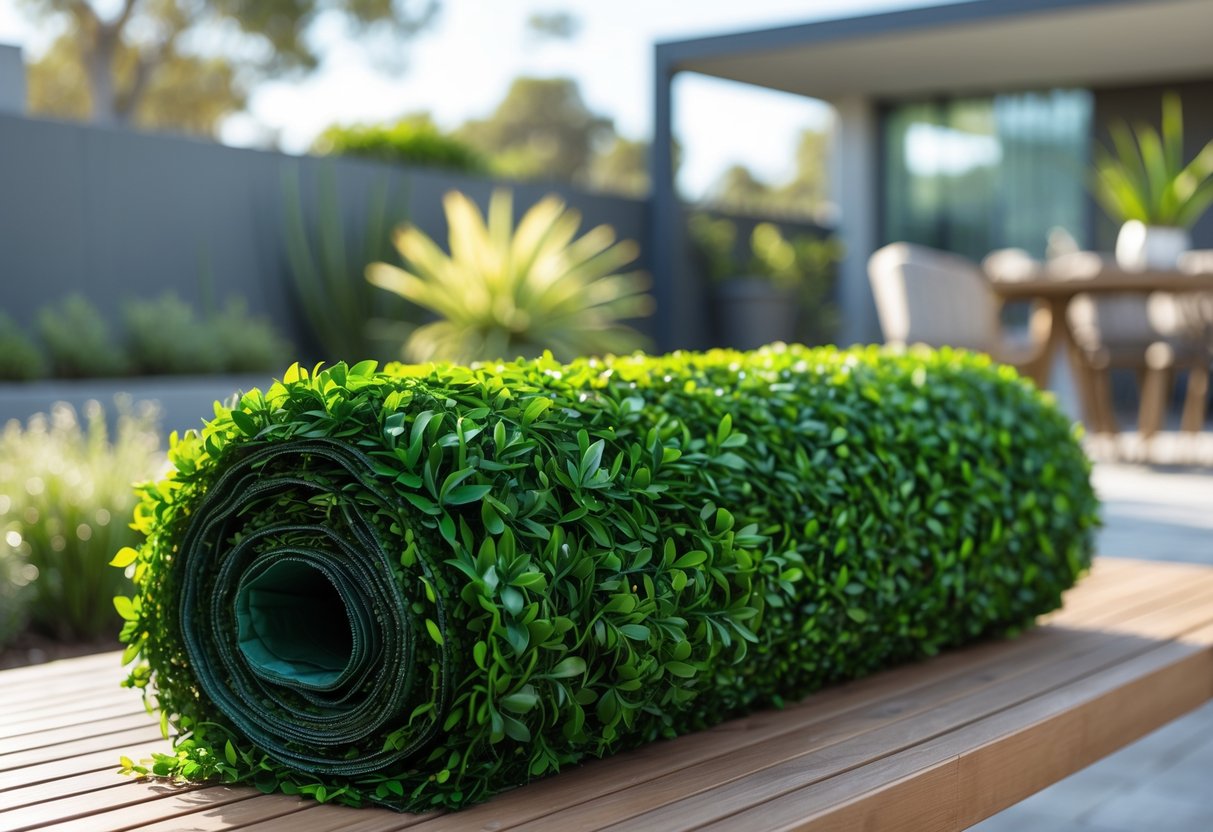
When I talk about an artificial hedge roll, I mean a flexible sheet of synthetic foliage that I can unroll and fix directly onto fences, walls, or frames. It comes in different leaf styles, backing types, and privacy levels, so I choose it based on coverage, durability, and how I plan to install it.
Definition and Overview
An artificial hedge roll is a continuous length of faux greenery attached to a flexible mesh or fabric backing. I install it in long runs, which makes it practical for covering fences, balconies, pergolas, and boundary walls without visible panel joins.
Unlike rigid panels, rolls rely on tension and fixing points to stay flat and secure. As explained in this guide to artificial hedge panels vs rolls, the flexible backing changes how force moves through the material and how I secure it in place.
Most rolls in Australia come in common sizes such as 3m x 1m or 100cm x 200cm. I cut them with heavy-duty scissors or shears to fit exact measurements, which makes them suitable for both small courtyard projects and long fence lines.
Types of Artificial Hedge Rolls
I can choose from several foliage styles depending on the look and coverage I want.
Common types include:
- Boxwood rolls for a dense, formal hedge look
- Ivy rolls for a softer, climbing-plant appearance
- Printed leaf blends for decorative features
For example, this Premium Artificial Boxwood Roll 3m x 1m with privacy backing uses tightly packed leaves and an added backing layer to increase screening.
If I want integrated shade cloth for added privacy and dust reduction, I might consider a product like this fake ivy roll with shade cloth backing 3m x 1m.
Each type varies in leaf density, colour variation, and backing strength. I match the roll to my intended use, whether that is decorative greenery or high-level screening.
Key Features
When I compare artificial hedge rolls in Australia, I focus on practical features rather than appearance alone.
UV resistance matters because strong sun can fade untreated plastics. Many products are UV-treated or UV-stabilised to help maintain colour under Australian conditions, as noted in this artificial hedge guide for buyers.
I also check:
- Backing material – mesh, polyethylene net, or shade cloth
- Leaf density – determines privacy level
- Warranty period – often around three years
- Installation method – cable ties, screws with washers, or staples
Some rolls, like this 100 x 200cm artificial hedge roll printed rose leaf, highlight UV treatment and warranty details clearly, which helps me compare options.
By reviewing these features carefully, I make sure the roll suits my climate, installation surface, and privacy needs.
Benefits of Artificial Hedge Rolls in Australia
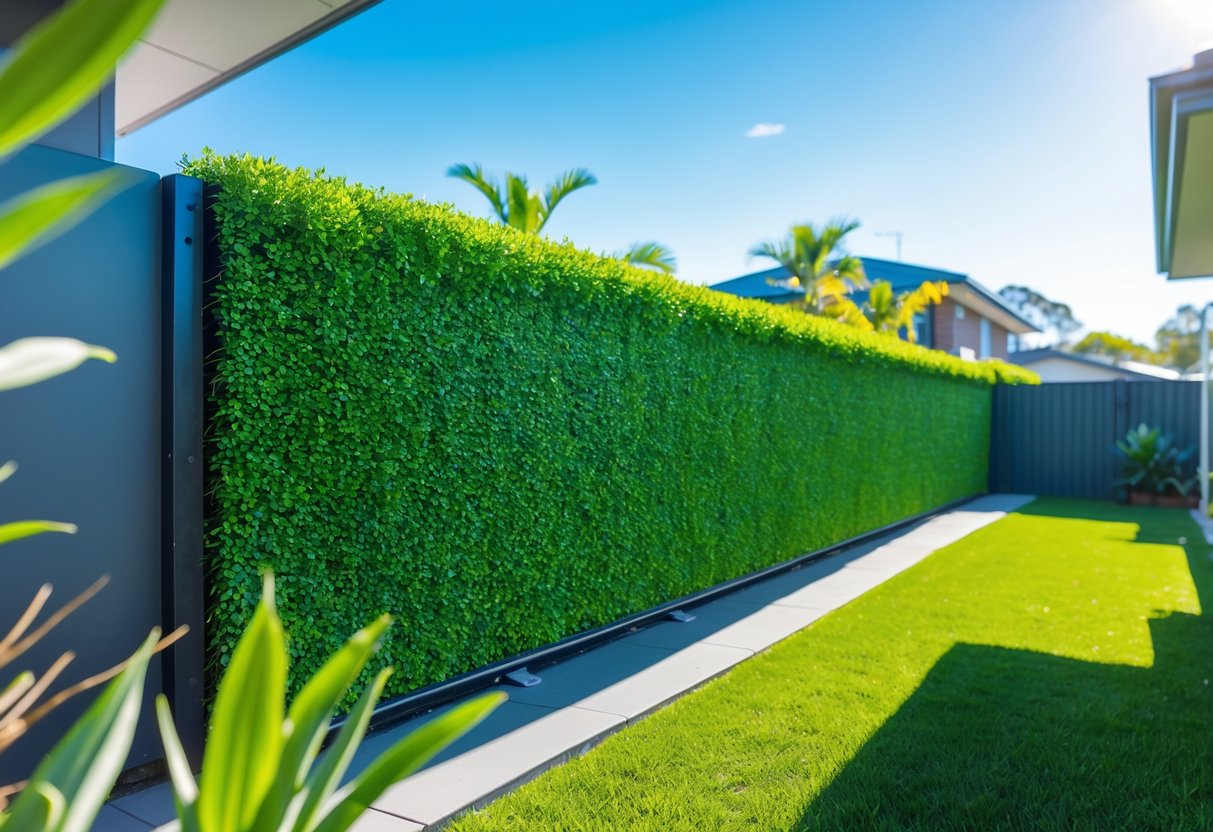
When I choose an artificial hedge roll in Australia, I look for three things: low upkeep, reliable privacy, and materials that handle harsh sun and weather. A well‑made roll delivers all three without the constant work that real hedging demands.
Low Maintenance Advantages
I don’t want to spend weekends trimming, watering, fertilising, and replacing dead sections. An artificial hedge roll removes those tasks completely.
Unlike natural hedges, I never need to:
- Water during dry spells
- Prune for shape control
- Apply fertiliser or pest treatments
- Clean up leaf drop
Many suppliers position artificial hedges as a practical alternative for homes and businesses because they provide greenery without ongoing plant care, as outlined in this artificial hedge guide for buyers.
I simply secure the roll to a fence or frame and leave it in place. Occasional rinsing with water clears dust or debris, especially in coastal or high‑traffic areas.
Because rolls come in continuous lengths, I can cover large spans with fewer joins. That reduces installation time and gives me a cleaner finish compared to installing multiple individual panels.
Privacy and Screening Solutions
Privacy matters in suburban Australian homes where fencing alone may not block neighbouring views. I use artificial hedge rolls to create a dense visual barrier quickly.
Roll systems differ from rigid panels because they use flexible mesh backing. As explained in this guide on artificial hedge panels vs rolls, rolls rely on tension and fixing density, which lets me contour them over uneven fences or curved structures.
I often use hedge rolls for:
- Boundary fences
- Balcony balustrades
- Pool equipment screening
- Commercial outdoor dining areas
Some products include integrated privacy backing to reduce visibility through the foliage, such as this Artificial Boxwood Roll 3m x 1m with privacy backing.
When installed tightly with adequate fixings, I achieve consistent coverage without gaps that compromise privacy.
Weather Resistance and UV Protection
Australia’s sun can fade and weaken outdoor materials quickly. I only consider hedge rolls that are labelled UV resistant or UV stabilised.
Quality products are designed for outdoor exposure and suit both residential and commercial settings, as described in this overview of artificial hedge walls for sale in Australia.
UV protection helps maintain colour consistency and reduces brittleness over time. This matters in states with high UV index levels, including Queensland and Western Australia.
I also check the backing material. A durable mesh with secure leaf attachment resists wind movement and minimises shedding.
When properly installed on a stable fence or frame, a UV‑rated artificial hedge roll maintains its appearance through heat, rain, and typical seasonal changes without ongoing structural repairs.
Choosing the Right Artificial Hedge Roll
I focus on accurate measurements, realistic materials, and practical customisation before I buy an artificial hedge roll. These factors affect privacy, durability, and how natural the finished installation looks in an Australian climate.
Measuring Your Space
I always measure the full width and height of the area I want to cover, whether it’s a timber fence, balcony balustrade, or colourbond panel. Most rolls come in standard sizes such as 3m x 1m, like this Premium Artificial Boxwood Roll 3m x 1m, so I plan my layout around those dimensions.
I allow extra length for overlaps and trimming around posts or corners. If I need full privacy, I check the actual foliage coverage rather than just the backing size.
I also think about wind exposure. A large, continuous span may need additional cable ties or fixings to prevent sagging over time.
Selecting Realistic Materials
Not all hedge rolls look the same up close. I look for dense, layered leaves with varied tones of green rather than flat, single-shade plastic.
Some products include privacy backing to reduce visibility through the mesh, such as the Artificial Boxwood Hedge Panel Roll with privacy backing. That feature matters if I want near-total screening from neighbours.
UV resistance is essential in Australia. Without it, leaves can fade or become brittle under strong sun.
I also compare rolls with panels to understand how they perform once installed. This guide on Artificial Hedge Panels vs Rolls explains how different formats handle wind and long-term exposure.
Customisation Options
I customise hedge rolls to suit the space rather than forcing the space to fit the roll. Most rolls can be cut with heavy-duty scissors to fit around lights, pipes, or uneven fence lines.
For decorative applications, I sometimes choose patterned options such as a 100 x 200cm Artificial Hedge Roll with printed rose leaf if I want more visual interest than standard boxwood.
When I want thicker coverage, I layer two sections slightly offset. This increases density without replacing the entire installation.
I also check the backing material. A sturdy mesh makes it easier to secure the roll tightly and keep it flat against the surface.
Installation Tips and Tricks
I focus on accurate measuring, secure fixing, and neat panel joins to get a clean finish that lasts in Australian conditions. When I install an artificial hedge roll, I work methodically and fix it tightly so wind and heat don’t cause sagging or gaps.
Tools Needed
Before I start, I gather everything so I don’t stop halfway through the job. The exact fixings depend on whether I’m attaching the hedge roll to timber, Colorbond, brick, or wire fencing.
Basic tools I use:
- Measuring tape
- Spirit level
- Marker or chalk line
- Heavy-duty scissors or garden shears
- Ladder (if installing above head height)
- Gloves and safety glasses
For fixing, I choose the right hardware for the surface. On timber fences, I use galvanised screws or staples. On wire fencing, I secure the roll with UV-stabilised cable ties, similar to the method shown in this guide on installing an artificial hedge on a fence.
On masonry, I use wall plugs with screws to prevent pull-out over time.
Step-by-Step Installation
I start by measuring the full width and height of the area, then cut the hedge roll to size with sharp shears. I always allow a small margin so I can trim neatly once it’s fixed in place.
Next, I position the roll at the top of the fence or wall and check it with a level. I fix the top edge first, spacing fasteners about 20–30 cm apart to prevent sagging.
Then I work downward, pulling the hedge tight as I go. If I need multiple sections, I overlap the edges slightly and secure both layers to hide joins. Many installers follow a similar approach when they create a green wall with artificial hedge.
Finally, I trim any excess and brush the foliage outward to cover visible fixings.
Common Mistakes to Avoid
The biggest mistake I see is under-fixing the hedge roll. If I space ties or screws too far apart, strong wind can cause movement and visible ripples.
I also avoid installing over uneven surfaces without checking alignment. If the base fence leans, the hedge will highlight that flaw unless I adjust my fixing points carefully.
Another issue is skipping proper preparation. I clear debris, check for loose palings, and make sure the surface is dry before I start.
I never stretch the material excessively. Pulling it too tight can distort the foliage backing and create thin patches that look unnatural.
Where to Buy Artificial Hedge Rolls in Australia
I look for retailers that stock UV-stabilised rolls, clear size specifications, and reliable delivery across Australia. The right supplier makes it easier to compare materials, pricing, and warranty details before I commit.
Leading Suppliers and Retailers
I usually start with large hardware chains because I can check stock levels and product dimensions quickly. For example, Bunnings carries options like the UN-REAL 100 x 300cm Olive Ivy Poly Artificial Hedge Roll, which suits standard fence panels and balcony screens.
If I want a broader range of styles, I browse specialist stores. Retailers such as Artificial Hedges at Artificialplantshop.com.au focus on faux greenery and often stock multiple leaf types, densities, and roll lengths.
For UV-rated panels and warranty-backed products, I check suppliers like Vertical Gardens Direct hedge panels. When I need something portable or pre-built, I look at options like the Portable Boxwood Hedge UV Resistant 75cm High 100cm Long, which work well for events or temporary privacy.
Online Shopping Tips
When I shop online, I check three details first:
- Exact dimensions (length, height, thickness)
- UV protection rating
- Material type (polyethylene or polyester)
Some listings, such as the 300×100 cm Artificial Ivy Hedge Roll for Garden Privacy, clearly outline weather and UV resistance. That helps me judge if the roll will handle full sun exposure.
I also read delivery terms carefully. Large rolls can incur higher freight costs, especially to regional areas.
Finally, I check installation details. I prefer rolls mounted on mesh backing because I can trim them with scissors and secure them with cable ties or galvanised wire.
Cost Considerations
Prices vary based on size, density, and UV treatment. A basic 3m x 1m ivy roll usually costs less than thick boxwood or layered foliage styles.
I compare cost per square metre rather than just the ticket price. This gives me a clearer idea of value, especially when rolls differ in height.
Premium panels or UV-stabilised hedges with longer warranties cost more upfront. However, I factor in replacement costs if cheaper products fade quickly in Australian sun.
If I need coverage for a long boundary fence, I measure carefully and allow a small margin for trimming. Buying the correct quantity in one order often reduces delivery fees and prevents colour variation between batches.
Frequently Asked Questions
I often get practical questions about installation, upkeep, fire safety, and privacy performance. These details make a big difference when choosing and using an artificial hedge roll in Australia’s climate.
How can I install an artificial hedge roll in my outdoor space?
I start by measuring the fence, balcony railing, or wall so I can cut the roll to size with heavy-duty scissors. Most rolls come in panels or continuous lengths, such as the Artificial Boxwood Hedge Panel Roll 3m x 1m, which I secure with UV-stable cable ties or galvanised wire.
I fix the roll to a stable structure like timber battens, chain mesh, or Colorbond fencing. I attach it at regular intervals to prevent sagging in strong wind.
If I install it on a wall, I use screws and wall plugs through the backing grid. I always check that the surface is dry and clean before mounting.
What are the best ways to maintain a synthetic hedge for longevity?
I hose the hedge down every few months to remove dust and debris. In coastal areas, I rinse it more often to reduce salt build-up.
For stubborn dirt, I use mild soapy water and a soft brush. I avoid harsh chemicals because they can weaken the plastic and fade colour.
Many products designed for Australian conditions, like those discussed in this artificial hedge guide for buyers, use UV-resistant materials. Even so, I still check for loose fixings and brittle sections once or twice a year.
Are there any fire-resistant artificial hedge roll options available?
Some manufacturers offer fire-retardant artificial hedges that meet specific fire testing standards. I look for products that clearly state their fire rating and compliance details.
When I compare options, I review technical specifications and FAQs such as those covered in this artificial hedges 101 guide. I never assume all synthetic hedges are fire-resistant.
If I live in a bushfire-prone area, I check local building regulations before installation. I also avoid placing artificial hedges near open flames or barbecues.
What should I consider when choosing artificial hedge rolls for privacy?
I focus on leaf density and backing coverage first. Thicker foliage and additional backing layers provide better screening, as seen in products like this Artificial Fence Hedge for garden privacy.
I also consider height and length to reduce visible gaps between panels. Overlapping edges slightly helps create a more consistent privacy barrier.
UV resistance matters in Australia’s sun. I choose materials rated for outdoor use so the colour stays consistent over time.