
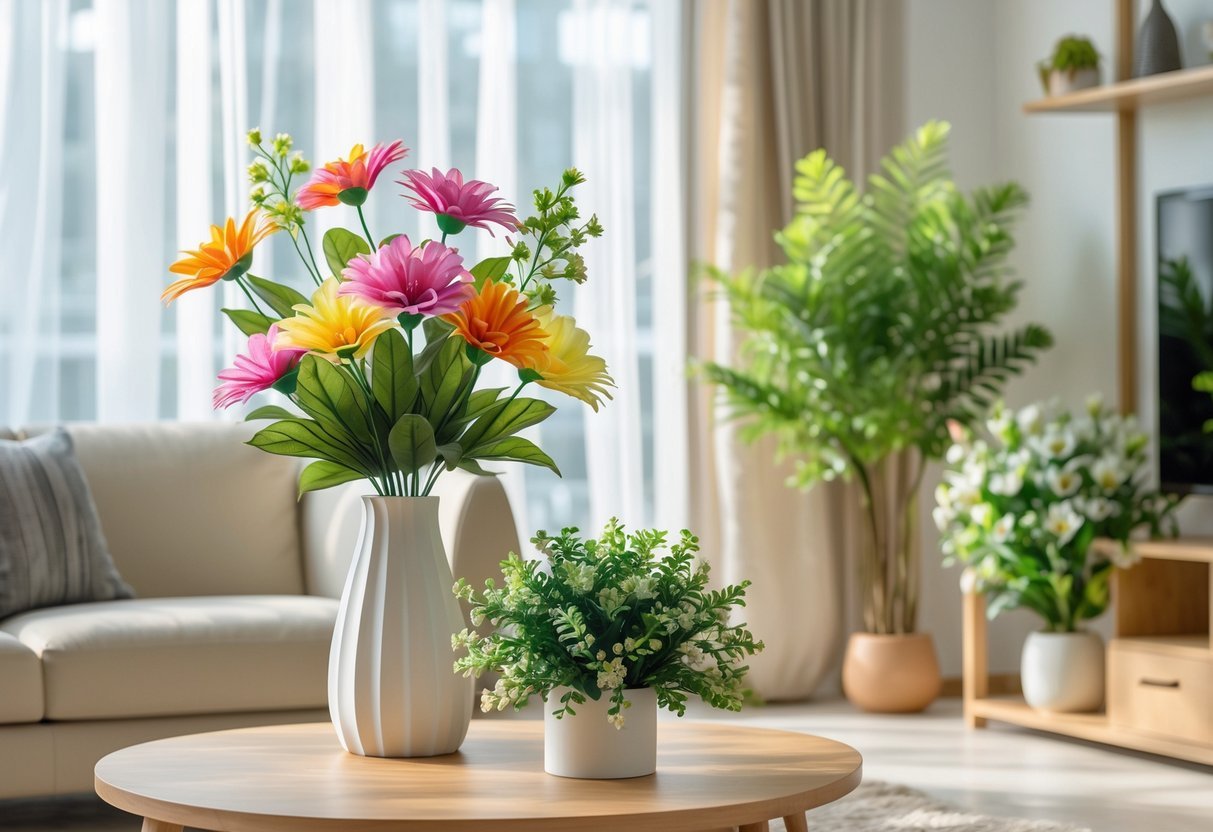
You want your home to feel fresh and inviting, but you don’t want to replace wilted blooms every week. I use artificial flowers for decoration when I want colour and texture that lasts without the upkeep. From soft silk roses to structured greenery, you can style them to suit almost any room.
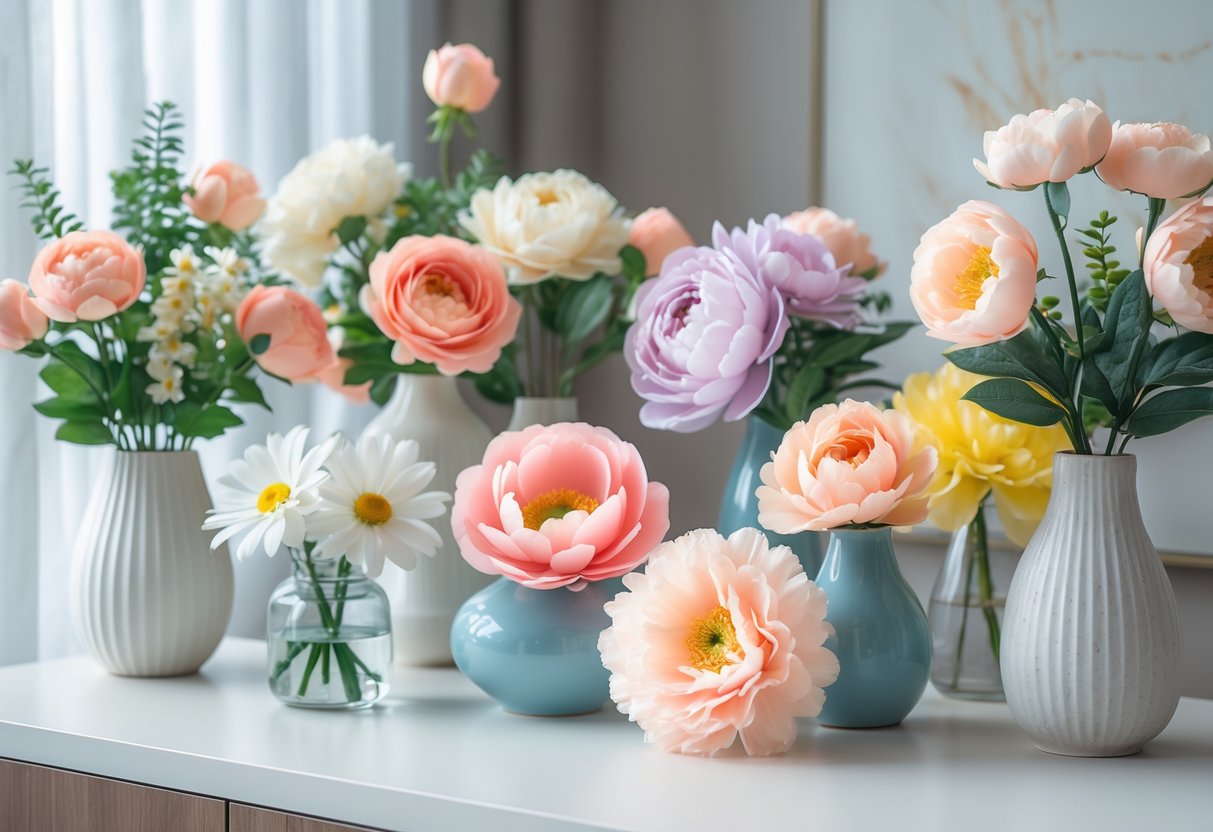
Artificial flowers let you decorate with realistic blooms that stay vibrant year-round, without watering, trimming or replacing them. I can swap arrangements with the seasons, match them to my décor, and place them anywhere without worrying about light or temperature.
If you’ve ever struggled to keep fresh flowers alive or deal with pollen and mess, you’ll appreciate how simple this option feels. I’ll show you how to choose the right styles, arrange them naturally, and make them look intentional in your space.
Key Takeaways
- Choose realistic styles and colours that suit your space and existing décor.
- Arrange and style them thoughtfully to create a natural look.
- Maintain them with simple cleaning to keep them looking fresh.
Types of Artificial Flowers for Decoration
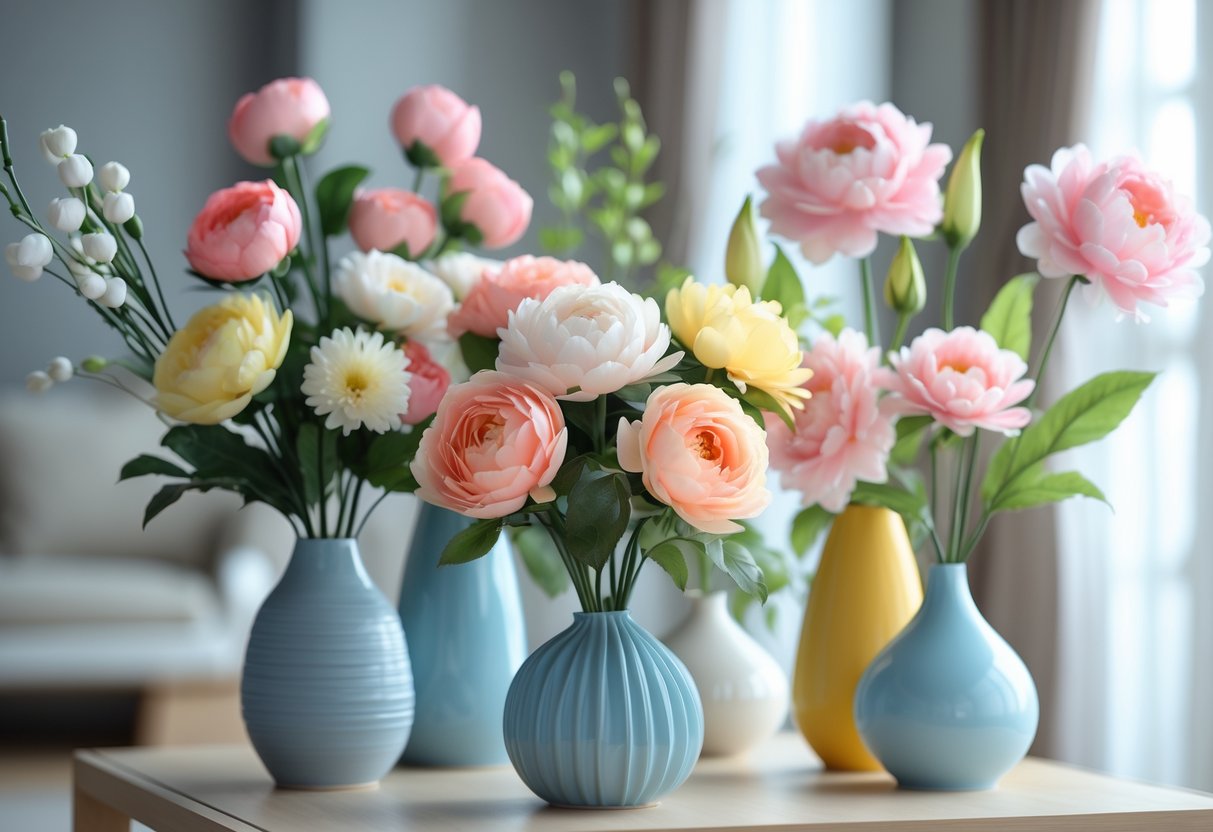
I choose different artificial flowers based on how realistic I want the arrangement to look and how much handling it will get. Materials, texture, and finish all affect how well faux flowers suit a home, event, or commercial space.
Silk Flowers
I often use silk flowers when I want a classic, lightweight option that works in most rooms. While many modern versions use polyester rather than pure silk, people still refer to them as silk flowers. They offer soft petals, good colour range, and easy styling.
Quality varies, so I check stitching, colour gradients, and leaf detailing before buying. Larger arrangements can act as focal points, while smaller stems fill gaps in existing décor, much like the guidance shared by IKEA’s artificial plants and flowers range.
Best for:
- Table centrepieces
- Shelf styling
- Rental properties
- Low-maintenance office décor
Silk artificial flowers hold their shape well and weigh very little, which makes them practical for wall installations or hanging displays. I keep them out of direct sunlight to reduce fading over time.
Real-Touch Artificial Flowers
When realism matters, I reach for real-touch artificial flowers. Manufacturers coat these blooms with latex or similar materials to create a soft, slightly flexible texture that feels closer to fresh petals.
The detail often includes subtle veining on leaves and natural colour variation. Guides such as this comprehensive guide to choosing artificial flowers highlight how material choice affects realism and occasion suitability.
Real-touch artificial flowers work especially well for:
- Wedding bouquets
- Close-up photography
- Entryway arrangements
- High-end retail displays
I use them in spaces where guests are likely to stand close or handle the arrangement. They cost more than basic faux flowers, but the improved texture and finish often justify the investment.
Dried Look Botanicals
Dried look botanicals replicate pampas grass, preserved eucalyptus, and seed pods without the brittleness of real dried stems. I like them for neutral interiors and minimalist styling.
They suit homes that lean toward natural palettes and layered textures. Many home décor guides, including this overview of artificial flowers for home decoration, note how artificial options remove the need for replacement and ongoing care.
Why I use dried look faux flowers:
- No shedding
- No mould risk
- Consistent colour
- Long-term durability
I group them in ceramic or stone vases to create height variation. Because they usually feature muted tones, I balance them with greenery or darker stems to avoid a flat appearance.
Forever Florals
I think of forever florals as statement artificial flowers designed to stay in place for years. These arrangements often come pre-styled and arranged in vases, boxes, or decorative containers.
Retailers specialising in realistic artificial flowers and foliage focus on long-lasting materials that maintain colour and structure. I choose forever florals for reception desks, hotel lobbies, and dining tables where I want a polished look without weekly upkeep.
They suit people who prefer a finished design rather than arranging individual stems.
Because they stay on display long term, I rotate their position occasionally and dust them lightly to keep them looking fresh.
Choosing the Right Artificial Plants for Your Space
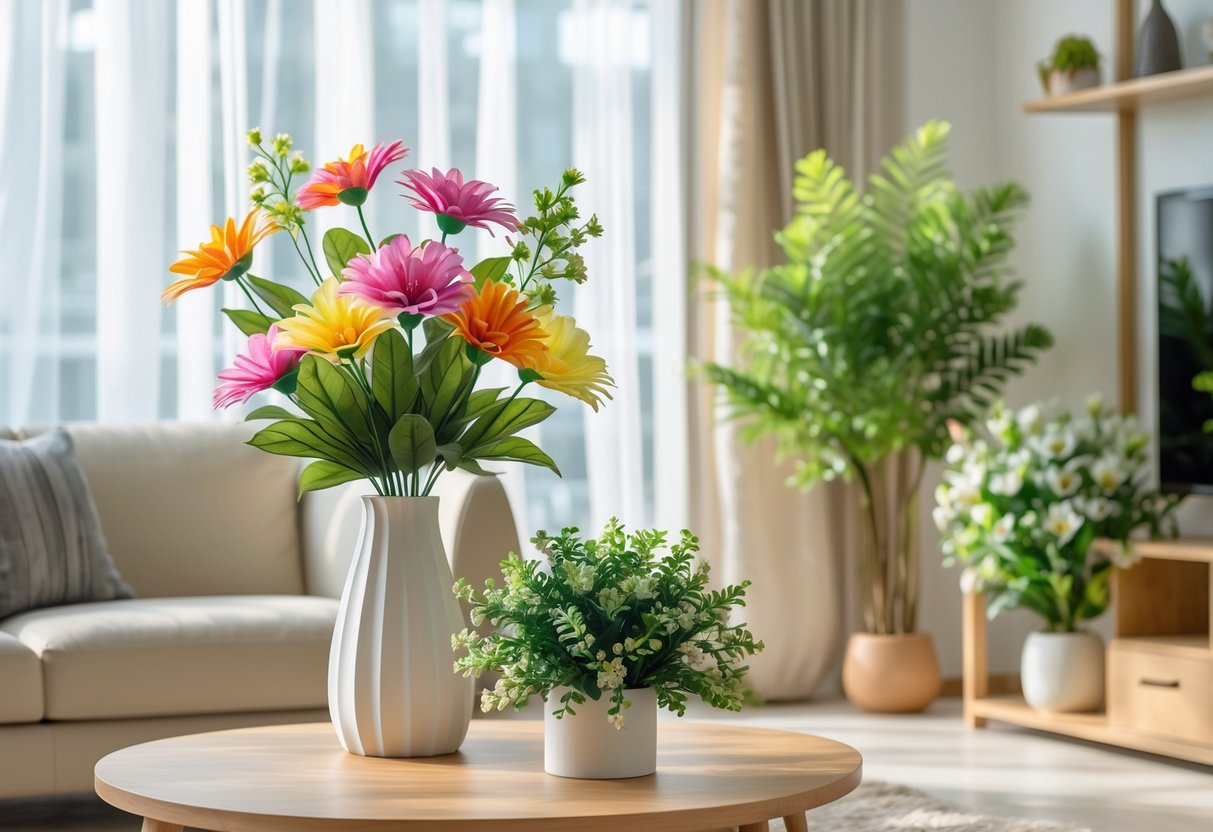
I focus on scale, style and placement before I buy any artificial plants. When I match the plant type to the room’s layout, lighting and purpose, my home decor looks intentional instead of cluttered.
Selecting Styles for Home Decor
I start by deciding what role the artificial plants will play in my home decor. Do I want a soft accent on a shelf, or a bold feature near the entry?
Different styles suit different interiors. A modern space often works well with structured greenery like faux snake plants or fiddle leaf figs, while a relaxed coastal room suits softer palms or trailing pothos. Guides such as this artificial plants buying guide explain how plant shape and leaf detail affect the overall look.
I also check the materials up close. I look for varied leaf tones, natural-looking stems and realistic soil or moss at the base. Shiny plastic leaves or identical shapes can make indoor plants look fake.
When I style shelves or consoles, I keep proportions balanced:
- Small pots for desks and bedside tables
- Medium plants for sideboards
- Trailing stems to soften sharp edges
This keeps the space tidy and cohesive.
Best Uses for Large Artificial Plants
I use large artificial plants to anchor a room. They fill empty corners, frame sofas or soften hard architectural lines without blocking walkways.
Before choosing one, I measure ceiling height and floor space. A tall palm works in rooms with standard or high ceilings, while a compact tree suits apartments. This guide to decorating with artificial plants highlights how matching plant size to layout prevents a cramped feel.
I place large artificial plants where real indoor plants would struggle, such as dark hallways or windowless offices. They add greenery without worrying about sunlight or watering.
To make them look more natural, I:
- Use a heavy, neutral planter
- Add real soil or bark on top
- Angle the plant slightly instead of placing it perfectly straight
These small adjustments make a noticeable difference.
Matching Flowers to Room Themes
I choose artificial flowers based on the room’s colour palette and function. In bedrooms, I prefer soft whites, dusty pinks or muted greens to keep the mood calm.
For living areas, I sometimes introduce stronger colours, but I limit them to one or two tones. This approach aligns with ideas from this artificial flowers for your home decor guide, which explains how colour coordination keeps arrangements from clashing.
I also match flower type to theme:
- Native-style blooms for Australian-inspired interiors
- Orchids or lilies for formal dining rooms
- Wildflowers for relaxed, rustic spaces
When I repeat the same flower or greenery in small ways across a room, the design feels connected. Artificial plants and flowers then support the room’s purpose instead of distracting from it.
Styling Tips for Decorating with Artificial Flowers
I focus on shaping, layering and placement when I style artificial flowers. Small adjustments in height, texture and containers make fake flowers look intentional and natural instead of stiff or overly arranged.
Arranging Faux Flowers for Natural Effect
I always start by bending and shaping the stems. Most faux flowers come straight from the packaging, so I curve the stems slightly and tilt a few blooms forward to avoid a rigid look.
I vary the heights so the arrangement forms a loose dome or soft triangle rather than a flat line. Real flowers rarely sit at the same level, so I let some blooms sit lower and others rise above the centre.
I also limit symmetry. Instead of spacing each stem evenly, I cluster two or three together and leave small gaps between others. This approach reflects ideas shared in guides on making faux flowers look more real, where shaping and natural spacing matter.
Before placing them in a vase, I remove excess leaves near the base. This keeps the arrangement from looking bulky and helps the artificial flowers sit more naturally.
Mixing Artificial Flowers and Greenery
Greenery gives fake flowers structure and depth. I like to combine roses or lilies with eucalyptus, ferns or trailing vines to soften the overall shape.
When I mix textures, I follow a simple ratio:
- 60% focal flowers (roses, peonies, dahlias)
- 30% greenery (eucalyptus, fern, olive branches)
- 10% filler (small blossoms or buds)
This balance keeps the arrangement from looking crowded. Advice from decorating with artificial flowers often highlights the importance of layering textures instead of relying on blooms alone.
I also pay attention to colour tones. If my artificial flowers are bright, I choose muted greenery. If the flowers are soft neutrals, I add deeper green leaves for contrast.
Mixing different bloom types, as suggested in ideas for ways to decorate with artificial flowers, helps create a more realistic and styled result.
Using Flowers in Vases and Pots
The container affects the entire look. I choose clear glass vases for a fresh style and ceramic or stone pots for a more grounded feel.
With glass, I often add faux water resin or hide the stems with pebbles. If I skip that step, I trim the stems so they sit neatly and don’t crowd the base.
For pots, I secure the artificial flowers in floral foam. Then I cover the top with moss or small stones so no mechanics show. This simple detail makes fake flowers feel more finished.
I also scale the arrangement to the space. A low, wide arrangement suits a dining table, while taller faux flowers work better on a console or entry table where they won’t block sightlines.
Caring for Artificial Flowers and Plants
I keep my artificial flowers and fake indoor plants looking fresh by cleaning them regularly and placing them where heat and sunlight will not cause fading. Small habits make a big difference in how long artificial plants hold their colour and shape.
Cleaning and Maintenance
I dust my fake plants every one to two weeks. A soft microfibre cloth, feather duster, or gentle brush lifts surface dust before it builds up.
For deeper cleaning, I remove the arrangement from its spot and rinse plastic stems under lukewarm water. I let them air dry completely before returning them to display. Many artificial floral arrangements can last for years with proper care, as noted in this guide on caring for artificial floral arrangements that last.
For delicate silk or real-touch blooms, I avoid soaking. Instead, I wipe each leaf and petal with a slightly damp cloth and reshape them while damp so they dry in a natural position.
I also check pots and containers. I wipe away grime, tighten loose stems, and trim any frayed threads to keep my artificial plants neat and realistic.
Placement to Avoid Sunlight and Damage
I never place artificial flowers in direct sunlight unless they are labelled UV resistant. Many faux florals can fade or discolour when exposed to strong sun, especially real-touch varieties, as explained in this advice on caring for faux plants and avoiding sun damage.
I position fake indoor plants away from heaters, fireplaces, and air conditioning vents. Constant heat or airflow can warp plastic leaves and dry out adhesives that hold stems in place.
In high-traffic areas, I choose sturdier artificial plants with wired stems. I bend them back into shape if they get bumped and rotate arrangements every few months so one side does not collect more dust or light exposure than the other.
When I store seasonal pieces, I wrap them loosely in tissue paper and keep them in a dry box. This prevents crushing and reduces dust buildup between uses.
Benefits of Artificial Flowers over Fresh Blooms
I choose artificial flowers because they last longer, need far less care, and suit homes where allergies or sustainability matter. They give me steady colour and structure without the short lifespan and upkeep that come with fresh arrangements.
Low Maintenance and Longevity
When I decorate with artificial flowers, I remove most of the routine care that fresh blooms demand. I do not water them, trim stems, or replace cloudy vase water every few days.
A quick dust with a cloth or light brush keeps fake flowers looking clean. That small task replaces the ongoing cycle of buying, arranging, and discarding wilted stems.
High‑quality pieces can hold their shape and colour for months or even years. Many retailers highlight their durability and minimal upkeep in guides such as this overview of benefits of artificial flowers.
I also save money over time. While the upfront cost can be higher, I avoid weekly or event-based repurchasing. For busy households or commercial spaces, forever florals offer predictable, stable décor that does not fade halfway through the week.
Allergy-Friendly and Safe
Fresh flowers release pollen and fragrance into the air. If I or my guests have hay fever, that can quickly become uncomfortable.
Artificial flowers solve that problem because they do not produce pollen. Many décor guides note their allergy-friendly nature, including this list of reasons to choose artificial flowers.
I also find them practical in sensitive environments. In offices, clinics, or aged care settings, scent-free arrangements reduce the risk of irritation.
There is another safety factor I consider: no standing water. Without vases full of water, I reduce the chance of spills, mould growth, or curious pets drinking from arrangements treated with preservatives.
Sustainable Decorating Choices
At first glance, fresh flowers seem more natural. However, I think about transport, refrigeration, and frequent replacement.
Many cut flowers travel long distances and require cold storage. When I repeatedly buy fresh stems, I increase packaging waste and ongoing resource use.
With artificial flowers, I buy once and reuse them for years. I rotate fake flowers seasonally, store them carefully, and bring them out again without additional production or shipping.
Some suppliers now focus on long-term value and year-round styling flexibility, as discussed in this guide on why choose artificial flowers over real ones. By investing in durable forever florals, I reduce how often I discard décor and make my decorating choices more deliberate.
Frequently Asked Questions
I look at materials, cleaning methods, outdoor suitability, styling ideas, lifespan, and environmental impact before I buy artificial flowers. These factors shape how realistic the blooms look and how well they hold up in everyday Australian homes.
How do I choose the best quality artificial blooms for my home decor?
I start by checking the material. Many artificial flowers use silk polyester fabric or plastic, as explained in these Artificial Plants and Flowers FAQs, and the finish affects how real they appear.
I examine the petals and leaves up close. I look for natural colour variation, soft texture, and wired stems that let me shape the arrangement easily.
I also compare “real touch”, “soft touch”, and similar styles, which are terms often used to describe realistic finishes in guides like these Realistic Artificial Flowers FAQs. Subtle veining and matte leaves usually look more convincing than overly shiny surfaces.
What’s the most effective way to clean and maintain faux floral arrangements?
I dust my arrangements regularly with a soft microfibre cloth. For delicate petals, I use a hairdryer on a cool, low setting, which aligns with advice shared in this artificial flowers decor guide.
If the flowers need a deeper clean, I wipe leaves gently with a slightly damp cloth. I avoid harsh chemicals because they can strip colour or damage fabric coatings.
I keep arrangements out of direct, harsh sunlight indoors to reduce fading. Rotating them every few months also helps them wear evenly.
Can artificial flower arrangements be used for outdoor settings as well?
I only place artificial flowers outdoors if they are rated for exterior use. Some suppliers note that you can apply a UV protective spray to extend outdoor life, as mentioned in these frequently asked questions about artificial plants.
Even with protection, I position them in covered areas like patios or balconies. Full sun and heavy rain will shorten their lifespan.
For exposed gardens, I choose products specifically labelled UV resistant rather than standard indoor stems.
What are some creative ideas for displaying fake flowers in my living space?
I mix single stems with foliage in ceramic or glass vases to create a relaxed look. Layering different heights gives the arrangement depth without looking crowded.
I also use faux blooms in unexpected spots. Coffee tables, bathroom shelves, and bedside tables all benefit from a small arrangement.
Retailers often suggest placing bouquets in living rooms as a starting point, as seen in ranges of Artificial Flowers & Faux Flowers in Australia. I build from there by adding wreaths to entryways or stems to open shelving.
How long do synthetic floral decorations typically last before they start to fade?
High‑quality artificial flowers can hold their appearance for several years indoors. They do not need water or sunlight, and they maintain their look year‑round when kept in stable conditions, as noted in this 2025 decor guide on artificial flowers.
I notice fading happens faster in bright, direct sun. Heat and UV exposure break down dyes over time.
Regular dusting and careful placement extend their usable life significantly.
Are there eco-friendly options available for artificial flower decor?
I look for brands that discuss material choices and longevity rather than short‑term trends. Longer‑lasting arrangements reduce the need for frequent replacement.
Some guides explore whether there are environmentally friendly options for faux flowers, such as in this overview of choosing long‑lasting artificial blooms. I read product descriptions carefully to check for recyclable components or minimal packaging.
I also reuse stems season after season. Rearranging what I already own lowers waste and keeps my décor feeling fresh without constant new purchases.