
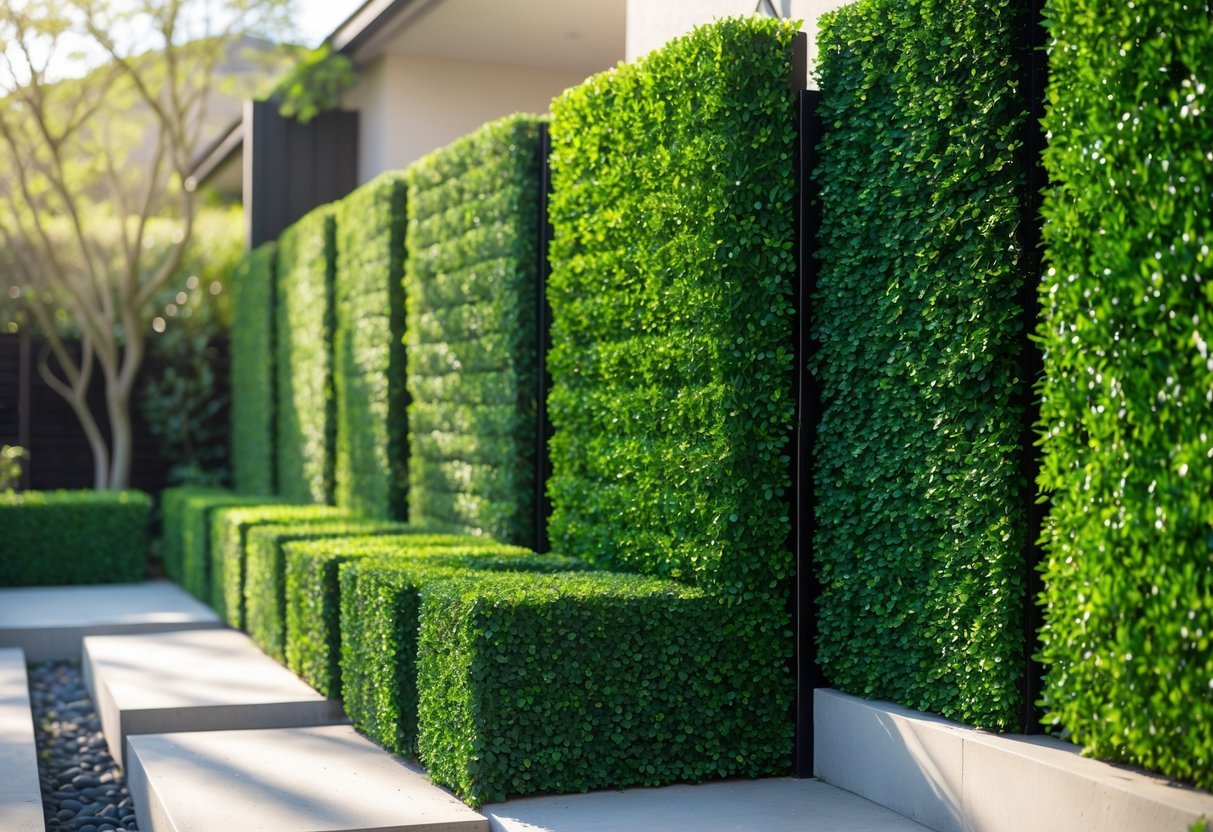
You want greenery that looks sharp every day without trimming, watering, or seasonal die-off. I’ve seen how artificial boxwood solves that problem by giving you a clean, structured look that works indoors or outdoors. It fits balconies, courtyards, entryways, and commercial spaces where real plants struggle.
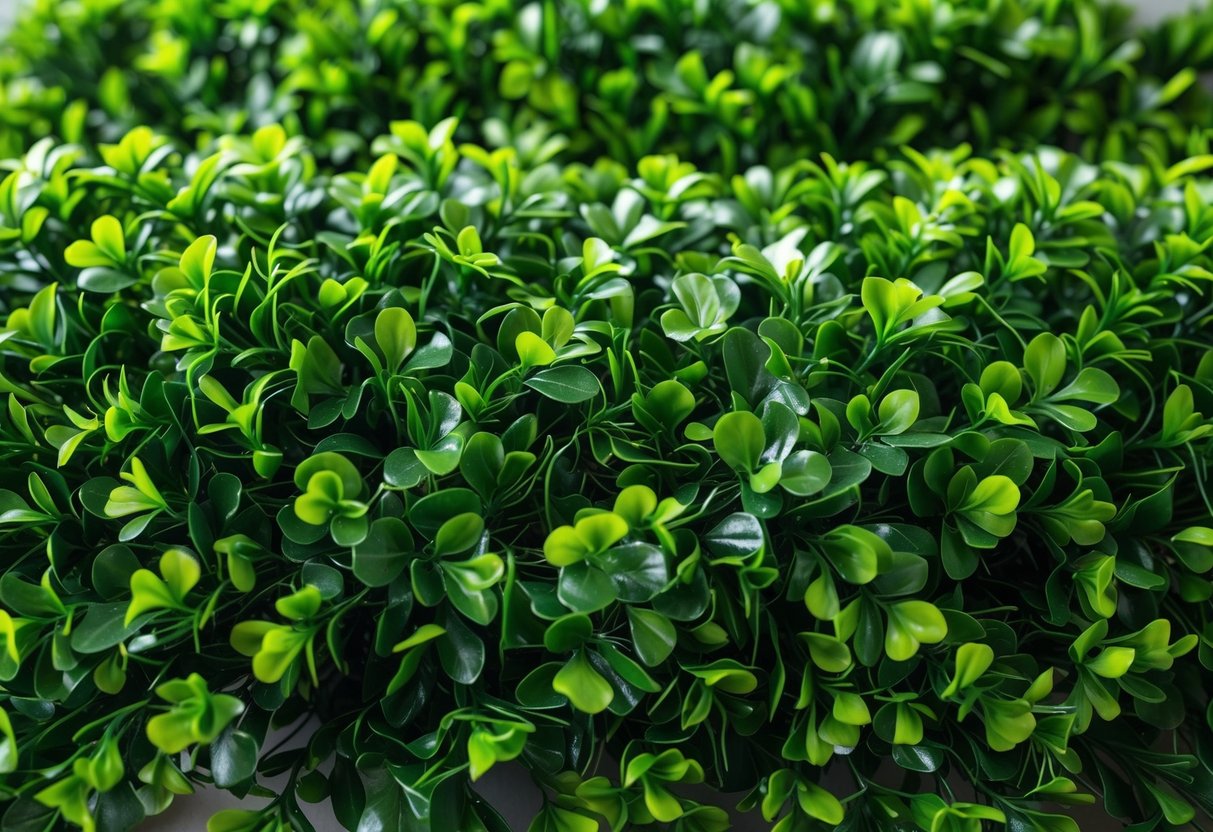
Artificial boxwood is a faux plant designed to look like real boxwood while requiring almost no ongoing care. I use it when you want consistent colour, tidy shapes, and flexible styling without worrying about sunlight, pests, or maintenance schedules.
I’ll walk you through how artificial boxwood works, where it looks best, and how to choose pieces that feel natural rather than plastic. You’ll also see how hedges, panels, and topiary shapes can change the feel of a space fast.
Key Takeaways
- Artificial boxwood gives a realistic green look with minimal upkeep
- You can use panels, hedges, and topiary shapes in many settings
- Smart selection keeps faux boxwood looking natural and tidy
What Is Artificial Boxwood?
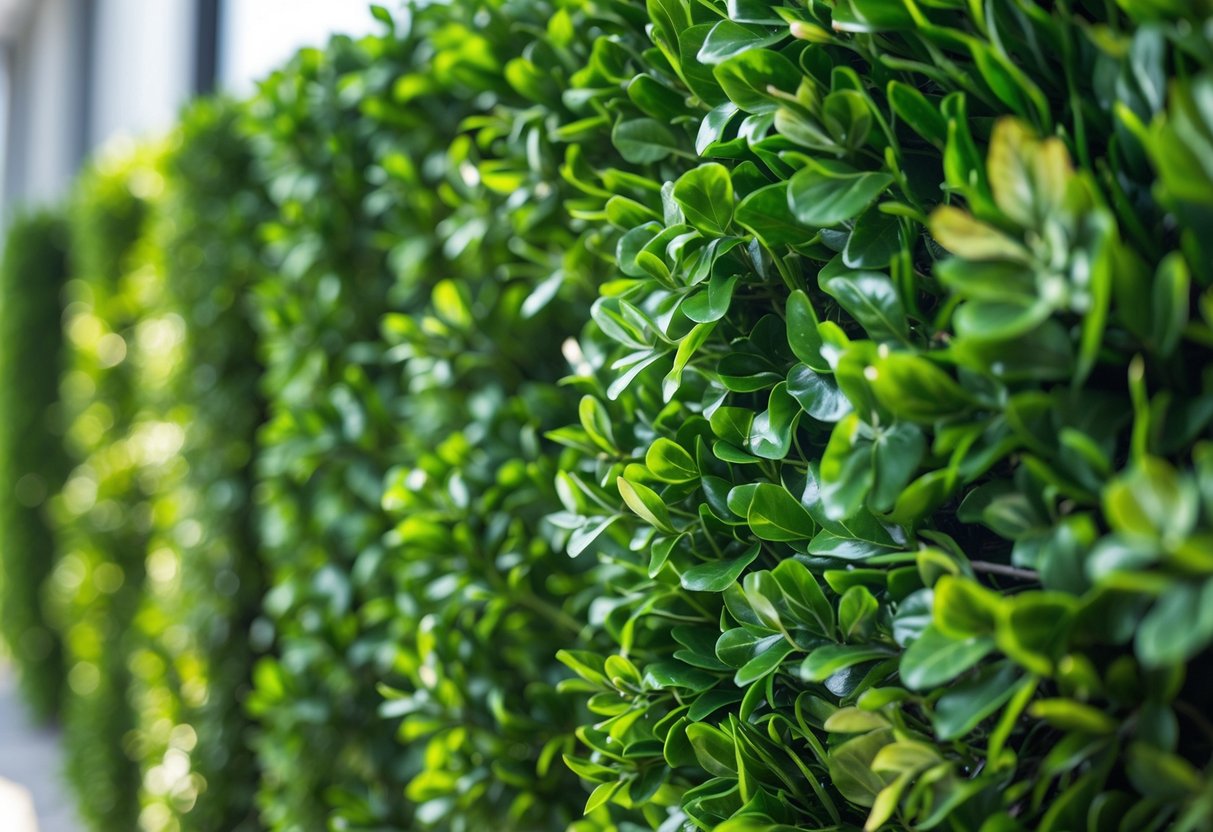
I see artificial boxwood as a practical way to get consistent greenery without the work that living hedges demand. It combines durable materials, convincing leaf detail, and flexible formats that suit homes and commercial spaces across Australia.
Materials and Construction
Manufacturers build artificial boxwood from synthetic plastics such as polyethylene (PE) or polypropylene. These materials hold shape, resist moisture, and clean easily with water.
Many products include UV-resistant coatings, which slow fading in outdoor light. This matters for patios, balconies, and shopfronts that receive daily sun, as explained in this guide to artificial boxwood hedge materials and design.
Construction usually involves snap-together panels or wired stems. This design lets me trim, mount, or reposition faux boxwood without special tools, which keeps installation simple.
Realistic Appearance
Good faux boxwood focuses on leaf density, colour variation, and texture. Instead of a flat green tone, quality pieces mix light and dark shades to mimic new and mature growth.
Leaves often have a soft matte finish rather than a glossy surface. That detail reduces the plastic look and helps artificial plants blend with real landscaping or interior décor.
Some ranges also vary leaf size and angle. This small inconsistency creates a more natural outline, which designers often highlight when discussing the aesthetic and functional benefits of outdoor artificial boxwood.
Types of Artificial Boxwood
I usually see artificial boxwood sold in several common formats, each suited to a different purpose:
| Type | Typical Use |
|---|---|
| Hedge panels | Privacy screens, feature walls |
| Boxwood balls | Entryways, planters, symmetry |
| Shrubs and bushes | Garden beds, indoor pots |
| Topiary shapes | Commercial displays, events |
Hedge panels work well for coverage and scale. Topiary and balls suit decorative accents, as shown across many artificial boxwood and topiary options.
Each type shares the same core benefit: consistent structure without watering, trimming, or seasonal loss.
Artificial Boxwood Hedges and Panels
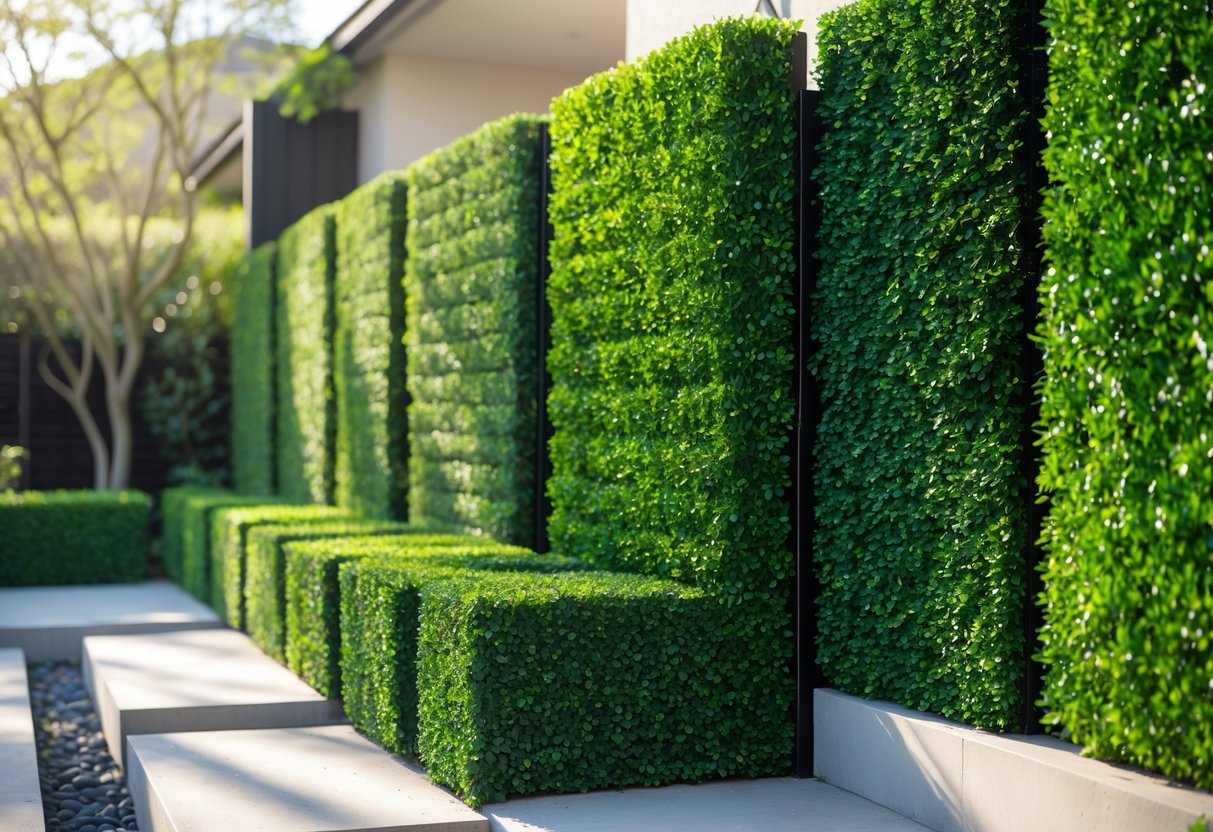
I use artificial boxwood hedges to add consistent greenery without watering, trimming, or seasonal changes. They suit privacy screening, decorative walls, and space definition, and they come in forms that fit apartments, cafés, and family homes.
Boxwood Hedge Varieties
When I choose an artificial boxwood hedge, I look first at form and scale. Options include freestanding hedges with planters, modular panels, and flexible rolls. Each serves a different purpose, from soft borders to solid screens.
Many boxwood hedges use UV-stabilised polyethylene to keep colour outdoors. Some designs feature two-tone leaves for depth, while others prioritise density for privacy. I also check backing materials, as steel or rigid plastic frames resist wind better on balconies.
Common formats I see include:
- Portable hedges with planters for entrances and patios
- Panel systems for walls and fences
- Rolls for longer runs with fewer joins, such as a premium artificial boxwood roll with privacy backing
Artificial Boxwood Hedge Panels
An artificial boxwood hedge panel gives me predictable coverage and fast installation. Most panels measure 1 m x 1 m or 20″ x 20″, which simplifies planning and reduces waste.
Panels often clip or cable-tie together, making them suitable for DIY projects. I like panels that specify UV resistance and leaf density, such as UV-resistant boxwood hedge panels sold at Mitre 10.
Typical panel features I compare
| Feature | Why it matters |
|---|---|
| Leaf density | Affects privacy and realism |
| UV rating | Slows colour fading outdoors |
| Backing grid | Improves strength and alignment |
Outdoor and Indoor Applications
I use artificial boxwood hedges outdoors to create privacy along fences, screen neighbours, and soften hard surfaces. Weather-rated products handle sun and rain with minimal change, which suits rental properties and commercial spaces.
Indoors, I rely on panels to build green walls without soil or moisture issues. Offices and hospitality venues often choose artificial boxwood hedge panels to reduce visual noise and define areas. Restaurants commonly install them around patios to manage sightlines, as seen with commercial artificial boxwood walls from Designer Vertical Gardens.
For compact spaces, I prefer lightweight systems like the artificial boxwood hedge 10-piece sets that adapt easily to walls and balconies.
Boxwood Topiary and Decorative Uses
I use artificial boxwood to add structure, greenery, and balance without ongoing care. The most practical uses include shaped topiary forms, full-height topiary trees, and modular greenery walls that suit both indoor and outdoor spaces.
Popular Topiary Shapes
Boxwood topiary works best when shape defines the design. Ball, cone, spiral, and double-ball forms remain the most common because they fit classic and modern spaces.
I often place spherical boxwood topiary in pairs to frame doorways or fireplaces. Spiral shapes suit narrow areas where height matters more than width. Double-ball designs create a formal look without filling too much floor space.
Artificial options offer consistency that natural plants cannot. Retail collections of artificial boxwood topiary in classic shapes show how varied these forms can be while keeping a uniform finish.
Key considerations
- Match shape to available space
- Use pairs for symmetry
- Keep scale proportional to furniture and architecture
Topiary Trees for Homes and Gardens
Topiary trees add vertical greenery where real plants struggle. I use artificial boxwood topiary trees in entryways, patios, and balconies where sunlight or watering access is limited.
Many designs feature realistic trunks and dense foliage, which helps them blend into outdoor settings. Some ranges of boxwood topiary and artificial trees work well in pots at front doors or along walkways.
Indoors, I place topiary trees near windows, stair landings, or unused corners. Outdoors, UV-rated models last longer and hold colour more reliably.
Common placements
- Front doors and porches
- Courtyards and balconies
- Large indoor rooms needing height
Greenery Walls and Feature Panels
A greenery wall creates impact without using floor space. Artificial boxwood panels form dense, uniform green walls that suit offices, patios, and feature areas in homes.
I install panels as full green walls or smaller feature sections behind seating or dining areas. Modular systems make installation straightforward and allow custom sizing.
Artificial boxwood panels work well because they maintain colour and shape year-round. Guides on using artificial boxwood for landscaping and design show how green walls soften hard surfaces without ongoing maintenance.
Typical uses
- Privacy screens
- Decorative feature walls
- Backdrops for outdoor entertaining
Benefits of Choosing Faux Boxwood
I often recommend faux boxwood because it solves common outdoor and indoor greenery problems without adding extra work. It offers practical advantages in upkeep, long-term appearance, and functional screening that suit homes, businesses, and rental spaces.
Minimal Maintenance
I like faux boxwood because it removes routine care from my schedule. Artificial boxwood does not need watering, pruning, fertilising, or pest control, which makes it practical for busy households and commercial settings.
Once installed, an artificial boxwood hedge keeps its shape and colour with very little effort. I usually clean it with a light rinse or a damp cloth a few times a year, depending on dust and exposure.
This low-effort care works well for landlords, hospitality venues, and offices. Many designers choose artificial greenery for this reason, as outlined in guides to the benefits of choosing artificial boxwood over real plants.
Key maintenance differences
| Task | Real Boxwood | Faux Boxwood |
|---|---|---|
| Watering | Weekly | Not required |
| Pruning | Seasonal | Not required |
| Pest control | Ongoing | Not required |
UV Resistance and Durability
I pay close attention to UV resistance when selecting artificial boxwood for outdoor use. Quality faux boxwood uses UV-stabilised materials that slow fading and brittleness from sun exposure.
Durable construction matters just as much as colour retention. Well-made artificial boxwood holds leaf density and structure through heat, rain, and wind, which reduces replacement costs over time.
Suppliers that focus on material quality tend to produce longer-lasting products. Articles discussing high-quality artificial boxwood for outdoor spaces highlight how durability directly affects value, especially in exposed areas like balconies and courtyards.
I find this reliability useful in climates with strong sunlight. It allows me to plan installations without worrying about seasonal decline.
Privacy and Noise Reduction
I often use artificial boxwood hedge panels to create visual screening where fencing feels too harsh. Dense faux boxwood blocks direct sightlines while maintaining a softer, natural look.
The thickness of artificial boxwood also helps reduce ambient noise. While it does not fully soundproof a space, it can soften traffic and neighbour noise when used along boundaries or patios.
This makes faux boxwood practical for small outdoor areas. Many homeowners use it as a privacy solution, as explained in guides on using faux boxwood hedges for residential screening.
I find it especially effective for renters. It delivers privacy without permanent structural changes.
How to Select and Care for Artificial Boxwood
I focus on three things when choosing faux boxwood: secure installation, simple cleaning, and correct sizing. Getting these details right keeps artificial plants looking consistent, tidy, and realistic in everyday use.
### Installation Tips
I start by checking the backing and fixings on each artificial boxwood hedge panel. Rigid plastic grids hold shape better on fences and walls, while flexible mesh suits curved surfaces.
For outdoor installs, I use galvanised screws or UV-rated cable ties. Indoors, adhesive hooks or lightweight frames work well and avoid wall damage. I always leave a small expansion gap between panels so they sit flat as temperatures change.
Quick install checklist
- Mount to a clean, dry surface
- Align panels before fixing
- Stagger joins to hide seams
Guides like this artificial boxwood hedge overview helped me avoid common placement mistakes.
### Cleaning and Upkeep
Artificial plants need less work than live greenery, but they still collect dust. I clean mine every few months using a soft brush or low-pressure water spray.
For indoor faux boxwood, I wipe leaves with a damp microfibre cloth. Outdoors, I rinse panels and let them air dry fully before reattaching. I avoid harsh cleaners because they dull the leaf finish and reduce UV coatings.
If panels sit in full sun, I rotate them once or twice a year. This helps colour fade evenly, which keeps the hedge looking more natural. I followed several tips from this artificial boxwood care guide and found the routine easy to maintain.
### Sizing and Placement Guide
I measure the area twice before ordering panels. Most artificial boxwood hedge panels come in standard square sizes, so accurate measurements reduce trimming and waste.
For privacy screens, I place panels edge-to-edge with no gaps. For decorative walls, I leave small spaces and mix boxwood with other artificial plants to soften the look. Indoors, I keep panels away from heaters and vents to prevent warping.
Placement tips by location
| Location | Panel depth | Notes |
|---|---|---|
| Balcony | 40–50 mm | Wind-rated fixings matter |
| Living room | 30–40 mm | Avoid direct heat |
| Fence line | 50 mm | Best for coverage |
This artificial boxwood hedge guide helped me plan sizing with fewer adjustments.
Frequently Asked Questions
I often get practical questions about cleaning, UV resistance, installation, safety, and product quality. These points come up most when people plan long‑term indoor or outdoor use and want predictable results.
How do I properly maintain my artificial boxwood to keep it looking fresh?
I clean artificial boxwood by rinsing it with water or wiping it down using a damp cloth. For outdoor panels, I occasionally use mild soap to remove dust and airborne residue.
I also check fixings and panel joins a few times a year, which helps prevent sagging or gaps. This approach aligns with common care steps outlined for maintaining artificial boxwood panels.
Are artificial boxwood panels UV protected to prevent fading outdoors?
Many higher‑quality panels include UV stabilisers that slow colour fading when exposed to sunlight. I always confirm UV treatment before using boxwood outdoors, especially in full sun areas.
Guides like this artificial boxwood hedge overview explain how UV resistance affects lifespan and appearance.
What are the best methods for installing artificial boxwood in my garden?
I usually install panels by attaching them to fences, walls, or frames using cable ties, screws, or mounting clips. A flat and secure backing surface makes the job easier and improves the final look.
Step‑by‑step methods appear in this artificial boxwood hedge guide, which covers both residential and commercial setups.
Can artificial boxwood be cut to different sizes for custom-shaped areas?
Yes, I cut most panels with sharp scissors or garden shears to fit corners, curves, or smaller spaces. I trim from the backing grid rather than the leaves to keep edges tidy.
This flexibility is commonly noted in artificial boxwood product FAQs, especially for privacy screens and feature walls.
What safety considerations should I be aware of when using artificial boxwoods indoors?
I check that indoor boxwood products are low‑odour and free from sharp backing edges. In commercial or enclosed spaces, I also look for fire‑retardant options where required.
This artificial boxwood guide for indoor use outlines material and compliance considerations.
Is there a significant difference between cheaper and more expensive artificial boxwood products?
I notice differences in leaf density, colour variation, and UV stability when comparing low‑cost and premium panels. Cheaper options often fade faster or look flatter over time.
Discussions around durability, including how long products last outdoors, appear in this article on artificial boxwood hedge longevity.